Lana Galdava: We call on the authorities to make a clarification in response to the ongoing Russian economic annexation in Abkhazia - "Dream" is damaging the policy of non-recognition with its silence and anti-state messages
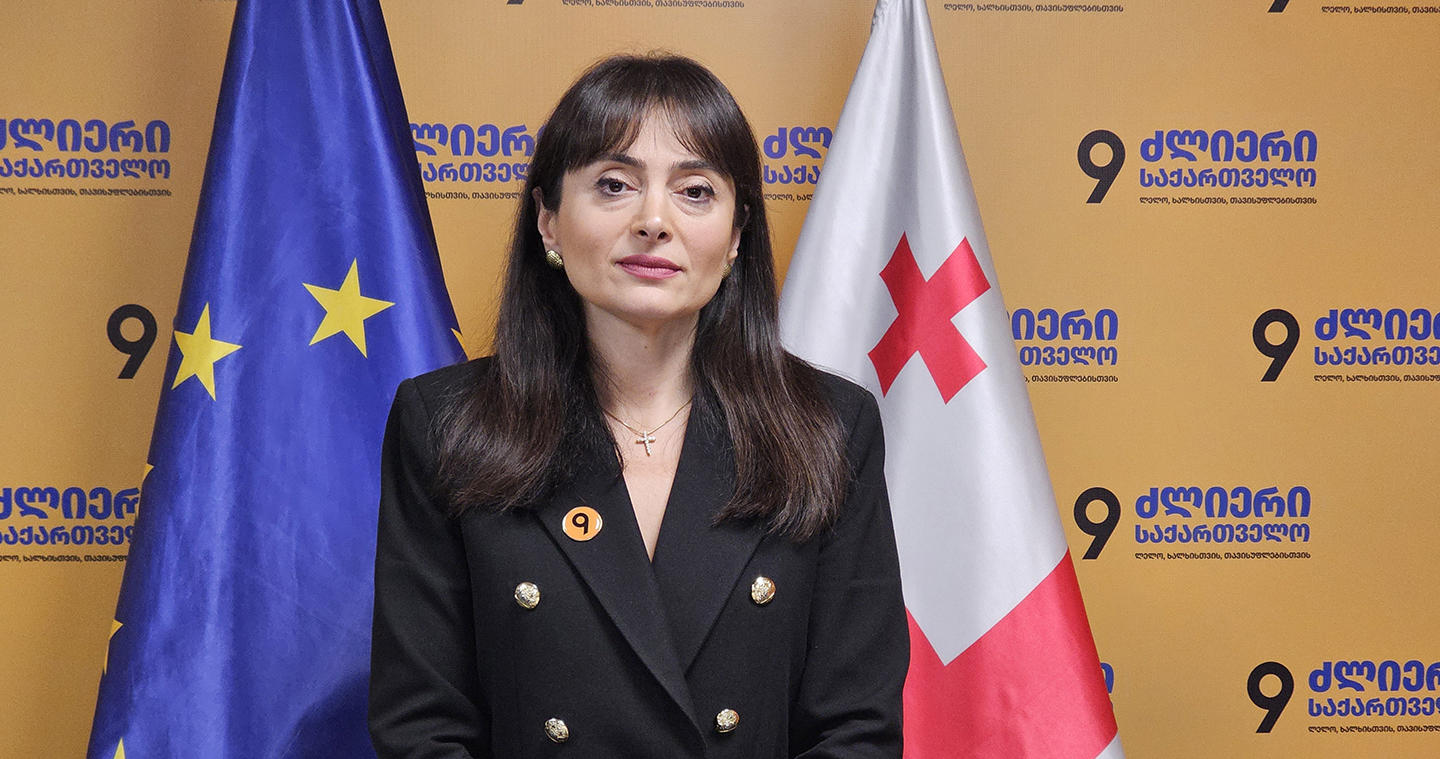
In Abkhazia occupied by Russia, the economic annexation is proceeding rapidly, and the situation has become especially complicated after the parliamentary elections held in Georgia, which is manifested today, in the background of the long-standing resistance of the Abkhazian people, in the process of ratification of the investment agreement concluded between Russia and Abkhazia in the so-called parliament of Abkhazia. The above-mentioned represents the continuation of crimes against Georgia by Russia, Lana Galdava, a member of the "Strong Georgia" coalition, said about the ongoing processes in occupied Abkhazia.
According to her, "Georgian Dream", with its criminal silence and anti-state messages, damages the policy of non-recognition and does not take real steps in the direction of peace policy.
"We call on the authorities of Georgia, the relevant agencies to explain why they are silent, why they are not making statements, why they are not active internationally in response to the ongoing Russian economic annexation in Abkhazia. In general, how do they see the process of restoration of territorial integrity and de-occupation of Georgia. To achieve the above national interest, what is their vision, strategy, long term and short term action plan. With the damaging foreign policy pursued by the "Georgian Dream", how are they going to avoid the threat to the policy of non-recognition? By stopping the process of European integration, how do they explain the crisis in the perspective of Georgian-Abkhaz and Georgian-Ossetian relations?
In Abkhazia occupied by Russia, the economic annexation is proceeding rapidly, and the situation has become especially complicated after the parliamentary elections held in Georgia, which is manifested today, in the background of the long-standing resistance of the Abkhazian people, in the process of ratification of the investment agreement concluded between Russia and Abkhazia in the so-called parliament of Abkhazia. The above, on the one hand, represents the continuation of crimes against Georgia on the part of Russia, and on the other hand, the adjustment of the so-called Abkhaz legislative framework for the economic annexation of the occupied territory and taking steps against the will of the Abkhazian people, in whose interest the ratification of the above-mentioned agreement is not.
The capitulant, and in many cases, anti-state statements of the "Georgian Dream": the fabricated global war party's goals, blaming their own country for starting a war, accusing Georgia's partners of trying to open a second front, publicly apologizing to the naval city of Gori, allowing persons who harm the national security of Georgia into the country's territory, Ineffective measures to protect the safety of the population near the occupation-separation lines As a result of handling (or not handling at all) we got the fact that at the 62nd round of international negotiations in Geneva, among other things, Russia demanded to start the process of delimitation of the Georgian-Abkhazian and Georgian-Ossetian state borders through their further demarcation. Also, transfer of international discussions from Geneva.
Here, the fact that the "Georgian Dream" with its criminal silence and anti-state messages harms the policy of non-recognition was clearly shown. does not take real steps in the direction of peace policy. With the above-mentioned goals, it does not effectively cooperate in international formats, it cannot understand the security risks of the Black Sea region. As for the suspension of the country's European integration process, it will directly affect the prospects of Georgian-Abkhazian and Georgian-Ossetian relations.
The lack of vision, strategies, short and long-term action plans in the direction of restoration of territorial integrity and de-occupation is proof of the criminal inaction of "Georgian Dream".
For example, a common national vision for de-occupation and peaceful resolution of the conflict, which the government is committed to by the 2021 parliamentary resolution, has not been developed. The state strategy for the occupied territories dated 2010, as well as other important conceptual documents, have not been updated", said Lana Galdava.