Giorgi Kalandarishvili: The CEC has finalized the final summary protocol of Mikheil Kavelashvili's election, and only authorized persons have the right to challenge it – No information available about observers
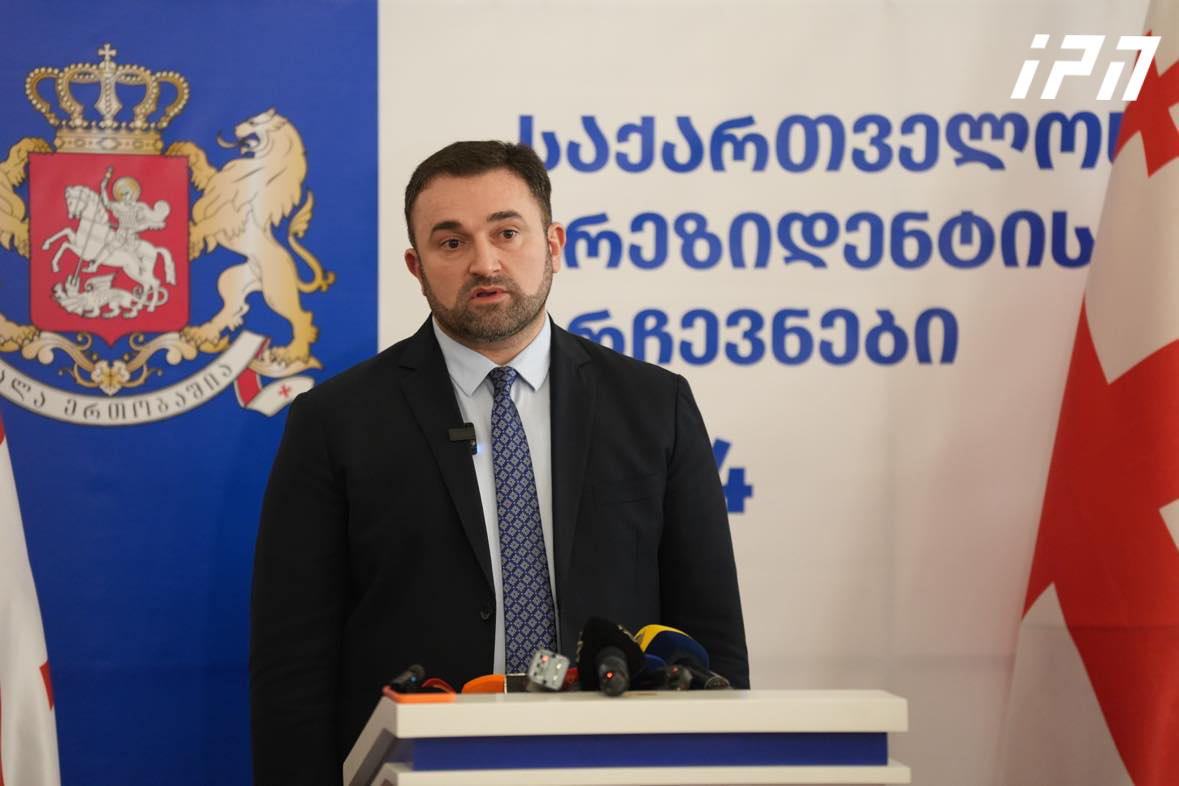
"These are the final data; the Central Election Commission (CEC) has finalized the summary protocol, and only authorized, interested parties have the right to challenge it according to the law," said Giorgi Kalandarishvili, Chairman of the Central Election Commission.
When asked whether any international or local organizations were present in Parliament to observe the process of electing the President of Georgia, Kalandarishvili responded that this was coordinated with Parliament.
"Regarding the participation of observer organizations, it should be noted that this was not within the regulatory scope of the Central Election Commission. These matters were coordinated with the Parliament of Georgia, as the accreditation process for observer organizations was not specifically provided for. We clearly see the large representation of media organizations in this process, which, based on appropriate applications, obtained the right to observe and report on the process. Therefore, I do not have information about observers since such a procedure is not foreseen on our part. However, under the authority of the Speaker of Parliament, the possibility existed for a decision to be made based on relevant requests regarding attendance by specific organizations," Kalandarishvili said.
In response to a journalist's question about what he would say to citizens who believe they participated in an illegitimate process, Kalandarishvili stated:
"The process was conducted in full compliance with the law, and no one can say that the law was violated in any part of it. Therefore, I find such assessments unclear. As for political assessments and the political process, of course, this is not within the purview of the electoral administration, and I do not have the opportunity to evaluate the assessments of the different parties regarding the legitimacy of the elections. Our guidelines are the documents of international organizations and other involved parties, most importantly the conclusions of OSCE/ODIHR, as well as reports from American and European institutions, which unequivocally speak about the technical integrity and proper administration of the elections. While concerns and certain recommendations are discussed, they do not indicate any systemic violations or manipulations of the elections. I believe this should serve as a guide for all involved parties when making assessments, or otherwise, there must be concrete evidence or facts, not assumptions or misinformation about election manipulation."
"By the way, it should be noted that one of the departments, if not the only one, whose activities, both in the pre-election period and on election day, in terms of large-scale technological interventions, has been positively evaluated," concluded Kalandarishvili.