Matthew Bryza on sanctions: It is a symbolic and political decision – decisive actions will come from the European Union
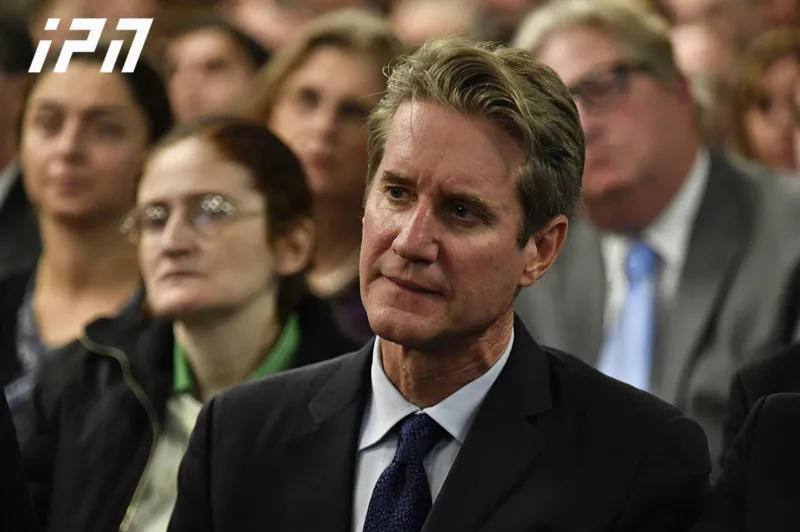
Former U.S. State Department official Matthew Bryza stated that the recently imposed sanctions represent a symbolic and political decision. Bryza shared his views on the developments in Georgia during an interview with the Georgian service of "Voice of America."
He highlighted that the U.S., through these measures, is signaling to the Georgian Dream government that its claims about the elections being tied to Georgia's EU integration were insincere.
“This is a symbolic and political decision. It’s symbolic because it demonstrates the U.S.'s displeasure with the Georgian government, though it’s evident that they don’t seem to care. It’s also symbolic because there are no financial restrictions accompanying this measure. These are not sanctions under the Global Magnitsky Act, meaning no assets will be frozen.
We’re only talking about visa restrictions, and it’s unclear who the 20 individuals affected are. Beyond that, the sanctions send a broader signal: the United States is calling out Georgian Dream for dishonesty when they claimed the elections were about EU integration. If I recall correctly, their slogan was ‘With Dignity Towards Europe.’ Yet, almost immediately after the elections, within about a month, the Prime Minister announced the suspension of association negotiations with the EU, which at least 80% of the population fundamentally opposes. This is what the U.S. is now labeling as a lie, undemocratic behavior, and a rejection of democratic values. The message is clear: the people behind this are not part of the democratic world, and the U.S. does not want to deal with them.
This is also a message to the Georgian people, encouraging them to recognize that their government is steering them in the wrong direction, away from the aspirations of the majority of citizens."
Regarding the Georgian Prime Minister’s recent decisions, Bryza commented:
“This either reflects poor political judgment and arrogance, an underestimation of the public’s reaction, or a blatant provocation. The Prime Minister must realize that decisions like suspending EU negotiations can have dramatic consequences, as they did in Ukraine, leading first to the Maidan protests and eventually to a revolution.”
Bryza also addressed the question of why the U.S. has not imposed stricter sanctions, such as financial penalties. He noted that the State Department prefers a cautious, step-by-step approach, allowing room for future actions. He also pointed out that the incoming U.S. administration may take a different course of action regarding sanctions.
“It's a valid question. I saw Senator Jeanne Shaheen’s remarks calling for financial sanctions by the Treasury Department, potentially under the Global Magnitsky Act. Such sanctions could have severe economic or even criminal consequences for the sanctioned individuals or the government.
What we’re seeing now is a softer measure—a message to the Georgian people. It may also have an impact on Georgian politics by encouraging more protests or prolonging existing ones. Notably, President Zurabishvili has stated that she won’t step down until legitimate parliamentary elections are held. Meanwhile, the government might try to force her out of her residence.
The State Department is clearly being cautious, observing the effects of its actions before escalating further. They are leaving room for future measures, including financial or criminal sanctions, if needed. This reflects respect for democratic principles. With a new U.S. President taking office in five weeks, they want to give the incoming administration the opportunity to choose its path, including whether to intensify sanctions or pursue other directions."
Bryza also emphasized the importance of joint U.S.-EU efforts in addressing the situation in Georgia, stressing that the EU’s actions will likely have a greater impact:
“From a professional standpoint, I was raised on the principle that the U.S. must work in unison with its transatlantic partners on all issues. However, practically speaking, what the U.S. does may not be as significant right now. The primary impact will come from the EU’s stance.
Georgians aspire to join the EU and view it as their desired future. A strong message from the EU—that the Georgian government is distancing its people from this goal—will resonate much more deeply than anything coming from Washington. If the EU says, ‘We want you, but your government does not,’ it will carry significant weight.”
Bryza also commented on the ongoing protests in Tbilisi, criticizing the police for their violent response:
“Peaceful protest is an integral part of democracy. We’ve said this during the Rose Revolution and during protests against Saakashvili. Successful democracies cannot exist without peaceful protests.
The police, however, are acting disproportionately and unprofessionally, reminiscent of Soviet-era dictatorial regimes. I hope those responsible will be held accountable. The violence against protesters has raised questions about whether the police are being coerced or influenced by external factors.
Such violence has no place in a democracy, and those responsible, including individual officers, may face accountability similar to what we saw after World War II with the Nuremberg trials. There is no justification for this level of brutality,” Bryza concluded.