Human Rights Center Report: In 2024, numerous protests saw the illegitimate restriction of freedom of assembly, the improper use of special means, and the mistreatment of citizens during the dispersal of demonstrations
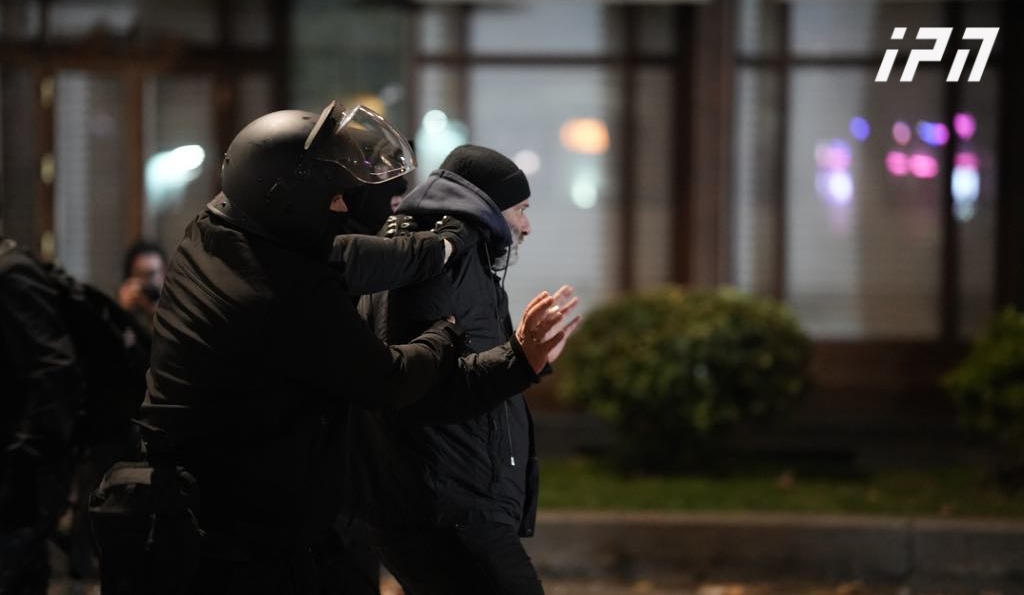
In 2024, numerous protests saw the illegitimate restriction of freedom of assembly, the improper use of special means, mistreatment of citizens during dispersals, violence, and unlawful detentions. The recurring nature of violent incidents and the lack of accountability for acts of torture and ill-treatment indicate a systematic and coordinated policy of repression, according to the Human Rights Center’s report on the state of human rights in Georgia in 2024.
According to the organization, the report highlights significant legal and political issues that impacted human rights standards in the country. Special attention is given to Georgia’s democratic backsliding in 2024, the parliamentary elections, the persecution of civil society organizations, protest-related events, and Georgia’s relations with the European Union.
"Despite these events, there is still no publicly available information on the progress of investigations or the prosecution of perpetrators. Even though publicly available footage sometimes clearly shows alleged instances of torture or degrading and inhumane treatment by law enforcement officers, investigations in all cases are launched solely under the article of abuse of official authority. Moreover, public officials have refrained from condemning police violence. The sense of impunity was further exacerbated by the fact that law enforcement officers did not wear identifying markers and had their faces covered with masks. The investigative actions conducted by the Special Investigation Service regarding these events do not meet international human rights standards or the Istanbul Protocol. Consequently, the recurring nature of violent incidents and the absence of accountability for acts of torture and ill-treatment indicate a systematic and coordinated policy of repression, which appears to aim at intimidating and retaliating against opponents of the government’s policies," the report states.
The document also discusses the media environment in 2024, noting that the situation for media and journalists significantly deteriorated.
"In the lead-up to the parliamentary elections, the Georgian media landscape was characterized by widespread threats, intimidation, and acts of violence. Attacks were primarily directed at representatives of independent and critical media organizations. The ruling party adopted the Russian-style 'Foreign Transparency' law, aimed at stigmatizing independent media and civil society, restricting their activities, and ultimately eliminating them. The Georgian Parliament gradually became an inaccessible space for independent media, while the politicization of state institutions severely affected media freedom. Strategic lawsuits against public participation (SLAPPs), aimed at restricting journalistic activities, remained a significant issue for independent and critical media. Additionally, daily disinformation became a serious challenge. As a result, by the end of the year, civil society organizations demanded the resignation of the chair and director of the Public Broadcaster’s Supervisory Board due to the broadcaster’s violations of Georgia’s 'Law on Broadcasting,'" the document states.