Vakhtang Dzabiradze: I wouldn’t rule out that if it faces serious difficulties, Georgian Dream might ask Russia to deploy troops in Tbilisi – Otherwise, how can the Russian Intelligence report be explained?
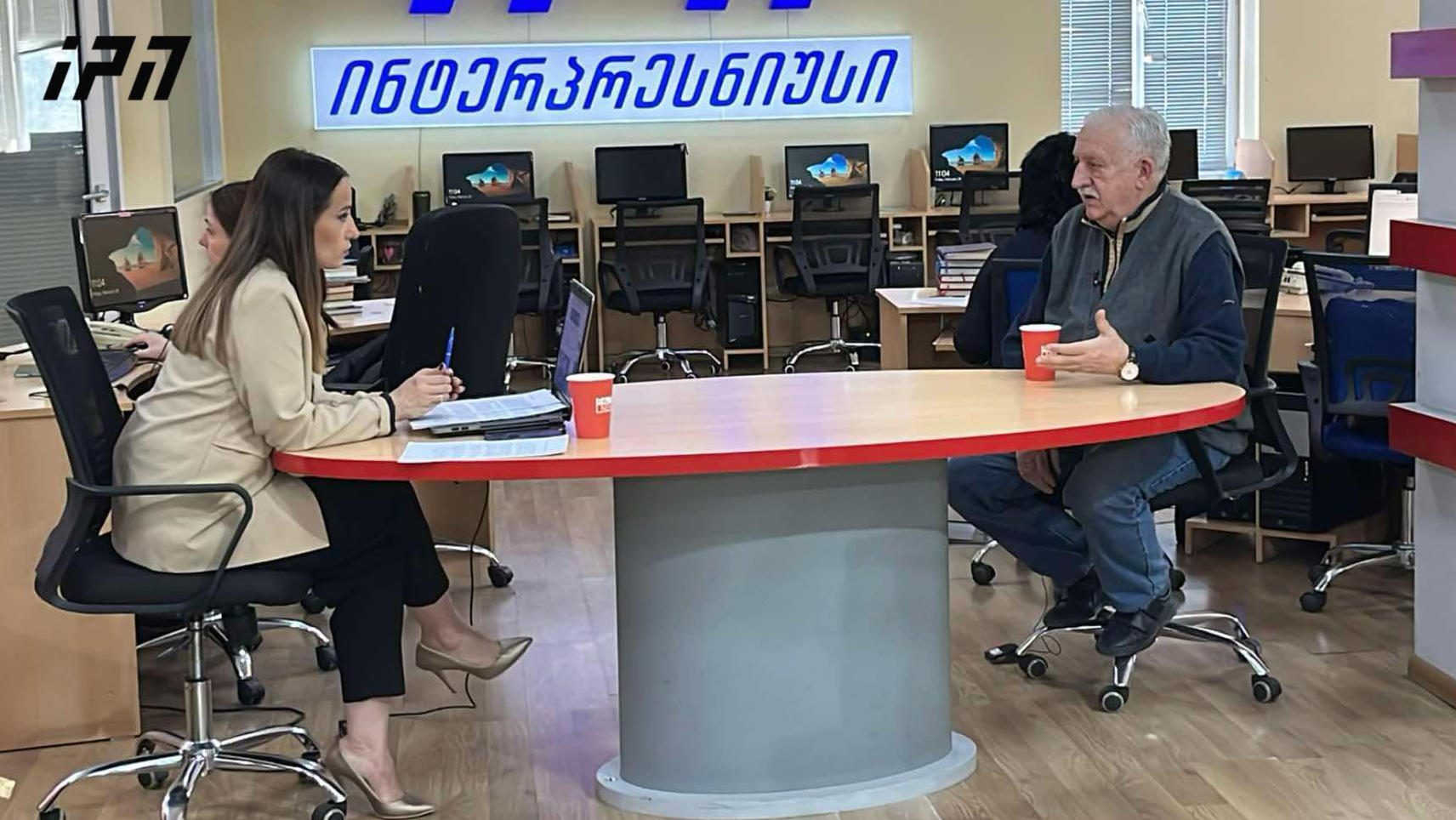
"Georgian Dream" is in a hurry because it wants to suppress the protests before sanctions are imposed and before the political crisis turns into an economic crisis. The protests will be even larger in the spring, but no real breakthrough will occur, analyst Vakhtang Dzabiradze stated on PalitraNews' "Day’s Newsroom" program.
According to him, despite Georgian Dream's efforts to build a "repressive net" to suppress the protests, "this is not entirely possible."
"I, too, have a positive expectation for spring, but only in the sense that if we get through this difficult period, the chances of the protests stopping or fading away will decrease—rather than the spring bringing some major breakthrough in the process. I am convinced the protests will grow larger. It will be a continuation of what we see today. However, it will not be a real turning point.
Currently, the country is in a deadlock: the opposition cannot force the government to call early elections, but at the same time, the government also cannot completely stop the wave of protests happening on Rustaveli Avenue. Despite resorting to crackdowns, then loosening control, then tightening financial sanctions, and introducing new laws, the government is weaving a repressive net—but whether it can truly neutralize the protests remains uncertain.
Georgian Dream is rushing because it wants to crush the protests before sanctions take effect and before the political crisis turns into an economic one. The government sees this risk and is trying to act quickly to suppress the movement. However, whether it will succeed in doing so remains doubtful," Dzabiradze said.
Dzabiradze also discussed the possibility of new elections and whether the opposition can remove the government through this process. According to him, even in the "cleanest elections," Georgian Dream would still come in first among political parties.
"It is difficult to predict where this process will lead. External factors will play a big role. How and when the war issue is resolved will also have a significant impact on Georgia’s political processes, including Georgian Dream’s actions. The party may eventually agree to negotiations, but for now, its priority is to negotiate not with the opposition, but first with Western partners—though this comes with its own complications, particularly with the United States.
At the same time, another factor is Russia’s stance on this situation. The tightening of laws and other government actions are not directed toward elections. If elections are announced, the opposition and international partners will not agree to let the ruling party conduct them on its own terms. Otherwise, the elections will face a legitimacy crisis.
If elections were held tomorrow, Georgian Dream would likely not secure 50% of the vote. However, given the current political landscape, it would still be the leading party. Even in the cleanest elections, this remains the case. The problem is that it would need to form a majority coalition with another political force or risk becoming an opposition party."
According to Dzabiradze, "the opposition currently lacks a leader."
"I am not talking about a charismatic leader who is seen as divine or omnipotent. The opposition needs a leader who can be accepted by the protesters on Rustaveli Avenue. The best chance for this is Salome Zourabichvili, but she would need to take certain steps. This is also difficult to achieve.
The opposition's leadership—those figures associated with the past—should step back and allow new people to take the forefront," Dzabiradze stated.
Russian Intelligence and the Possibility of Russian Troop DeploymentDzabiradze also commented on the recent claim by Russian intelligence that the European Union is allegedly prepared to pay €120 per day to each participant of anti-government protests in Georgia.
According to him, the fact that this narrative aligns with Georgian Dream’s messaging suggests that it could be laying the groundwork for a worst-case scenario—asking Russia to deploy military forces in Georgia.
"This is not just a coincidence. It is essentially part of the same strategy. I wouldn’t rule out that, if Georgian Dream finds itself in serious trouble, it might request Russian military assistance, similar to what happened in Kazakhstan. I mean the deployment of Russian troops in Tbilisi.
This would be the worst-case scenario, but still a plausible one—where the Georgian government, Georgian Dream, asks Russia for support. This could explain why they are preparing a certain narrative. Propaganda is used to set the stage for something—so what are they preparing for? Otherwise, how can we explain Russian intelligence not only obtaining but publicly releasing such information?
If intelligence agencies had this data, they could have simply communicated it directly to officials in Tbilisi through diplomatic channels. But when such information is made public, it serves a propaganda purpose.
This [bringing in Russian troops] would allow the Georgian Dream to retain power. On the other hand, it would create a conflict situation, allowing Russia to present itself as a ‘peacekeeper.’ The justification could be that clashes at Russia’s border necessitate a military operation to stabilize the situation.
Furthermore, if power in Georgia changes not through elections, but through civil confrontation, the majority of Georgian Dream’s leadership would have nowhere to go except Russia," Dzabiradze concluded.