CoE Congress adopts resolution on rapid and dramatic democratic backsliding in Georgia
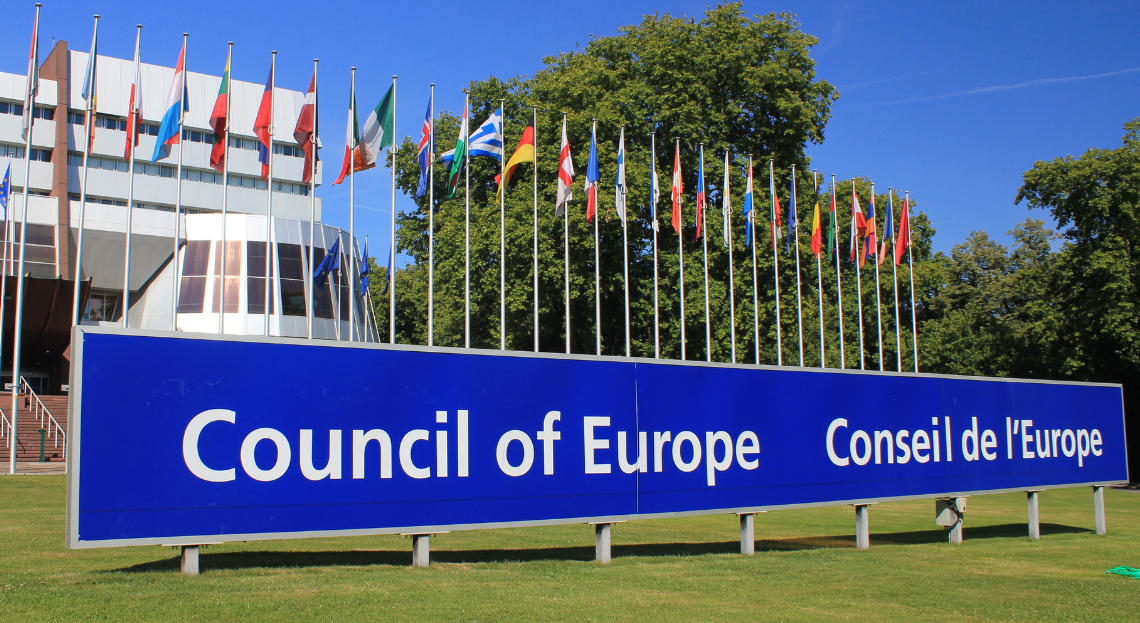
The Congress of Local and Regional Authorities of the Council of Europe adopted a resolution on the situation of local and regional democracy in Georgia.
The relevant resolution was adopted at the session of the Congress of Local and Regional Authorities of the Council of Europe.
The resolution was supported by 101 MEPs, with 10 against and 3 abstentions.
The resolution expresses the Congress’s concerns on the following issues:
“Amid deepening polarisation in Georgia, the rapid and dramatic democratic backsliding observed over the past two years, has affected local democracy in Georgia increasingly: this has intensified in the aftermath of the 2024 parliamentary election, which were rejected by all opposition parties, domestic and some international election observers, notably due to concerns over their integrity, and of the decision to halt Georgian EU accession on 28 November 2024;
the progressive marginalisation of the opposition from the political scene and the lack of dialogue between the authorities and the opposition has led to a de facto absence of political pluralism, including in municipal councils. This situation has led to anexcessive concentration of power by the ruling party, and has prompted the opposition to boycott all decision-making bodies, shrinking the space for negotiation and mediation;
following the highly controversial adoption of the Law on Transparency of Foreign Influence and the Foreign Agents Registration Act (FARA) adopted in first reading, there has been increased intimidation and stigmatisation of NGOs and dissenting voices in the media, which work under increasingly challenging conditions, undermining their freedom of association and freedom of expression. In a democratic society, freedom of expression must be protected, supported and promoted irrespective of whether it is critical of the government, and even if it is influenced by international discourse;
the brutal repression of peaceful protesters and opponents by law-enforcement authorities in many cities and particularly in the capital city of Tbilisi, has violated both the freedoms of expression and assembly. Moreover, freedom of assembly in Georgia has been negatively affected by recent legal amendments to increase sanctions and offences related to public demonstrations, which according to the Venice Commission introduced “vague and broadly framed provisions, granting the authorities [including local authorities] excessively broad discretion in their application”. This situation forced to local authorities to take decisions that are not compliant with democratic standards;
the instrumentalisation of public institutions including at local level, has resulted in numerous reports of dismissals, intimidation and pressure on civil servants, facilitated by the adoption of amendments to the Law on Public Service;
the recent findings by both international and domestic observers have also raised concerns regarding the politicisation of public administration, widespread misuse of administrative resources and pressure on voters during electoral campaigns, unduly tilting the playing field between candidates and distorting voters’ will;
the legal framework applicable to local elections in Georgia has been amended repeatedly, more than 20 times since the last elections without extensive consultations and broad consensus, which is not in line with the principle of stability of electoral law. The amendments have reinforced the dominant position of the ruling party in the Central Election Commission, undermining its independence, and have also wound back fundamental rules pertaining to the electoral system, gender quotas and the establishment of electoral districts.
consequently, the many shortcomings and challenges affecting the respect of democracy, rule of law and human rights have led to a collapse in public confidence in democratic institutions for large parts of the Georgian population, and notably the young people, and damaged local democracy, which is not conducive to holding the 2025 local elections in a trust-based environment; in fact, it risks exacerbating the situation.
In the light of the above, the Congress:
instructs the Monitoring Committee to continue its work to extend the guarantees for free and fair elections applicable to local and regional electoral processes and to delay the visit to monitor the application of the European Charter of Local Self-Government to after the upcoming local elections;
stands ready to carry out, if necessary, a fact-finding or high-level visit, depending on the progress made on fulfilling the points raised in Recommendation 526 (2025) and invites the Standing Rapporteur on Human Rights to take part in such a visit to assess the situation of human rights at local level in the country;
invites its Bureau and Monitoring Committee to introduce a standing item on the agendas of their future meetings to discuss the situation of local democracy in Georgia until Recommendation 526 (2025) has been fully implemented;
continues to support the implementation of the Council of Europe Action Plan for Georgia (2024-2027) through dedicated cooperation projects; and in particular, reinforce the capacities of local authorities and their representative association, to work as a fully-fledged intermediary to promote the needs and identify the challenges existing at local level;
calls on the National Association of Local Authorities of Georgia to ensure that it serves as the representative body of all local authorities, not only those in which the majority of seats are held by the ruling party and that all political actors take part in its work;
The Congress stands ready to pursue its political dialogue with the delegation of Georgia to the Congress, in its full composition, to cooperate on the implementation of Recommendation 526 (2025) and the present Resolution”, reads the resolution.