GYLA: Different judges may have different legal views on different legal issues, but it is clear that the decisions of judges in activists’ cases are always directed against the activists, which once again emphasizes that these cases include motives of political persecution
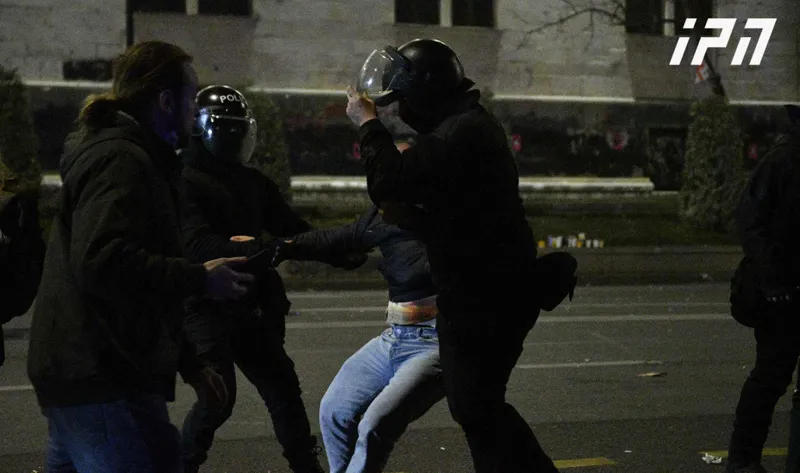
Different judges may have different legal views on different legal issues, but it is clear that the decisions of judges in activists’ cases are always directed against the activists, which once again emphasizes that these cases include motives of political persecution, - this is how the Young Lawyers’ Association assesses the pre-trial hearing stage of criminal cases related to protests.
As noted in the assessment published by GYLA, the problems have been identified as a result of observing the pre-trial hearings, including the disregard for the principle of publicity.
“GYLA is monitoring the processes of considering criminal cases related to the protests. At this stage, the total number of persons detained in the context of the protests (including those detained during the protests related to the Russian law - in the spring of 2024) is 64. Of these, the consideration of the cases of all ten persons detained during the protests against the Russian law has been completed in the court of first instance, all of them were found guilty by the court and eight out of ten were sentenced to imprisonment. At present, the majority of the defendants in the context of the protests, who were sent to pre-trial detention at the very first stage (40 out of 46 persons), remain in custody.
The following problems have been identified as a result of monitoring the pre-trial hearings: the issue of admissibility of evidence.
In the aforementioned criminal cases, the court fully recognized all the evidence of the prosecutor's office (the prosecution) as admissible, with the exception of one case, Mzia Amaglobeli, where the judge excluded one witness from the list of people to be questioned in court. In the cases of eight (Nikoloz Javakhishvili, Tornike Goshadze, Irakli Miminoshvili, Zviad Tsetskhladze, Vepkhvia Kasradze, Vasil Kadzelashvili, Giorgi Gorgadze and Insaf Aliyev) and eleven persons (Andro Chichinadze, Onise Tskhadadze, Guram Mirtskhulava, Jano Archaia, Luka Jamburia, Ruslan Sivakov, Revaz Kiknadze, Giorgi Terashvili, Valeri Tetrashvili, Sergey Kukharchuk and Irakli Kerashvili), several representatives of the defense filed motions to exclude video recordings from the list of evidence submitted by the prosecutor's office, as they believed that video recordings published in public sources should be requested through investigative actions related to computer data - requesting a document or information - Article 136 of the Criminal Procedure Code. In particular, if there is a reasonable assumption that information or a document important for a criminal case is stored in a computer system, the prosecutor or the defense party is authorized to apply to the court with a motion to issue a ruling to request the relevant information or document.
According to the defense, the video materials that were posted in public space (on the YouTube platform, social networks or on the pages of certain media outlets) should have been inadmissible on the grounds that the rules for obtaining them were violated; not Articles 125-126 of the Criminal Procedure Code, but a special Article 136 should have been applied to them, since the case concerned computer data.
The judge did not satisfy the defense's motion, while in the case of Mzia Amaglobeli, the judge in the Batumi City Court granted the prosecutor's motion of a similar nature and declared the evidence obtained by the defense inadmissible”, reads the report.
"It is true that different judges may have different legal views on different legal issues, but it is clear that the decisions of judges in activist cases are always directed against the activists, which once again emphasizes that the motives of political persecution are evident in these cases," says GYLA's assessment of the pre-trial hearing stage of criminal cases related to the protests.