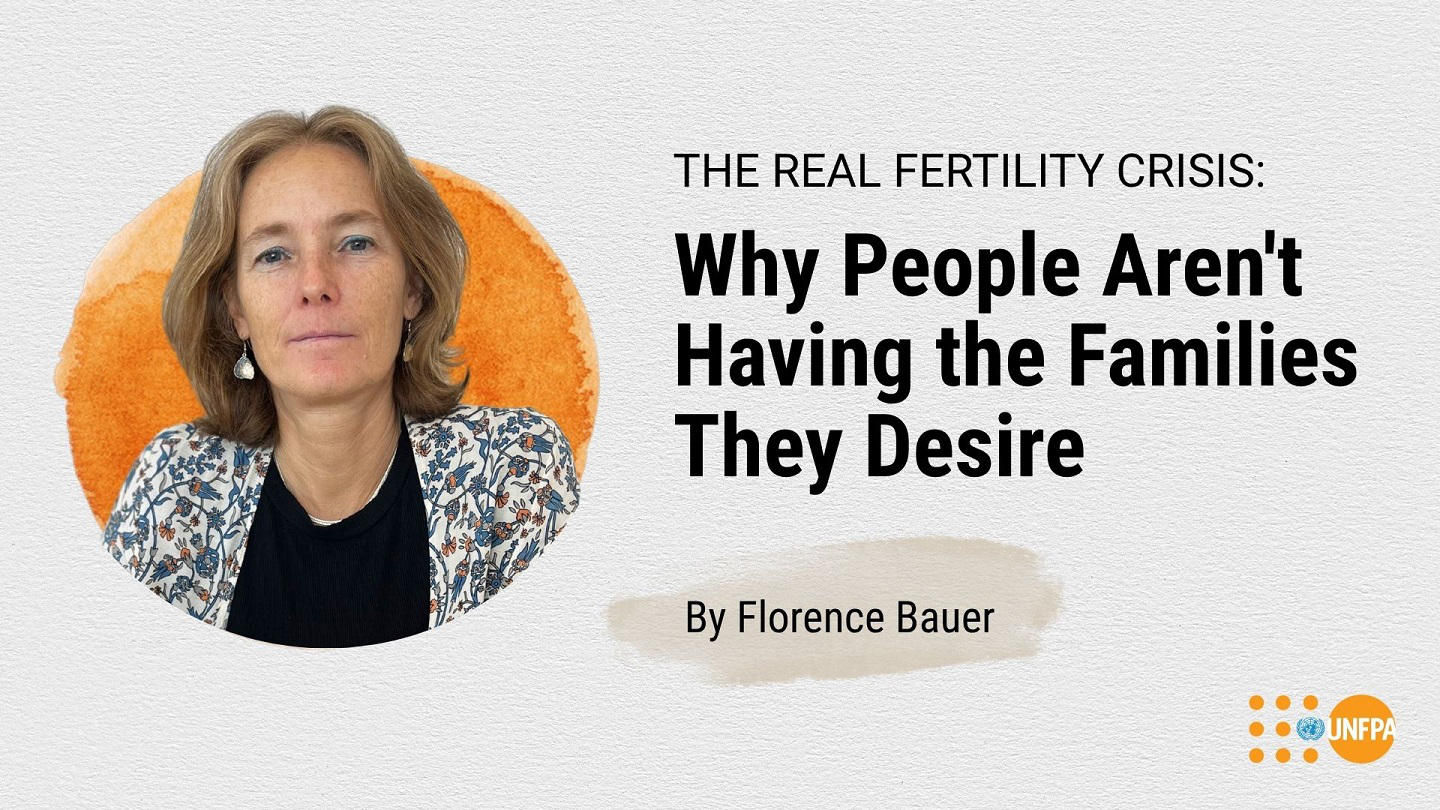
The Real Fertility Crisis: Why People Aren't Having the Families They Desire
What's happening with birth rates around the world? It seems almost daily we're bombarded with alarmist headlines about yet another country's birth numbers hitting a historic low. In some places, like Ukraine and South Korea, birth rates have plummeted below one child per woman on average. Even in countries with traditionally high fertility, rates are collapsing; Türkiye, for example, saw its rate drop from 2.2 to under 1.5 in just a decade. Fertility trends across much of the northern hemisphere appear to be headed in only one direction: down.
Why is this happening? When asked how many children they want, most people everywhere generally say two or more. So, something must be making it difficult for people to actually have the number of children they desire, causing them to change their family plans as they go through life.
A new report from UNFPA, the United Nations Population Fund, now sheds light on what prevents people from having the families they want. We surveyed 14,000 people in 14 countries globally to understand the challenges they face.
The biggest hurdle is economic. More than half of people (54 percent) said their financial situation, lack of affordable housing, job insecurity or the high cost of childcare has played, or could play, a role in them not having the number of children they wanted.
Other factors include health issues like infertility (24 percent), fears about the future (19 percent) and sexist norms and relationship issues. This includes people not finding the right partner to have children with (14 percent) and an increase in singlehood, driven in part by diverging gender attitudes and values held by young men and women. It also includes people finding their partner’s contribution to stemming the care burden insufficient (11 percent).
The report paints a picture of a world where vast numbers of people are simply unable to have the families they want. Among people over 50, who have mostly finished their childbearing years, a stunning 40 percent said they ended up with fewer children than they had hoped for.
Perhaps surprisingly, even in countries with low birth rates, there are still quite a few people who have had more children than they wanted. This suggests that people still face difficulties getting access to contraception and avoiding unintended pregnancies. (And, of course, this problem is much more severe in countries with high birth rates.)
With so many people unable to form the families they desire, and such a wide range of reasons influencing their decisions, the report's message for governments worried about their country's demographic future is clear: Low birth rates aren't the real crisis; they are just a symptom. The true crisis is our failure to remove the barriers that prevent people from achieving their family dreams and having the number of children they wish for.
The report’s findings also help us understand why so many government attempts to encourage more births with various "baby bonuses," tax breaks, or other financial incentives have failed.
The costs of having a child, both financially and, especially for women, in terms of lost career opportunities, are generally so high that even generous government payments only cover a small part.
What's more, financial support doesn't fix many of the other issues that influence people's choices. What about the difficulties many young people face in finding a suitable partner? What about the social norms that still put the main burden of childcare squarely on women's shoulders? What about the tough choice many women, in particular, are still forced to make between having children and having a job? And what about the fears many people have about their future and the future of our planet?
Creating a world where people can have the families they desire requires more than just money handouts. Putting pressure on people to have more babies doesn't help either. In fact, it risks undermining people's reproductive rights and undoing the hard-won progress we've made on gender equality.
Instead, we need governments to genuinely listen to the concerns of young people, especially, and take them seriously. We need governments to show that they won't sacrifice women's equal rights and their freedom to make decisions about their own bodies for the sake of population numbers. And we need governments to step up support for people when it comes to things like affordable housing and childcare, flexible work and parental leave policies, preventing and treating infertility, and promoting more equitable gender norms.
What we need, in short, is the creation of societies that are truly child- and family-friendly, but in a way that preserves, and indeed advances, gender equality and reproductive rights, and fully respects the right of people not to have children.
There's no single button governments can push to easily make fertility rates go up or down whenever they want. But they can dismantle the obstacles that stand between people and their reproductive desires, ensuring that everyone can have the number of children they want.
–
Florence Bauer is UNFPA Regional Director for Eastern Europe and Central Asia.