Giorgi Akhobadze: They think they are putting us on trial, but in reality, they are sentencing themselves; They try to scare us with prison, but no one can take away my freedom - If I have the right, I call on you to fight, using the words of Mzia Amaghlobeli: ‘Fight before it’s too late'
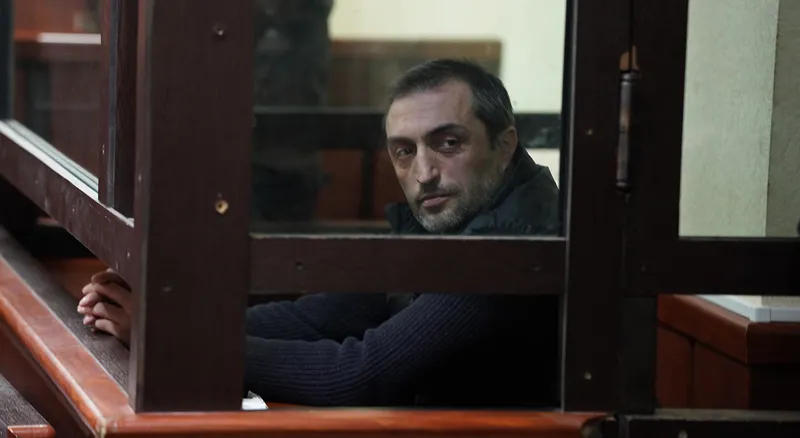
"If I have the right, I call on you to fight, in the words of Mzia Amaghlobeli: ‘Fight before it’s too late.’ If we delay, the outcome will be dramatic and difficult to reverse." – this is what Giorgi Akhobadze, who is charged with a drug offense, said during his court hearing.
At this moment, Akhobadze is delivering his final statement, after which the judge will announce the verdict.
The judge interrupted Akhobadze’s final statement three times, stating, "The court will not listen to insults."
Before giving his final remarks, Akhobadze addressed the judge, saying that during the previous hearing, the judge’s comment that his right to defense had not been violated was a sign of a prejudged opinion about the case.
“We must begin with the motive — if I describe it in one sentence, it’s revenge against me. They couldn’t defeat me by any other means — not through threats, not through acts of vandalism, like posters and graffiti. So they resorted to a banal and standard ‘planting’ – the Interior Ministry’s trademark of recent years.”
“Police officers, prosecutors, judges — they’re all part of this revenge.”
At this point, the judge interrupted him and told him to remove such statements about the judiciary from his speech.
“The police know better than anyone that they’ve destroyed themselves. They think they’re putting us on trial, but they’re actually sentencing themselves… The Tsulukiani cannot pass judgment on us.
If I have the right, I call on you to fight, in the words of Mzia Amaghlobeli: ‘Fight before it’s too late.’ If you delay, the consequences will be dramatic and hard to fix. They try to scare us with prison, but I’ll tell you — prison isn’t scary. The only issue is that my struggle doesn’t fit within these 20 square meters. That’s my discomfort. No one can take away my freedom.
It all started with a false report… With physical violence, they planted drugs in my pocket — the head of the unit was present. That official was in contact with another high-ranking figure, Levan Maisuradze. During the search, they illegally collected a sample of my saliva and transferred it onto the drug packaging. They were required to record the search and bring a neutral witness — but they didn’t do any of that. After they seized this garbage, they didn’t even search my car or basement. The police officer couldn’t even describe my house or building.
They claim I’m an active buyer and user of drugs. I offered them a hair and nail test — they wouldn’t have found anything, because I’m clean.
The killer prosecutor Shmagi Gobejishvili and the killer Lela Maridashvili, without any grounds, separated a mother from her only caregiver."
At that point, the judge again interrupted Akhobadze.
“I will not tolerate such remarks about the court,” Judge Tkeshelashvili declared.
“They are what I said they are… The prosecutor was obligated to conduct a thorough and objective investigation, which he didn’t do.”
“They accuse me of having the drugs in my pocket — that means there should be fingerprints. The prosecutor didn’t order a fingerprint test and instead presented falsified DNA evidence.”
"They stole my saliva and placed it on the packaging. Lying police, judges…”
Once again, the judge interrupted him.
“The court has warned you several times. While final statements should not be interrupted, no one will listen to insults here. This is your final warning — one more offensive word about any judge and the hearing will continue without you.”
After this, Akhobadze resumed his statement.
He described in detail the episode of his arrest, noting that five cars and over ten police officers were involved.
He also emphasized that “the search was not recorded.”
“They didn’t record the search, and now they’re trying to prove the drugs belonged to me. But if someone touches an object, it must contain traces of their DNA — this evidence is fabricated. The presence of my fingerprints would be objective proof,” Akhobadze said.
For reference: Doctor Giorgi Akhobadze was arrested on December 7 while returning home from a protest rally held on Rustaveli Avenue. He was charged under Article 260, Part 6 of the Criminal Code of Georgia, which refers to the illegal purchase and storage of a large quantity of narcotic substances.
This crime is punishable by 8 to 20 years or life imprisonment.