According to the lead investigator in the case of Andro Chichinadze, Onise Tskhadadze, and 9 other individuals: a direct connection between the defendants and the organizers of the crime has not been established
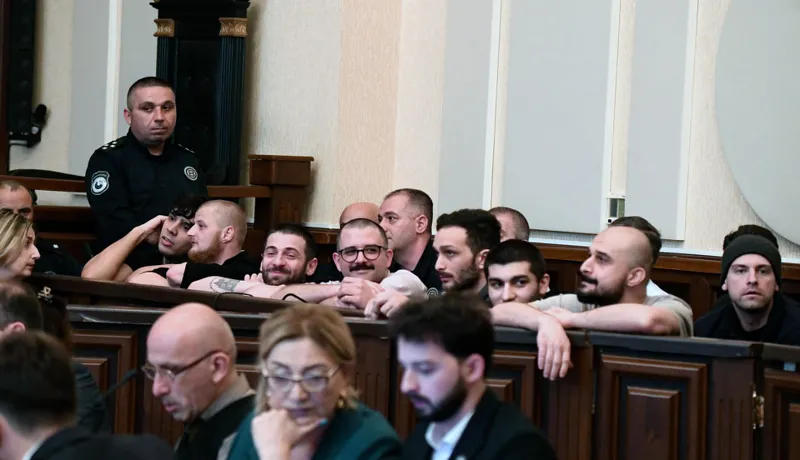
The lead investigator in the case of the 11 individuals detained during the protest, Arsen Khunashvili, stated that “a direct connection between the defendants and the organizers of the crime has not been established.”
According to his explanation, the organization of the crime must be determined through the defendants’ mobile phones, which have been sent for forensic examination. He noted that he did not personally review the phones prior to sending them for examination.
As the main investigator, Arsen Khunashvili, testified as a witness, he stated that his role was limited to reviewing videos.
During the court hearing, he answered questions from the defense lawyers. In response to a question from Irakli Chomakhashvili, the attorney representing Giorgi Terishvili, Khunashvili confirmed that he had not retrieved call records (incoming/outgoing) from cell towers related to Terishvili’s phone.
Another defense attorney, Irma Chkadua, representing Valeri Tetrashvili, asked the witness: “Is there any evidence that confirms Valeri Tetrashvili’s connection to the organizers?”
The witness replied that this would have to be determined through forensic analysis of the phone.
“This can only be determined through phone forensics. At this stage, no direct link between Valeri Tetrashvili and the organizers has been established,” said Arsen Khunashvili.
Judge Nino Galustashvili then asked the witness to answer the same question in the context of the other detainees.
“There are videos showing several individuals together. It’s possible they are connected to each other. However, no direct link to the organizers is evident,” Khunashvili said.
For context, during the protest rallies near the Parliament, 11 individuals were detained on charges of participating in group violence.
The detainees – Andro Chichinadze, Onise Tskhadadze, Jano Archaia, Ruslan Sivakov, Luka Jabua, Guram Mirtskhulava, Valeri Tetrashvili, Giorgi Terishvili, Irakli Kerashvili, Revaz Kinadze, and Sergei Kukharchuk – have been charged under Article 225, Part 2 of the Georgian Criminal Code, which pertains to participation in group violence.
This offense is punishable by 4 to 6 years of imprisonment.