CEC: Another statement by the European Parliament violates the presumption of innocence - in the pre-election period, we may consider such statements as an attempt to influence the electoral process and reduce trust in it
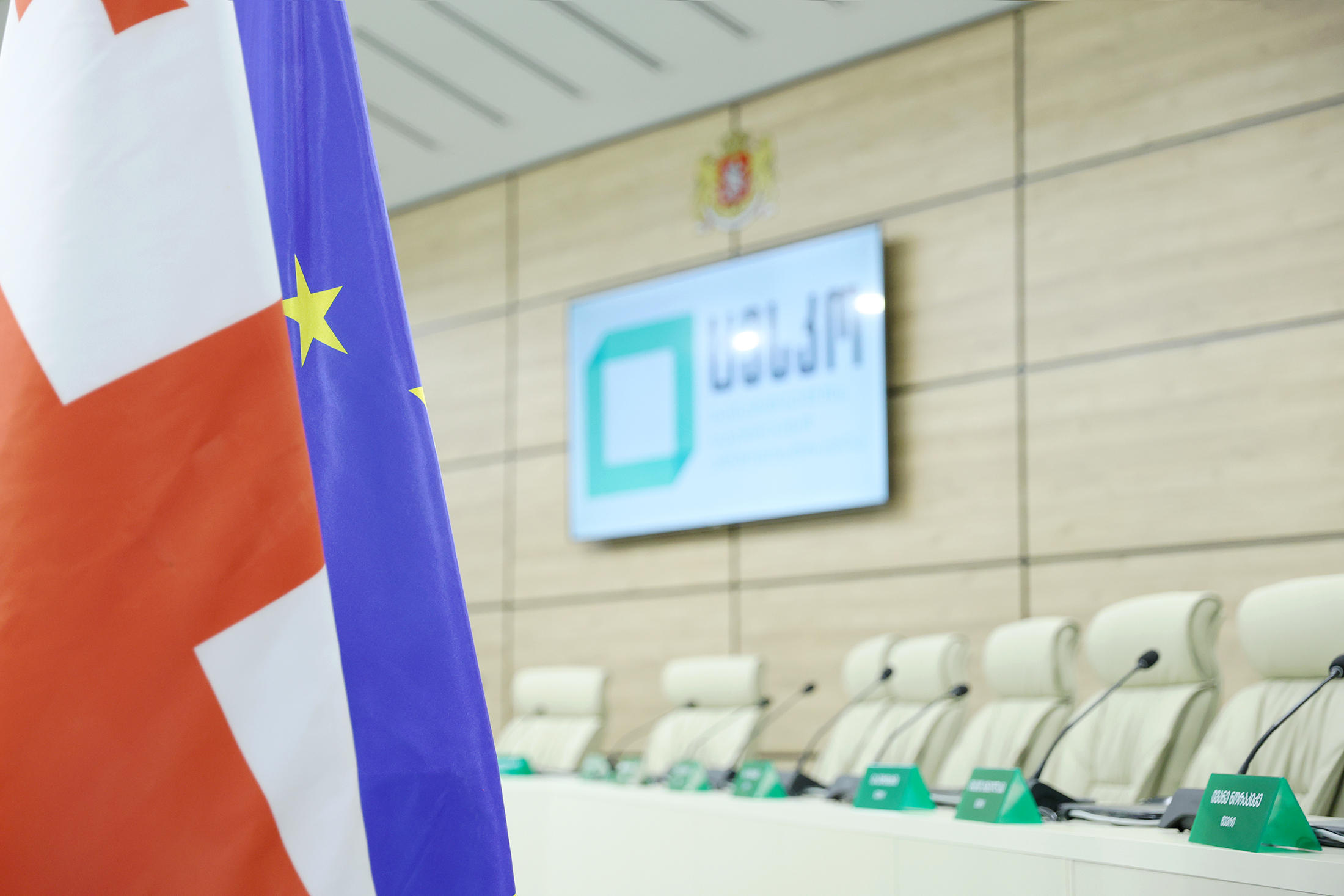
The election administration considers another statement of the European Parliament as a violation of the legal principle of the presumption of innocence. And in the context of the fact that municipal elections are to be held in just a few months in the country and it is actually the pre-election period, such statements can be considered as an attempt to influence the electoral process and reduce trust in it, - reads a statement issued by the Central Election Commission, in which they respond to the information published on behalf of the European Parliament regarding the October 26 elections.
As stated by the CEC, the election administration expresses concern regarding the opinions, where the October 26 elections are referred to as "rigged".
"The election administration expresses concern regarding the opinions expressed in the statements recently published on behalf of the European Parliament, where the October 26 elections are referred to as "rigged".
The Central Election Commission has so far made a number of public statements regarding the October 26 elections and explained in detail the circumstances related to these elections, including the facts of an attempt to discredit the 2024 elections based on unsubstantiated allegations. It has held meetings with the parties involved, including representatives of the international community, and has addressed an open letter to the Parliamentary Assembly of the Council of Europe in response to the spread of disinformation. Despite these activities, unfair accusations are still being heard that are not based on any evidence. An example of this is the statement recently published on behalf of the European Parliament.
It is incomprehensible to the election administration for such an unprecedentedly biased statement to be made by an organization that, as a rule, should base its positions on facts and solid arguments. Statements based solely on perceptions and without facts and arguments leave the impression of being politically motivated, which is somewhat insulting and degrading to the tens of thousands of election administration employees who organized the October 26 elections.
We would like to remind the public and MEPs that out of 53,210 members of the 3,111 precinct election commissions created for the 2024 parliamentary elections, 25,261 were appointed by 9 authorized parties. To be more specific, 8 out of 17 members of each commission were appointed by the so-called opposition parties' quota, and only nine of them expressed a different opinion in the summary protocols drawn up on election day. Against this background, it is completely unacceptable to question the honesty and integrity of the commission members. The aforementioned numbers and factual circumstances reflect the transparency and multi-party nature of the election process.
It is known that after the announcement of the results of the parliamentary elections of October 26, 2024, based on the widespread statements regarding “alleged fraud”, the election administration on its own initiative addressed the Prosecutor’s Office of Georgia and requested the initiation of an investigation in order to objectively assess the widespread allegations. It is clear from the interim statement of the Prosecutor’s Office that no one has presented any specific evidence of the voiced allegations. No evidence has been presented either to the election administration or to the relevant court instance during the process of considering election disputes. Given that the violations mentioned in the voiced allegations did not actually occur, the corresponding facts/evidence naturally do not exist.
In addition, it is unclear why the European Parliament does not take into account the OSCE/ODIHR conclusion regarding the October 26 elections and the statements made directly by the representatives of the observation mission, where they directly stated that the 2024 parliamentary elections were held at a high professional level and reflected the will of the voters. As we have already stated on this issue many times, the OSCE/ODIHR conclusion expresses certain concerns and recommendations regarding a number of issues related to the electoral process, as is usually the case in various countries, is characteristic of electoral practice and in no case constitutes a basis for ignoring the legitimacy of the elections, especially given that the conclusion does not mention election fraud.
Based on all of the above, the election administration considers another statement of the European Parliament as a violation of the legal principle - the presumption of innocence. And in the context of the fact that municipal elections are to be held in the country in just a few months and it is actually the pre-election period, such statements can be considered as an attempt to influence the electoral process and reduce trust in it.
In conclusion, we once again appeal to all relevant persons to verify the information provided to you with the primary source, in this case the election commission, before publishing a public opinion/assessment regarding the October 26 elections in the European Parliament.
Do not look at the process superficially and do not repeat the opinions of politically interested parties without relevant evidence.
We remain ready for full cooperation, constructive dialogue and open communication, which is in line with international standards and common values,” reads the statement.
For information, the European Parliament, following its resolution on Georgia, stated in a statement released on July 9 that Georgia’s rigged 2024 elections were a turning point in the establishment of authoritarian rule. They also said that the rigged elections paved the way for the ruling party, Georgian Dream, to illegally seize state institutions, adopt repressive legislation, and take repressive measures against political opponents, journalists, and peaceful demonstrators. According to the same statement, the European Parliament condemns democratic backsliding and repression in Georgia and once again calls for new parliamentary elections in Georgia under international and independent local monitoring.