Beka Basilaia on Murta Zodelava’s Actions: This was not an overthrow of the constitutional order - it was an attempt to return to Georgia’s Constitution - this was not violence, but an effort to prevent the violence carried out by “Georgian Dream”
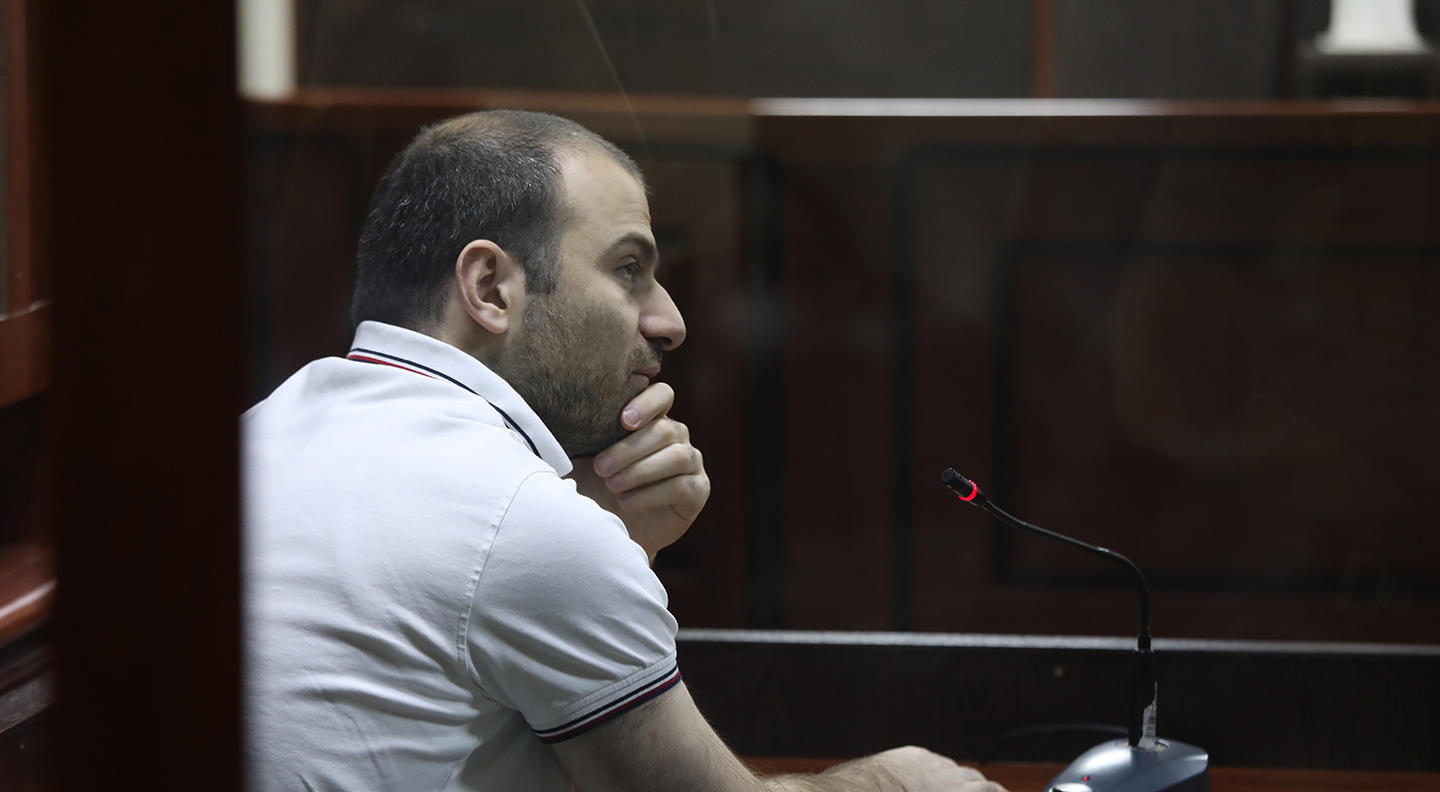
“There is tyranny in the country, and the form of protest expressed by these people against tyranny cannot be considered a crime. When the prosecution claims this was violence and the organization of violence, in reality, it was an attempt to prevent the violence that ‘Georgian Dream’ has been perpetrating in recent times,” stated Beka Basilaia, the lawyer for Murta Zodelava and Paata Manjgaladze, who were detained in connection with the events of October 4, during a court hearing.
According to him, in reality, it is “Georgian Dream” that is perpetrating violence, and October 4 was an act of liberation from that violence.
As the human rights defender stated, hundreds of thousands of Georgians not only sympathized with this process but also looked upon it with hope.
“In this case, the prosecution probably believes it is armed with the strongest evidence and arguments compared to politically motivated criminal cases in recent years. In reality, what is written in the prosecution’s formulation was seen by the entire society with their own eyes. I’ll say more—I am a participant in what the prosecution is accusing. I believe hundreds of thousands of Georgians not only sympathized with this process but also looked at it with hope. This is not a political statement from a lawyer; it is an assessment of the reality of the case and the situation… This was not an overthrow of the constitutional order; it was an attempt to return to Georgia’s Constitution. When the prosecution claims this was violence and the organization of violence, in reality, it was an attempt to prevent the violence that ‘Georgian Dream’ has been perpetrating in recent times,” Basilaia stated, after which the judge, Maridashvili, interrupted him.
“Do not make such offensive statements,” the judge addressed the lawyer.
“Who is offended? Are you?” the lawyer responded with a question, to which the judge instructed him to “refrain from political statements.” The judge added that he was not restricting statements but urged that no one make offensive remarks.
In response, the lawyer asked the judge to specify what was offensive so he could take it into account in the future. He also noted that the case is political and he could not avoid addressing it as such.
“For the past year and a half, hundreds of people have been bloodied and beaten, and not a single perpetrator has been held accountable… We are not talking about another case. Is it not important what caused the uprising? Even if I agreed with the prosecution, is the motive not important?!
On the night before October 4, on October 3, two activists, including a 15-year-old minor, had their heads bashed, and no one was detained. The police showed us footage of how the perpetrators were escorted away, not how they were detained. In this situation, what else is left for the prisoners presented here, in this case, Murta Zodelava, but to try to make an effort to return the country to its constitutional framework,” Basilaia stated.
This time, the prosecutor, Tamar Bezhuashvili, interrupted the lawyer’s speech, which led to a verbal dispute between the parties.
Specifically, the prosecutor stated that the lawyer was talking about unrelated circumstances and that his aim was to prolong the process, to which Basilaya responded: “Where is it written that you have the right to make such interventions?!”
“I protest. Please set a reasonable time limit and allow each of them to speak about the case materials and not about other circumstances… Be assured, you yourself do not know the rules of conduct and ethics in court. Reprimand him; he should not dare to speak to the prosecution in this manner,” the prosecutor stated.
In response, Basilaia told the prosecutor that in his speech, he was explaining what led to the charges and urged her not to interrupt him.
“Show me the criminal procedure norm that allows the other side to interrupt a lawyer while formulating their position. I didn’t continue in two voices and let the lady finish, but what right does the other side have to interrupt me?! Tell me the norm. I am citing examples. There is tyranny in the country, and the form of protest expressed by these people against tyranny cannot be considered a crime. Why don’t I have the right to reference the facts that led to October 4? In my speech, I am explaining what caused the charges, so don’t interrupt me,” the lawyer stated.
According to Beka Basilaia, Murta Zodelava was not at the October 4 protest to physically confront any police officer.
“When it comes to Murta Zodelava’s speech, he said nothing about ‘hitting or insulting any police officer.’ There was no such thing. Murta Zodelava said, ‘Police officers, when the regime treats you this way, you should not be servants of the regime; you should be servants of the people’… That was the essence of this protest. Zodelava was not there to physically confront any police officer.
As for the President’s Palace—there was talk of symbolically ‘taking the keys’ to the President’s Palace. Every phrase has great significance. Taking the keys is a symbolic act and does not imply any violence,” Basilaia stated.
Furthermore, the lawyer noted that pre-trial detention measures should not be applied to the accused.
According to him, “these people are the best part of our nation,” and “the time will surely come when they will stand side by side with those who led the 1924 uprising.”
“What the prosecution accuses us of, we cannot accept, because these actions were aimed entirely at returning to Georgia’s constitutional framework, not anything else.
The time will surely come when everything will be called by its proper name. In reality, this is not just a fight for Georgia’s European future. We are fighting so that Russia does not swallow us, because what is happening here is pleasing to Russia. The time will surely come when these people, whom you see here today, will stand side by side with those who led the 1924 uprising.
There are no expectations. Pre-trial detention measures should not be applied to these people. These people are the best part of our nation,” Basilaia stated.
For reference, Murta Zodelava, Paata Burchuladze, and Irakli Nadiradze have been charged under Article 19-222, Part 2(a) of the Criminal Code of Georgia (attempt to seize and block strategic and particularly important objects, committed by a group); Article 225, Part 1 (organization and leadership of group violence); and Article 317 (incitement to violently change Georgia’s constitutional order and overthrow the state government), which provides for imprisonment of up to 9 years.
Lasha Beridze has been charged under Article 19-222, Part 2(a) of the Criminal Code of Georgia (attempt to seize and block strategic and particularly important objects, committed by a group) and Article 225, Part 1 (organization and leadership of group violence), which provides for imprisonment of up to 9 years.
Paata Manjgaladze has been charged under Article 225, Part 1 (organization of group violence), which provides for imprisonment of up to 9 years.