Nika Gvaramia: Whoever bans us, we will bury them - obviously politically and professionally - I intend to get involved in the process, walking from prison to Batumi to represent the party and myself in the Constitutional Court
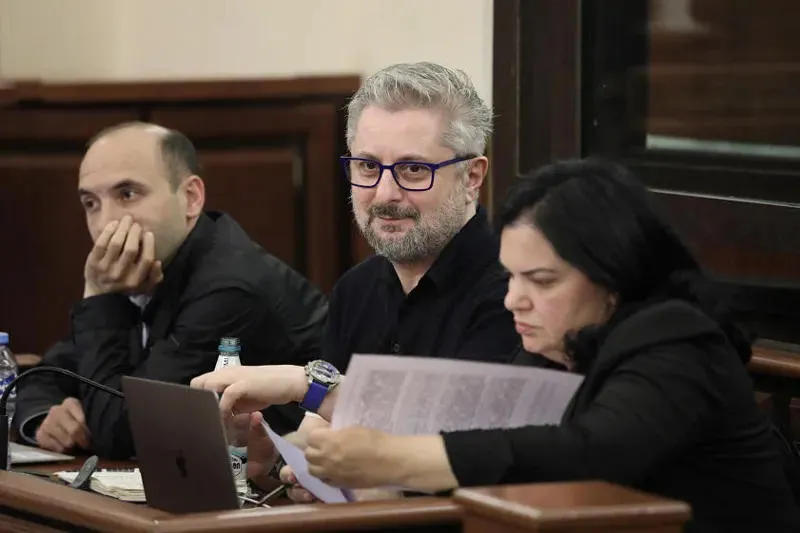
"Whoever bans us, we will bury them. Obviously, we will bury them politically and professionally," writes Nika Gvaramia, leader of the "Coalition for Change" and currently imprisoned, in a statement shared on his Facebook page.
Nika Gvaramia is responding to "Georgian Dream's" constitutional lawsuit regarding the banning of parties.
According to Gvaramia, he intends to get involved in the process and walk from prison to Batumi to represent the party and himself in the Constitutional Court.
In Gvaramia's assessment, what is happening is very necessary and beneficial—moreover, hopeful. According to the opposition figure, "a dictatorship, before it collapses, must conquer every peak of madness and pass the point of no return"—it simply doesn't happen otherwise.
"Whoever bans us, we will bury them. Obviously, politically and professionally. On banning parties, I will say 3 things (besides the above): I absolutely intend to get involved in the process and walk from prison to Batumi to represent the party and myself in the Constitutional Court. In every profession, they promise to ban me, as I see (journalist, politician, lawyer), and I will use my constitutional expertise in something before they ban that too—plus, I'll have fun," Gvaramia writes in his statement.
He also addresses the issue of parties not yet on the ban list. In Gvaramia's view, the government is currently focused only on banning parties that passed the electoral threshold but will quickly act against other entities if needed.
"I want to separately and emphatically note about the parties that 'have not yet been banned.' It's simple: they plan to review the case quickly, and anyone who doesn't see the difference between 3 respondents and 10 should know that each respondent comes with their own representatives, experts, circumstances to examine, and the full remaining set of procedural rights and procedures. Individual persons are not in the lawsuit for the same reason—they would each be separate respondents with their full litigation package. So, they neither spared anyone, avoided anyone, nor made a deal with anyone. These conspiracy theories on this and other topics are absurd, baseless, and damaging. In short, it's about quickly resolving the issue, and they went the route of banning threshold-passing electoral subjects; they can 'arrange' banning others in 14 days at any time," Gvaramia writes.
The leader of the "Coalition for Change," Nika Gvaramia, notes that in reality, it's not about specific political entities but the complete cancellation of elections.
In Gvaramia's assessment, the main problem is the loss of electoral competitiveness, which automatically excludes its legitimacy.
Gvaramia also noted that banning parties is the most severe form of political score-settling and states that for the ruling party, protest and political competition are the only serious obstacles:
"In reality, it's not parties that are banned—elections are banned. Whoever remains or whatever is created, without the 3 most highly rated mainstream subjects (even if 2 or 1), elections do not meet the free election standard in terms of competitiveness. Accordingly, there is simply no theoretical chance for the legitimacy of its results (even if a fabricated opposition wins). Competitiveness is the first filter for election legitimization; all other aspects, including various forms of rigging, are checked only after that. If you fail the first filter, the rest is meaningless—zero legitimization.
So, let's not trouble ourselves too much with conspiracies, and certainly not engage in naive or unscrupulous party engineering. Neither serves us.
Yes, politicians and parties don't exist, they say—non-existent and insignificant things aren't banned. They ban us because we harm the system and cause discomfort to its flock. Moreover, in international practice, there is no heavier decision than banning a party, so the question is: why did the regime skip any other option to ban organizations or subjects and go straight for the heaviest self-damaging step of first banning protests and then parties? On the path to full dictatorship, it considered these two things—and not others—the most significant obstacles. Obviously, that's why.
And finally, what is happening is very necessary and beneficial—moreover, hopeful. A dictatorship, before it collapses, must conquer every peak of madness and pass the point of no return. It simply doesn't happen otherwise. Therefore, the pace and consistent movement that Georgian Dream follows in this regard, like a rolling avalanche, only provides grounds for optimism. Just a little more!" Gvaramia writes.