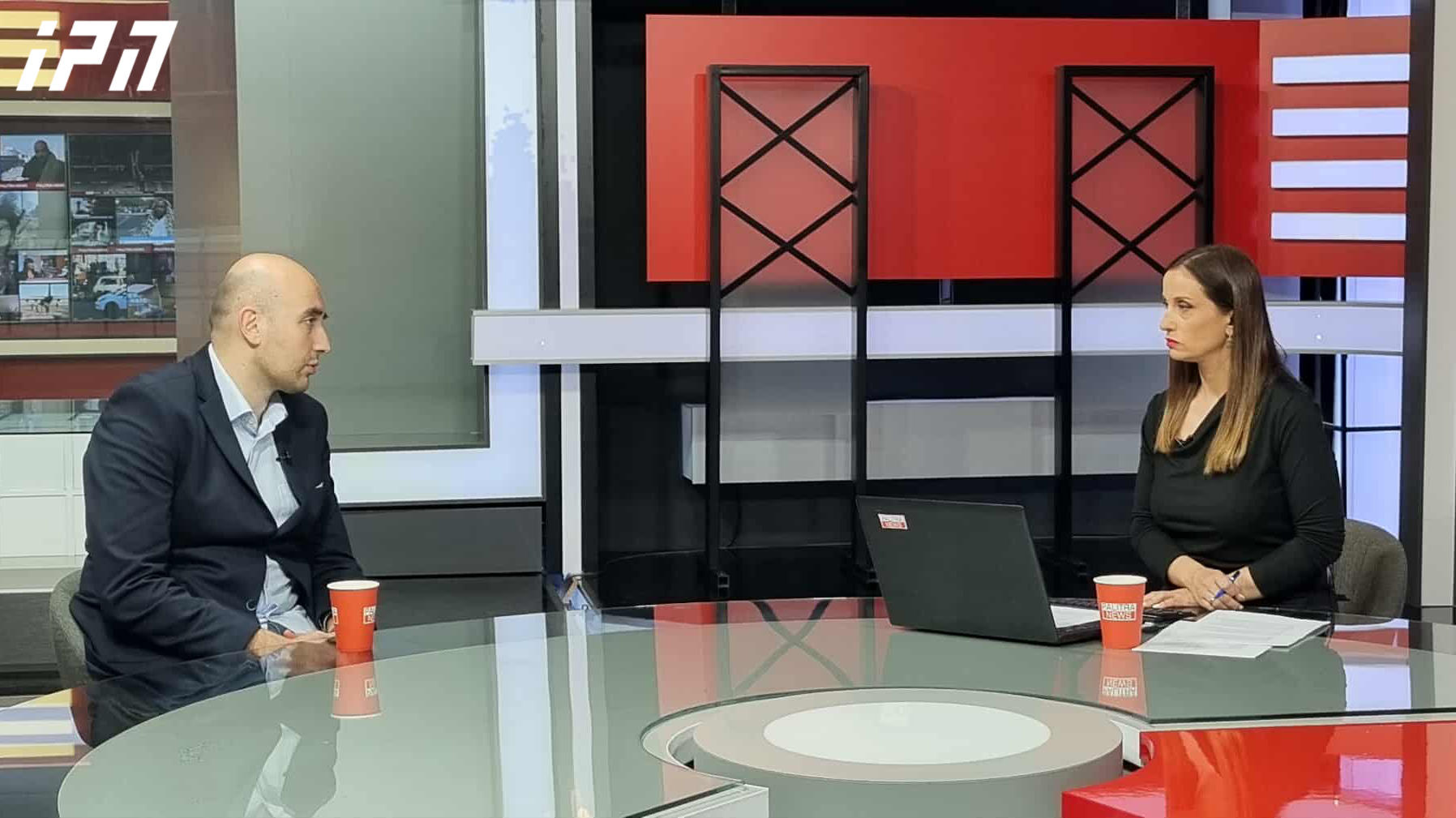
“If anyone thinks that in this country someone will be banned and political life will continue afterward, they are very mistaken. In this country, it is not the ‘United National Movement’ that is being banned — politics itself is being banned,” said Irakli Pavlenishvili, Deputy Secretary General of the “United National Movement,” on PalitraNews’ program “360 Degrees,” commenting on the constitutional lawsuit prepared by the ruling party, Georgian Dream, regarding the banning of political parties.
According to Pavlenishvili, the rights of nearly a million Georgians to hold and express political opinions are being restricted, and these people “will go to the streets, protest, and resist.”
“So far, we have had significant support, but I want to say one thing: if anyone thinks that someone will be banned in this country and political life will continue afterward, they are very mistaken. In this country, it is not the ‘United National Movement’ that is being banned — it is politics. That is why Papuashvili said that if someone else forms a party that has such support and is connected with the ‘Deep State,’ that party will also be banned. They are not banning a specific politician — whether an old member of the United National Movement who remains, or even me, Irakli Pavlenishvili, Levan Sanikidze, or Lasha Farulava — they are banning the political activity rights of hundreds of thousands of Georgian citizens. By their own admission, according to their calculations, around 800,000 people are being banned from political activity. And by the same logic they propose, if another party is formed or another party gains strength that these people support, that party would also be banned. Nearly a million Georgians are being denied the right to have and express political opinions. Where will these people go? They will take to the streets, protest, and resist.
After the fall of the national government, when Zviad Gamsakhurdia and his administration had a large army of supporters, protests were fired upon, leaders were imprisoned, and these people were banned from political activity for ten years. They want to do the same thing now. Imagine, in this country, we have witnessed an example taken straight from the textbook of dictatorship — that is why I say that resistance has no alternative,” Pavlenishvili said.
For reference, 88 members of Parliament have submitted a case to Georgia’s Constitutional Court regarding the constitutionality and potential banning of three political parties: “Unity – United National Movement,” “Coalition for Change – Gvaramia, Melia, Girchi, Droa,” and “Strong Georgia – Lelo, for the People, for Freedom!” The lawsuit has already been published on the court’s website and is being considered by the first panel, chaired and reported by Vasil Roinishvili. The panel also includes Eva Gotsiridze, Giorgi Kverenchkhiladze, and Giorgi Tevdorashvili.
The constitutional lawsuit states that the Constitution of Georgia considers it impermissible to create or operate a political party whose goal is to overthrow or violently change Georgia’s constitutional order, undermine the country’s independence, violate its territorial integrity, engage in war or violence propaganda, or incite national, ethnic, regional, religious, or social discord. The lawsuit further notes that the non-constitutional aims of a political party can be identified through its charter, public statements, behavior, or actions.