EUMM Head - Our monitors patrol the Administrative Boundary Lines around the clock, 365 days a year - this underlines our dedication to supporting security in Georgia
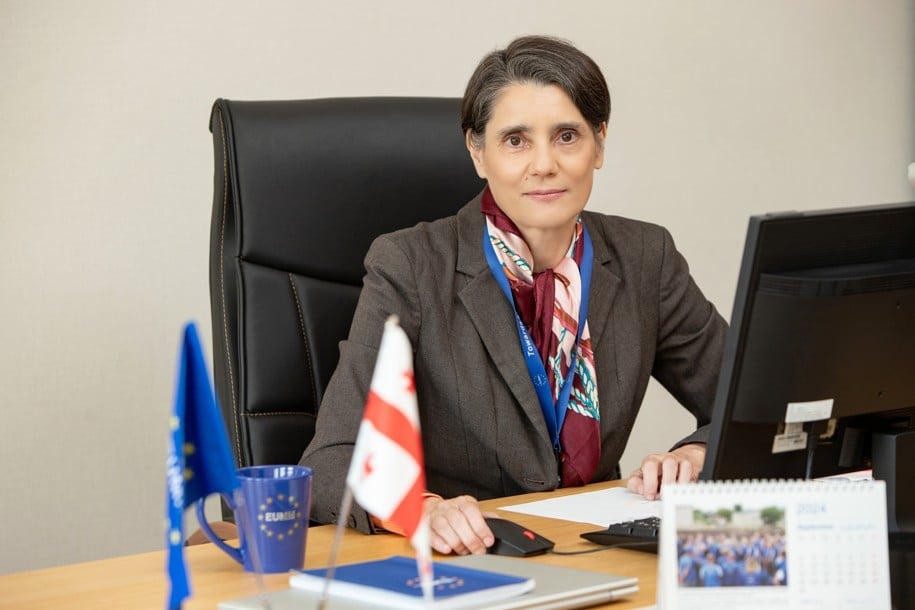
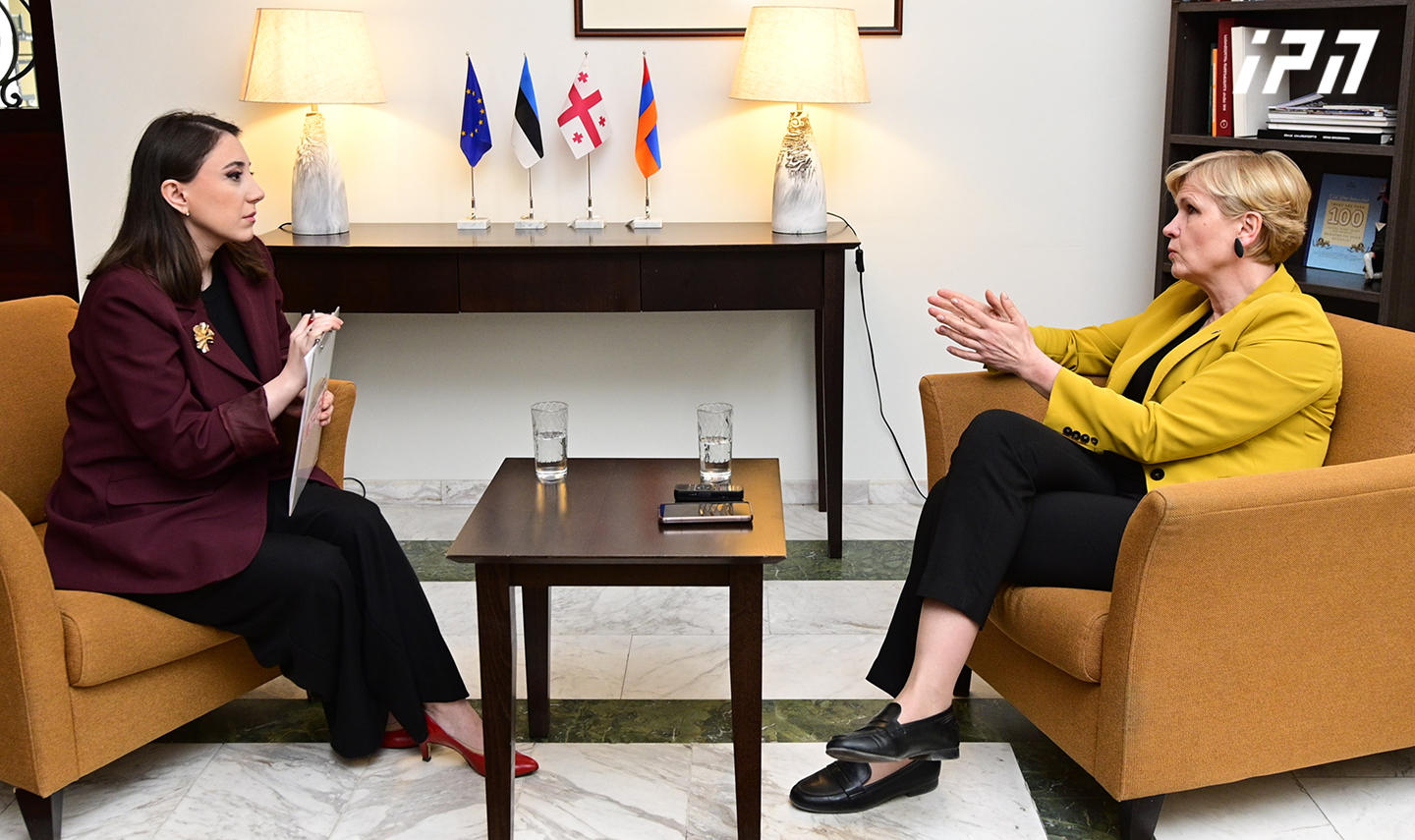
For 17 years, about 200 representatives of the EU Monitoring Mission in Georgia have been patrolling the Administrative Boundary Lines around the clock. According to the Head of the Mission, Bettina Patricia Boughani, this visible presence of the Mission has a preventive effect. As she noted in an interview with InterpressNews, these resources, which are being invested in the Monitoring Mission, underline the dedication of the EU and its member states to supporting security and stability in Georgia.
What challenges are the population facing along the ABLs, what is the daily mission of the Monitoring Mission and what is its long-term vision? These and other important issues are discussed in detail in an interview with Bettina Patricia Boughani.
Almost two years ago, you became the Head of the EU Monitoring Mission in Georgia. I’m sure you have faced many challenges and resolved various issues during this time. What is the situation along the Administrative Boundary Lines (ABLs) today? Which issues are most frequently on the agenda? We have often reported on new developments related to “borderisation” and the difficulties faced by the local population, including detentions. Could you tell us about the most recent developments in this regard?
Thank you for this opportunity. I’m glad to highlight the work of the European Union Monitoring Mission and to provide some insight into our activities in Georgia.
Since I took up my role almost two years ago, the situation along the Administrative Boundary Lines (ABLs) has remained relatively stable. While security incidents were frequent in the years following the 2008 war, their number has significantly decreased. Nevertheless, the situation remains fragile and unpredictable, and this relative stability cannot be taken for granted. It is essential for all parties to act responsibly and avoid any actions that could lead to new incidents.
The relative stability along the ABLs has brought some reassurance to the communities living nearby, but they continue to face significant challenges, as you mentioned. Our monitors speak regularly with local residents to understand their concerns. The issues raised most often include restrictions on freedom of movement, ongoing “borderisation” activities, and detentions. These constraints affect their daily life in many ways, making it difficult for them to visit family and friends, tend to their land, earn a living, or ensure their children can access education in their own language.
The number of detentions has generally decreased over the years. However, this is not necessarily a sign of improvement on the ground. People are well aware that such detentions take place. As a result, many are afraid to approach the ABLs, fearing they could be detained themselves. These fears have created strong psychological barriers, alongside the physical ones resulting from the continuing process of “borderisation”.
The EU Monitoring Mission in Georgia has been operating for 17 years, having arrived on 1 October 2008. Since then, it has worked to maintain stability and ensure the security of population on both sides of the Administrative Boundary Lines. In your view, what would you identify as the Mission’s main achievement over these 17 years?
Over the past 17 years, the situation along the ABLs has become far more stable compared to the immediate aftermath of the 2008 war. I would say the Mission’s main achievement is our contribution to maintaining this calm and stability, which we have supported in several ways.
Our monitors patrol around the clock, 365 days a year, observing and reporting on conflict-related developments. This visible presence has a preventive effect, as all sides are aware that we are on the ground and can bear witness to any activities they might engage in. We also facilitate dialogue through confidence-building mechanisms such as the EUMM-managed Hotline and the Ergneti Incident Prevention and Response Mechanism (IPRM). These tools help maintain communication between the parties and prevent incidents from escalating.
A further achievement linked to this relative stability is that it allows local communities to carry on with their daily lives in a more normal and secure way. This is true even though they continue to face the daily challenges I mentioned earlier. Our monitors frequently hear from residents that our patrols make them feel safer. When people feel secure, they can go about their daily lives and earn a living with less fear and intimidation.
I would also like to ask you, what is the main challenge that the Mission has not been able to overcome so far?
The biggest challenge for our Mission continues to be the lack of access to Georgia’s regions of Abkhazia and South Ossetia. From our patrols, we know that our presence has a real impact on communities near the ABLs. People feel safer, and the risk of incidents or detentions is lower. As I mentioned before, residents often share these thoughts directly with our monitors.
I really hope that Russian and de facto authorities will recognise these realities and allow us to operate on the other side of the ABLs. We consistently stress in all discussions that EUMM is a civilian, unarmed, and impartial Mission. Having access there would make a real difference for the women, men, and children living in those areas. It would enhance their security and, in doing so, support their return to a more normal life.
For this reason, EUMM, together with the EU Institutions and Member States, continues to push for full, unrestricted access to both sides of the ABLs. As Head of Mission, I also make it a point to explain to everyone the concrete benefits that such access would bring to the communities on the ground.
We know that there are about 200 observers from different EU Member States working on the ground. Do you think this number is sufficient for the amount of work you are doing on the ground?
We are fortunate to have a highly capable and committed team on the ground. Around 200 monitors, representing 25 EU nationalities out of 27 Member States, bring a wide range of specialised skills and expertise to EUMM. In addition, our operations are made possible by a two-year budget of €50.6 million, also provided by the EU and its Member States. Together, this dedicated team and substantial resources allow us to carry out our mandate effectively: maintaining a continuous presence along the ABLs, responding to incidents, and supporting local communities. Finally, it is worth noting that these resources underline the EU and the Member States’ dedication to supporting security and stability in Georgia. It reflects a long-term commitment to peace in the region and to ensuring that people living near the ABLs can carry on with their daily lives with greater confidence and safety.
The EU Monitoring Mission has very clearly declared goals, to which it has been committed for 17 years. I will repeat for our readers that these priorities are: to ensure that there is no return to hostilities; to facilitate the resumption of a safe and normal life for the local communities living on both sides of the ABLs with Abkhazia and South Ossetia; to build confidence among the conflict parties and to inform EU policymakers about Georgia. I would like to ask you, what is your personal goal as Head of Mission, both in the long and short term, and the signature that you personally want to leave behind?
As Head of Mission, my main goals naturally align with the core mandate of EUMM: to help ensure that the security situation along the ABLs remains stable. I see my role as building on the strong legacy of the Mission over the past 17 years and making sure that we continue to carry out our work effectively and efficiently.
At the heart of my focus is the people living along the ABLs. I want our work to result in real, tangible improvements in the lives of those still affected by the conflict. That’s why I place a strong emphasis on engaging closely with local communities. Our monitors speak daily with residents to understand their concerns and needs, and when appropriate, we relay this information to those who can provide support. My hope is that, by the end of my tenure, we will have helped enhance the safety and daily lives of people in these communities.
On the operational side, my priority is to make sure the Mission runs smoothly. This involves providing guidance and leadership to our dedicated team of international and local staff, who are on the ground day in and day out, monitoring and reporting on security and humanitarian developments. Their professionalism is what gives the Mission its credibility and impact. Finally, I aim to further strengthen the excellent cooperation that already exists within the EU family in Georgia, as well as our close partnership with the OSCE, with which I co-facilitate the IPRM. This is vital to achieving our shared objectives of peace and security in Georgia.
Since we are talking about your personal goals, I would like to ask you what your agenda is. How often do you personally visit the villages along the ABLs, and what is the reaction of the population towards you personally and towards the mission in general?
I try to join patrols as often as my schedule allows. Seeing the security and humanitarian situation along the ABLs firsthand is essential. It gives me real “boots on the ground” perspective. We also regularly take high-level officials from the EU, its Member States, and other like-minded partner countries on patrols with us. They get all the details from our reports, but actually seeing the situation on the ground gives them a much clearer picture than any report could. This firsthand understanding they can take back to their capitals and use when shaping policies on Georgia.
In addition to being out in the field, I gather information through discussions with my team and meetings with a wide range of stakeholders, including local leaders, civil society and international organisations. This combination of direct observation and structured engagement allows me to get a full picture of what is happening on the ground.
I am always struck by how positively local communities respond to our work and presence. People frequently tell me themselves how much they value our patrols, and I hear the same from our monitors. It is clear that our constant presence provides reassurance and contributes to a sense of security for those living near the ABLs.
I'm also curious about your experience in terms of communicating with the central government. How actively do you communicate with the Georgian government, and on the other hand, in your opinion, to what extent is official Tbilisi doing everything to resolve or at least reduce the problems at the ABLs?
We maintain contacts with the Georgian government at the working level, as part of our day-to-day operations along the ABLs. At the same time, it’s important to stress that EUMM is an impartial, apolitical Mission. We don’t make political judgments or statements about the work of others. Our focus is on carrying out our own mandate of contributing to stability along the ABLs through our 24/7 monitoring presence, confidence-building work and impartial reporting.
Representatives of the Georgian Dream government are criticised for not visiting the ABLs often and for not having intensive communication with local residents. What can more frequent visits to the ABLs and more active conversations with residents change?
There is no doubt that visiting the ABLs and engaging directly with local residents is extremely valuable. Speaking with people on the ground allows you to gain a deeper understanding of daily life in these communities and hear first-hand about the challenges they face. EUMM is not a humanitarian or development organisation, so we cannot directly provide assistance. However, whenever appropriate, we share the information we collect with those who are in a position to help. This allows practical solutions to be explored where possible.
In Ergneti, the group established within the framework of the Incident Prevention and Response Mechanism continues to work. What is the Mission's assessment of this format? What do the dynamics of problematic issues and responses to them show?
The Incident Prevention and Response Mechanism, or IPRM, is a truly unique format. It is facilitated jointly by EUMM and the OSCE, and brings together participants from the Georgian, Russian, and de facto South Ossetian authorities on a regular basis. The meetings offer an opportunity to discuss and resolve specific issues and incidents. That’s vital for easing tensions and preventing situations from escalating. In addition, the IPRM provides a space to explore practical solutions that improve the daily lives of local communities on both sides of the ABL. Typical topics include freedom of movement, opening of crossing points, detentions, and irrigation.
I have seen firsthand how constructive these meetings can be, and how they can lead to tangible results. For example, through the IPRM we have successfully advocated for the opening of crossing points along the South Ossetian ABL during religious holidays, such as Easter and Lomisoba. This allowed people to visit family and religious sites. In recent years, we have also established cross-ABL cooperation on irrigation. We have the EUMM-managed Hotline in place, which helps reduce tensions by allowing all sides to exchange information around the clock on urgent issues. Our EUMM Hotline holders serve as the central point of contact, receiving calls and relaying messages. Through this Hotline, our Mission also facilitates the exchange of information on irrigation water levels to help farmers on both sides have access to water. This allows them to cultivate their crops and sustain their livelihoods. These are concrete examples of how dialogue can translate into real benefits for local communities.
In general, I would like to ask you how fruitful is cooperation in such formats, including the format of the Geneva International Discussions (GID)? Do you have any recommendations to increase the effectiveness of this format?
As I just mentioned, participation in the Ergneti IPRM remains constructive. The fact that 127 meetings have been held since the very first one on 23 April 2009, with all participants continuing to engage, is a clear sign of its lasting value.
The objectives of the IPRM and the Geneva International Discussions are quite different, and so is EUMM’s role in each. The IPRM seeks to address concrete, day-to-day issues that directly affect conflict-affected communities, whereas the GID is the only internationally recognised political format where the broader resolution of the conflict in Georgia is discussed.
And while we co-facilitate the IPRM, in Geneva we act as an information provider. We share our impartial observations on the security and humanitarian situation on the ground. This helps ensure that discussions at the international level are informed by the realities we see every day in the field. Both formats are important and complementary, each playing its part in contributing to peace and stability in Georgia.
Salome Abulashvili
InterPressNews