Teona Akubardia: The ‘Betrayal Commission,’ the Chorchana Episode, and Russia’s Influence in Georgia
“The findings of the ‘Betrayal Commission,’ the Chorchana episode, and other developments all reveal the ultimate goal: Russia wants to formalize the victory it already has in Georgia. The regime is not only Iavnishvili and someone like Kobakhidze - it is Russia itself.
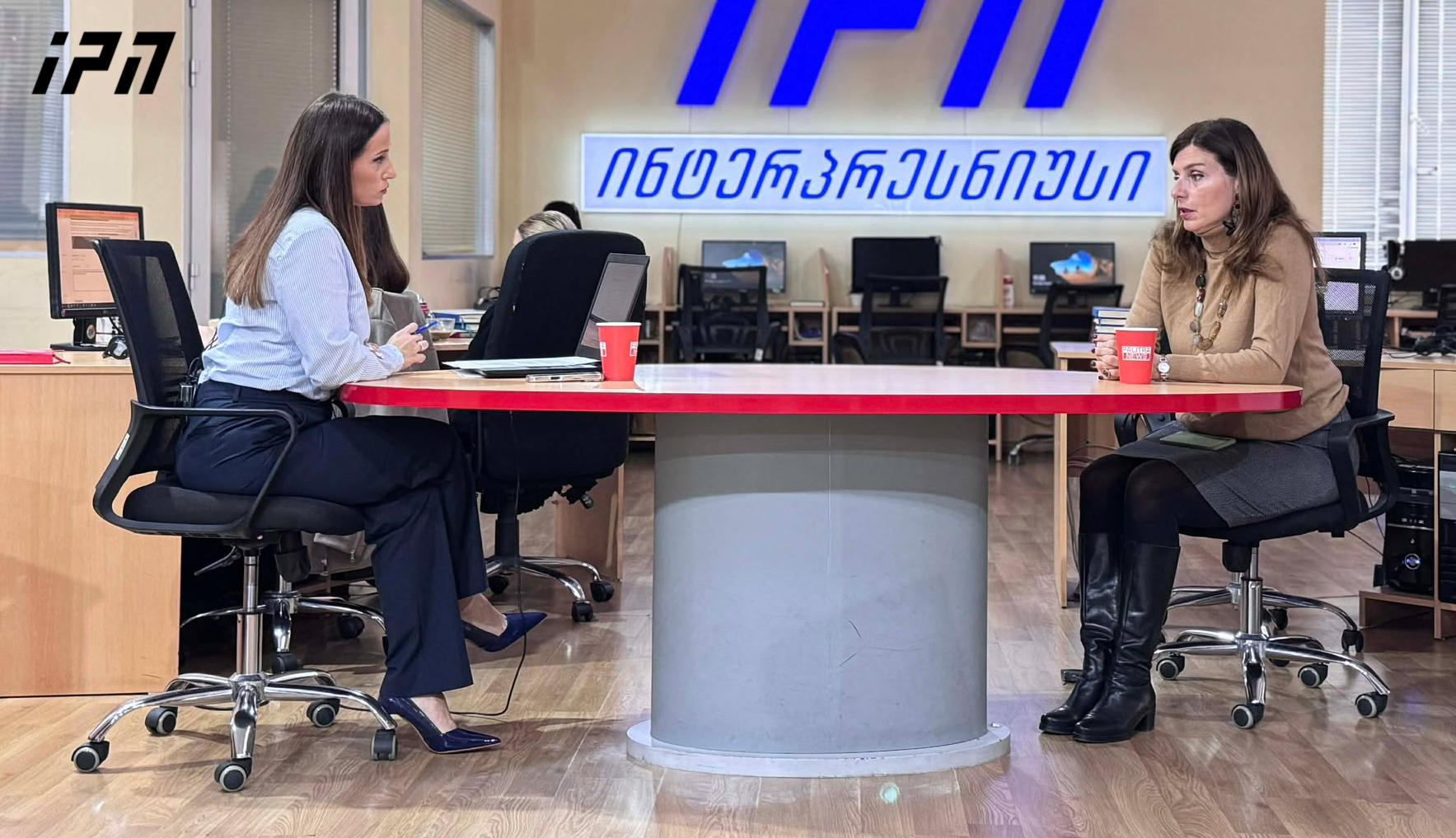
Now, no one should claim that former Prime Minister Giorgi Gakharia personally carried the Chorchana checkpoint on his back and installed it secretly. If anyone wants to convince people that Gakharia did this without anyone knowing, it only demonstrates once again that the state was completely blind and deaf, that we had no functioning state at all,” opposition politician Teona Akubardia said on the “Day’s Newsroom” program by PalitraNews, commenting on the investigation of the so-called Chorchana episode involving Gakharia.
Akubardia noted that, although she had previously criticized Gakharia, she believes that one of his correct decisions was establishing the Chorchana checkpoint on Georgia-controlled territory.
“When the puppet regime in Tskhinvali openly made territorial claims - not only regarding Chorchana but also Truso-Gudauri and Kobi - and claimed these areas were ancestral Ossetian lands, the checkpoint was fully legitimate. Now, if anyone says that Gakharia personally carried the checkpoint on his back and set it up secretly, it only proves that the state was entirely blind and deaf.”
She drew a parallel between the Chorchana case and the August 2008 war investigation: “The report of the so-called ‘Betrayal Commission,’ led by Tsulukiani, blamed Georgia for starting the 2008 war. Georgian Dream is preparing, according to the Russian narrative, to shift the blame from Russia to Georgia. This provides a pretext to sign agreements with the puppet regimes in the occupied territories of South Ossetia and Abkhazia not to use force. This implies that Russia was not a participant in the war, as confirmed by Tsulukiani’s commission and Iavnishvili’s one-party parliament. It also paves the way for the formal recognition of the so-called independence of these two occupied territories.”
This, she said, also opens the door for the restoration of diplomatic relations with Russia, which previously was impossible due to the August war and the non-recognition of the two occupied territories. Russia has now openly raised claims concerning Georgia’s constitutional provision for NATO membership during recent Geneva discussions, showing that it seeks influence over Georgia’s domestic and foreign policy.
“If new elections or referendums are held, including the so-called neutral stance, this will be an entirely Russian project. On one hand, it is lobbied by ethnic Georgians working in Russia as Russia’s support network, and on the other, by a fifth column inside Georgia.”
Akubardia stressed that the ultimate goal is for Russia to cement its victory in Georgia, and the main obstacle is the resistance of citizens and civil society. She emphasized that the regime is not just Iavnishvili or Kobakhidze - it is Russia.
Regarding the planned November 28 protests, she said: “November 28 should not be seen as a single date but as part of the process that has developed over the past year.”
On Georgia’s EU integration, she noted: “I don’t think EU accession is merely paused; I think it has effectively ended under this regime. The EU’s latest enlargement report shows that only the title of Georgia’s candidate status remains. This indicates not the possibility of progress but the loss of what already existed, highlighting how grave the country’s situation is despite the EU door being open.”
Akubardia also criticized the secrecy surrounding the Arab investment group ‘Eagle Hills’ project: “Of course, all initiatives linked to Iavnishvili, including his personal involvement with investors, show that his money is the priority, not the people or the country. That is why the agreement is secret, and why Kobakhidze was presented as a ‘promo boy’ in that advertisement.”