Ambassador of Korea Hyon Du KIM - Korea’s strength lies in high-tech manufacturing while Georgia’s strength is in logistics and service areas - Georgia should not be just considered as a single market but as a market that can encompass the region and beyond
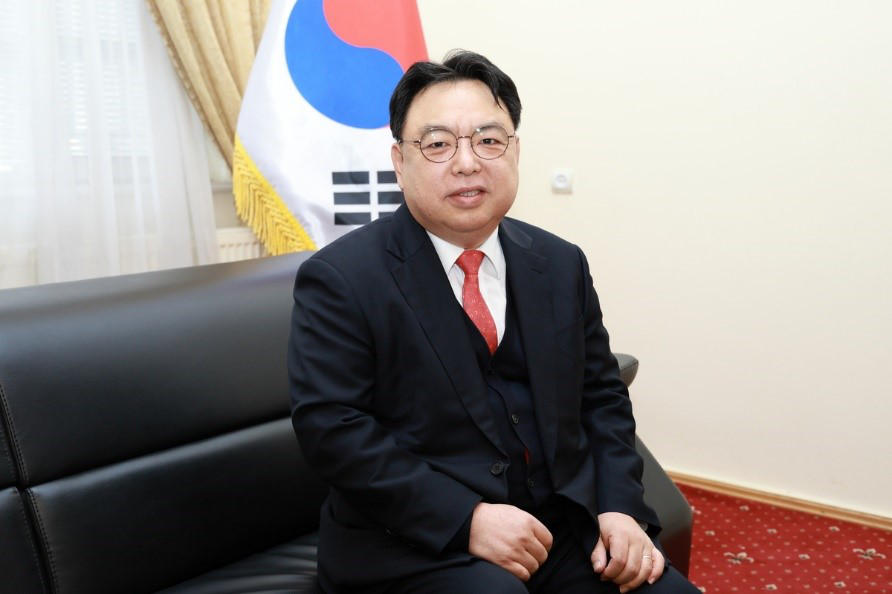
According to the Ambassador of the Republic of Korea to Georgia, Hyon Du Kim, as mutual exchanges increase across various fields and the number of Georgian visitors to Korea grows, opportunities will emerge for the two countries to hold further discussions on visa liberalization. Until then, the diplomat says that two documents are agreed to be signed: a bilateral Comprehensive Economic Partnership Agreement and a framework agreement on cooperation related to climate change.
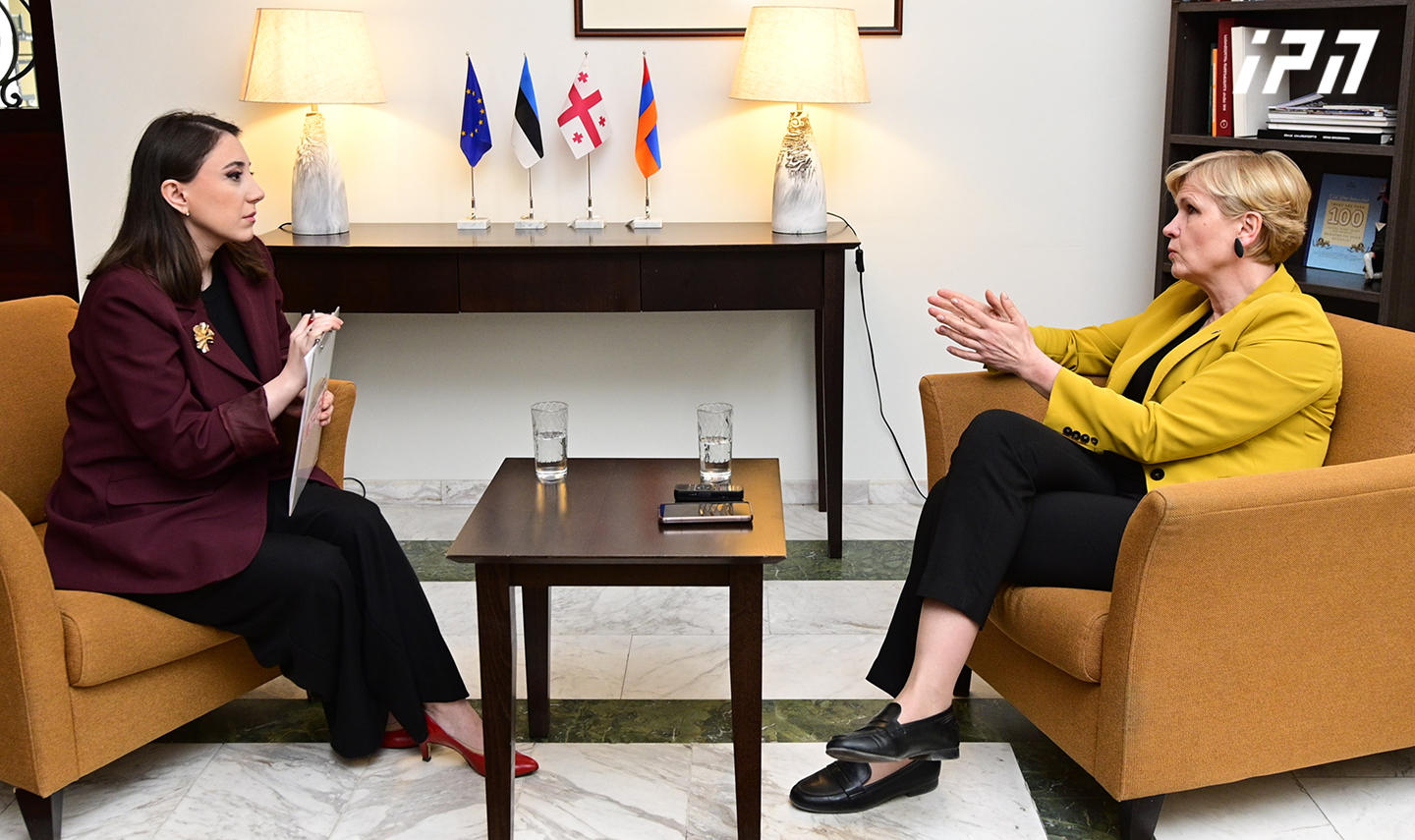
How does he assess the investment environment in Georgia? What challenges does he see, and how is South Korea working - including through the business community - to increase interest in Georgia’s potential? InterpressNews spoke with the Ambassador of the Republic of Korea about these and other relevant issues.
As we know, diplomatic relations between the Republic of Korea and Georgia were established 33 years ago, in 1992. Korea first opened its office in Tbilisi in 2015, but it was only in November of last year that the Republic of Korea decided to elevate the office to a full-fledged embassy. I would like to ask what motivated the government of the Republic of Korea to make this decision, and why now?
Georgia and the Republic of Korea have maintained strong relationships for the past 33 years, cooperating closely bilaterally and supporting each other multilaterally in the international arena. The Embassy was elevated to a full-fledged embassy to accommodate growing relationships between the two countries and to strengthen mutual partnership going forward.
The two countries are currently at work to establish institutional measures that will lay the foundation for future partnership, namely, bilateral agreement on Comprehensive Economic Partnership Agreement and Framework Agreement for Cooperation on Climate Change, both of which have been already agreed and are to be signed. Such institutional measures are expected to provide a basis for future growth in trade and investments as we work towards further solidifying economic ties and partnership.
Perhaps you’ve already had the chance to travel around Georgia. Even if not, you probably have at least a basic understanding of the country. What first caught your attention about Georgia? Could you share your thoughts on what you find most appealing about it, and on the other hand, what you think is the most challenging?
Since my arrival to Tbilisi in February this year, I’ve traveled to the mountains of Kazbegi, wineries of Kakheti, and the Black Sea port cities of Batumi, Poti and Anakalia. Breathtaking views of the mountain regions and the rich traditions of winemaking caught my attention as it would to anyone traveling Georgia. Georgia has immense potential as a travel destination and its wines and winemaking traditions, in particular, ought to serve as a magnet to attract more enthusiasm from the rest of the world.
The visit to the port cities also showcased growing potential in transport/logistics connection with Georgia serving as the link between the East and the West. The challenge would lie in garnering attention of foreign investments to the potential economic benefits in engaging in transport/logistics infrastructure projects and sharing in long-term economic output. The Georgian government has been at work to bring more appeal and attention to the related projects, so I hope to see it come to full fruition soon.
Let’s talk a bit more about tourism. First, I’d like to ask you to share the most recent figures: how many visitors came from South Korea to Georgia in the latest reported period? Do you expect the number of Korean tourists to increase, and how do you see your role in that process? Can we also expect any visa facilitation for Georgians traveling to South Korea in the near future?
The number of visitors from Korea to Georgia has increased significantly recently. In 2023 the number was 14,553, and last year the number increased 80% to 26,075. The number of travelers from Korea this year so far (Jan~Sep) stands at 26,357 already surpassing last year’s figure, and it is projected to reach 30,000 or more this year. Increase in tourism and people-to-people exchanges will attract businesses to seek untapped markets and opportunities, and that will in turn fuel more exchanges in other areas.
As Korean Ambassador, I’m working towards expanding people-to-people exchanges not only in tourism but in the areas of education, culture, and business by introducing programs that are available from the Korean government and organizations and by introducing business opportunities in Georgia to Korean businesses. With increase of exchanges in diverse areas and increase in Georgian visitors to Korea (currently 15~18 hundred per year), there will be opportunities for the two countries to further discuss easing of visas that can contribute to the bilateral relationship.
Georgia has a lot to offer in terms of economic potential – those were the exact words you used when describing Georgia’s economic opportunities in your op-ed published on Interpressnews. How would you assess the current state of economic relations between Georgia and the Republic of Korea? In which directions could these relations develop further, and what specific potential do you see?
Trade between Korea and Georgia has been steadily growing since the year 2000, and last year it reached 161 million USD. The figure is yet to reach its potential, but it is expected that the Comprehensive Economic Partnership Agreement will provide a foundation and momentum for further growth in trade and investment between the two countries. Korea’s strength lies in high-tech manufacturing while Georgia’s strength is in logistics and service areas, so the complementary strengths of the two economies can be explored to produce future demands in commercial ventures and cooperation.
To help kick-start growth in bilateral trade and investment, the Korean government established the KOTRA Tbilisi office in June this year. KOTRA is a Korean government agency promoting trade and investment abroad, and its office here, which essentially functions as a commercial arm of the Korean Embassy, will serve as a channel between the businesses of the two countries to identify their needs and propel future demands. Its opening ceremony will be held this week on 21st of November.
As for the potential of Georgia, apart from its strategic location and asset to serve as a corridor linking the East and West, I believe Georgia is a nation that can utilize its historical traditions, natural beauty, and cultural assets to market “Georgia” as a brand itself. By doing so, Georgia can employ the brand power to elevate exports of its home-grown products such as wine and locally produced goods, while attracting foreign tourists in search of stories and cultural nourishment.
In this regard, I would like to ask whether the Republic of Korea is interested in the Middle Corridor project. How do you assess the prospects for its participation in the development of this initiative?
As a country strategically located at the crossroad of Europe and Asia, Georgia should not be just considered as a single market but as a market that can encompass the region and beyond. For instance, Georgia’s number one import from Korea is automobiles (33% of imports from Korea in 2024), but some of them are reexported to neighboring countries. The key element for such a market is its logistics capacity, and in that respect, the Middle Corridor project can draw interests of the Korean businesses, but more importantly, it serves as a platform for Georgia to become an attractive market for the region and beyond.
As an export-oriented, manufacturing economy, Korea has experience and technology in large-scale infrastructure projects and is interested in exploring business opportunities in transit, energy, and trade that utilize the Middle Corridor as a regional channel linking the East and West. For instance, one of the Korean firms attending the Silk Road Forum held recently in Tbilisi showed interest in participating in the Black Sea Submarine Cable project.
I’d also like to ask how you assess the current investment climate in Georgia. Could you also specify the sectors in which Korean businesses are most interested in investing or participating?
Amid global uncertainties and geopolitical tensions, Georgia has shown one of the highest economic growth in the world, averaging over 9% for the past few years, and it is projected to grow at more than 5% for the next five years. Also, Georgia ranked third in the World Bank’s Business Ready (B-Ready) 2024 report, and it’s looking to expand its role as a prominent, regional link for logistics and transport. With these attributes, together with government-led efforts to foster a business-friendly environment, Georgia has been gaining in its investment appeal.
As a high-tech manufacturing nation, Korea is big in infrastructure development and construction, IT and semiconductor industry, automobile and EV battery manufacturing, shipbuilding, and nuclear and renewable energy technology. So, Georgia’s business opportunities in 1) large-scale infrastructure projects like port and transportation modernization, 2) IT sector, and 3) renewable energy sector match the interest and strength of Korean businesses. I hope that bilateral institutional measures between the two countries I spoke about earlier can be quickly established so that both countries can reap the benefits and make the most of the opportunities.
Salome Abulashvili
InterPressNews