Nika Simonishvili: They no longer just block the road; now they try to restrict protesters even on the sidewalks — which legal norm allows this? If they try to restrict movement on the sidewalks, the protest will take another form
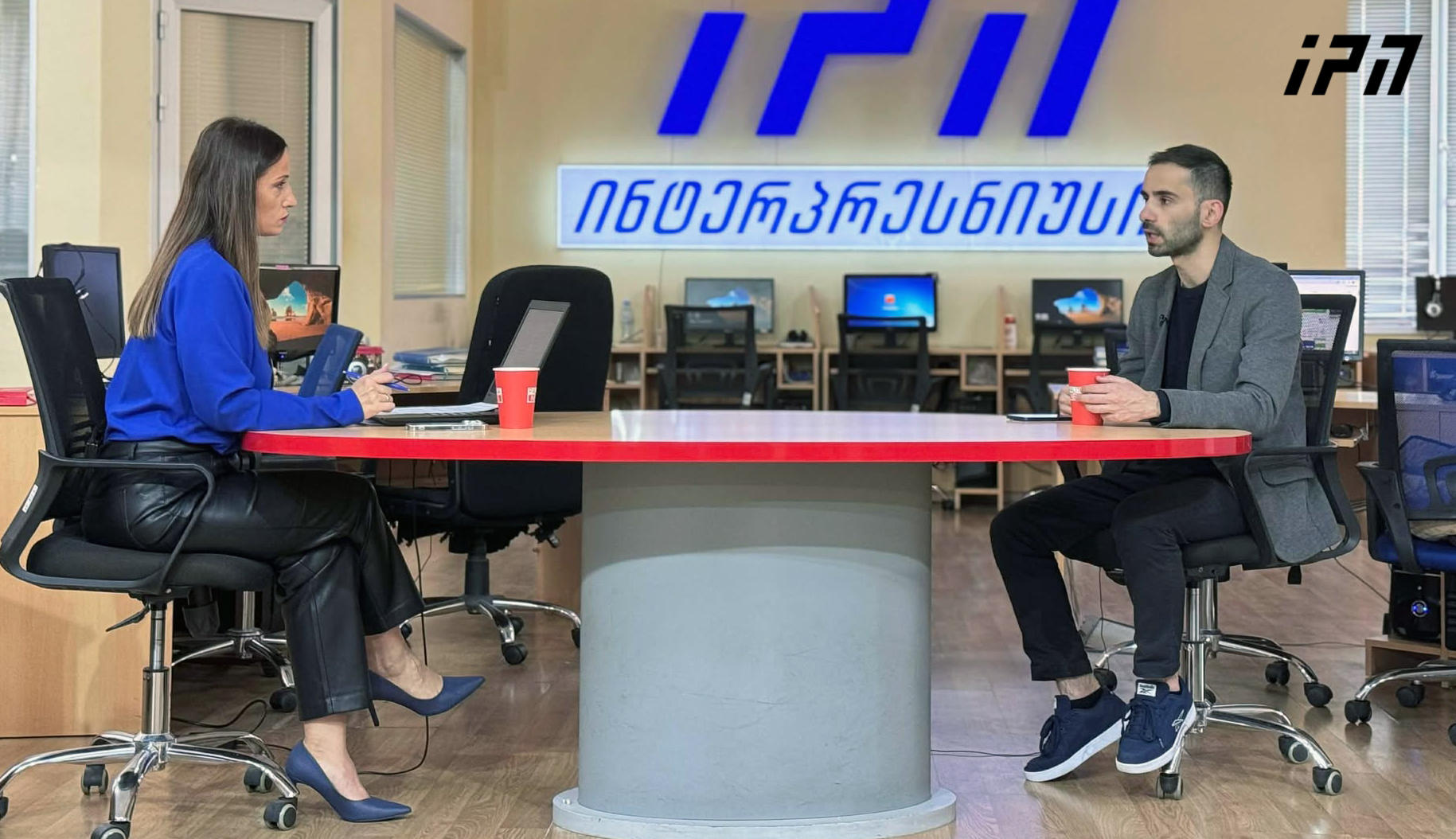
“Currently, the situation of Georgian Dream is like water leaking through a wall — you cover one spot with your hand, another leaks somewhere else,” assessed Nika Simonishvili, former Chair of the Young Lawyers’ Association, regarding restrictions imposed by law enforcement on protest marches along Rustaveli Avenue.
Speaking on PalitraNews’ program Day’s Newsroom, Simonishvili said that if authorities try to restrict protest movement on sidewalks, the protests will inevitably take another form.
“The police no longer allow protesters to block the road, so demonstrations have become more mobile, turning into marches. This form of protest became so effective that Georgian Dream realized they didn’t want many people in Tbilisi to witness the protest, so they are creating obstacles for participants on different streets.
What will they do on November 28, when thousands of people take to the streets again? Will they again try to block protesters on the sidewalks with police and restrict gatherings? They simply can’t do that. On November 28, thousands will come out, and once again we will show that thousands oppose what Georgian Dream is doing. In reality, they are trying to restrict movement on the sidewalks for those participating in the march. This is not about blocking the road — which legal norm or framework allows them to do this? They cannot cite any legal norm that justifies restricting movement on the sidewalk. Even under Georgian Dream’s own laws, protest movement on sidewalks is not restricted in any case. What they have done through these measures is the result of thoughtless, ill-conceived political decisions. In reality, as I said, their situation is like water leaking through a wall — no matter where you cover, the water will always leak elsewhere. Even if they try to restrict protest movement on the sidewalks, the protest will inevitably take another form.”
He also said that law enforcement’s argument that there are not enough people to justify free movement is unfounded.
“This argument is legally invalid for several reasons — this is not a static gathering; it’s a moving assembly. It occurs even on narrow streets in Mtatsminda and Sololaki, where the argument about the number of people is completely irrelevant. Georgian Dream realized that once they set up a cordon on Rustaveli Avenue and blocked road access, protests changed form and became more mobile.”
Simonishvili also commented on restrictions imposed in court buildings, where anyone entering must leave their devices (laptop, phone, etc.) in specially installed lockers. He said the aim was to prevent information from leaving the courtroom — which ultimately won’t succeed.
“The main target was to prevent any information from leaving the process. That’s why filming and recording were restricted, but live blogs and other methods still allow timely information to get out. The point is, the more they restrict access to information, the more people want it. Even if the media couldn’t bring in their phones, information would still get out. If that logic continues, eventually entry to the court itself would need to be blocked. One person decides no technical devices should enter, and no one considered that it applies to all parties, prosecutors, and lawyers. Even the judge is affected. What principle is this? What century are we talking about? What are we discussing? You allow paper and pen, but what if they ban those too?”
He also evaluated legislative changes prepared by the Ministry of Internal Affairs regulating the circulation of acoustic weapons, stun devices, and pepper sprays. Simonishvili believes this restriction should not only be seen in the context of protests but also as a ban on defensive tools.
“We should look at this more broadly. We live in a country with a high incidence of crimes against women. Even one instance should be cited where such defensive tools, like stun guns or pepper spray, were misused or used against someone unlawfully.”
Additionally, he spoke about a new project in public schools aimed at introducing young people to police work and promoting the profession among adolescents. Simonishvili considers this part of propaganda.
“I cannot see this as having an educational purpose. This is part of propaganda. If they want to show society the truth about police work, then show how Guram Kogava was beaten by special forces or what the special forces did on Rustaveli Avenue a year ago — how they unlawfully detained people. Those illegal acts show the true face of the Ministry of Internal Affairs.”