Shalva Papuashvili: I have said, not only publicly but also directly to James O’Brien, that giving in to the demands of the U.S. Ambassador would have meant sacrificing Georgia to war
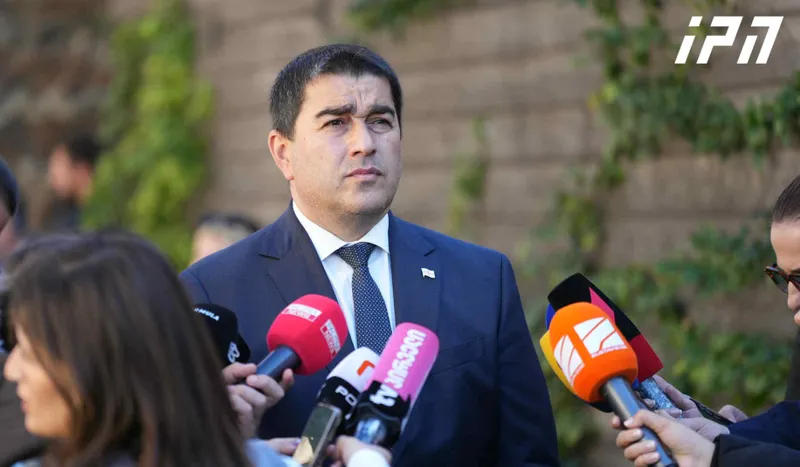
The public is once again given the opportunity to understand what would have happened, at the start of the war in Ukraine, if decision-makers in government offices had not been a national leadership, but rather those who seek to please foreign powers — this is what the Speaker of the Parliament of Georgia writes.
As the Speaker notes, four years after the start of the war in Ukraine, it seems this war is nearing its end. “We all see how Ukraine is forced to think about whether to accept or reject extremely harsh conditions.”
“It is good that, against the backdrop of a war in Ukraine that is moving toward its end, the issue has once again surfaced of what was being demanded from us from the very first days of the war. The public is once again given the opportunity to understand what would have happened if, at the start of the Ukraine war, those sitting in government offices as decision-makers had not been a national leadership, but foreign appeasers. Had that happened, today we would not be thinking about proper investment placement and education reform — we would be mourning the dead and trying to pull our country out from under ruins.
The fact that, under the correct leadership of the previous U.S. administration (and the West in general), the war in Ukraine would not have happened, is something the U.S. government itself is now stating. Likewise, the U.S. government says that the war in Ukraine is a proxy war. Four years after the start of the war in Ukraine, it appears this war is nearing its end. We all see how Ukraine is forced to consider whether or not to accept extremely severe terms. Against this background, it is even clearer how misguided is the Georgian who still stares into the eyes, statements, and resolutions of those who, in the past, were pushing others to the frontline of someone else’s war. What the U.S. ambassador demanded from me in a categorical tone on 28 February 2022, on the fourth day of the war in Ukraine, is something I have described many times, and therefore, below I am attaching once again my detailed post.
I have said — not only publicly, but also personally to James O’Brien, the former Assistant Secretary of State, when he visited Georgia last year — that giving in to the demands of the U.S. ambassador would have meant sacrificing Georgia to war. I never heard any convincing explanation of how one could ask Georgia to take on the risk of military confrontation with Russia without providing security guarantees — neither at that meeting, nor at any other time. The same applies to many European politicians who, safely under NATO’s umbrella, felt very brave. The fact is this: the very same people who, after our war, advised us to follow a policy of strategic patience toward Russia, demanded maximum escalation with Russia the moment the war in Ukraine began. And our recent past has shown many times that the final point of such escalation is war. As for those foreigners who demanded escalation with Russia yet refused to acknowledge that escalation ends in war — they were either naïve themselves, or they thought we were naïve. Naïve enough to believe their naïveté,” Papuashvili writes.