Giorgi Volski: I think many topics will be raised that, in their view, are needed to justify sanctions or continue political attacks – I do not exclude that the BBC article was released for this purpose
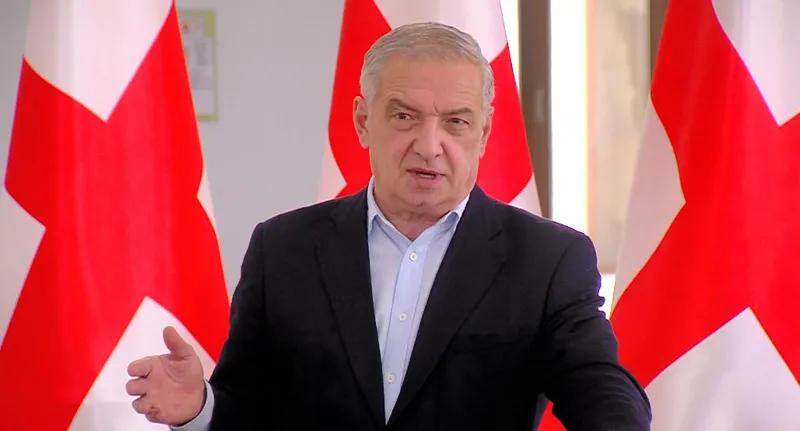
"I think many topics will be raised that, in their view, are needed as a basis for sanctions or some continuation of political attacks. I do not exclude that this article was released precisely for this purpose," said Giorgi Volski, First Deputy Speaker of the Parliament, commenting on the BBC report claiming that “First World War-era chemical weapons were allegedly used against protesters in Georgia.”
Volski stated that the information disseminated by the BBC is false.
"BBC itself notes that such weapons existed until 1930, then disappeared, and no trace of them has been seen. Now, when these extremist processes have slowed and lost energy, suddenly it is claimed that such weapons exist in Georgia. Naturally, this has not been proven in any way, and no one has investigated health issues to confirm poisoning symptoms. No such findings are recorded in the reports or investigations of even the most vigilant international organizations.
Professionals work on all topics related to any chemical or other weapons, and especially their use. Of course, this is false, but we cannot fully blame BBC for this. There is a certain direction and structure that wants to somehow involve this network – some call it a mix of propaganda and violent, planned efforts to promote revolutionary processes. Several systems are working against Georgia, and this falsehood is part of the conspiracy against Georgia, which we must withstand," Volski said.
Asked whether the BBC article could become a reason for sanctions from the United Kingdom, Volski replied that he does not exclude the possibility that the article was published for that purpose. However, in his assessment, the article does not correspond to the reality in Georgia.
"I think many topics will be raised that, in their view, are needed as a basis for sanctions or the continuation of political attacks. I do not exclude that this article was published for this purpose, to create a basis for developments. However, the article has no evidence, nor any approach close to the reality that exists in Georgia – neither this article nor other propagandistic attacks, including those from some of our media outlets," Volski said.
For reference, BBC reported that evidence they collected indicates that the Georgian authorities last year used First World War-era chemical weapons to suppress anti-government protests.
According to BBC, “protesters opposing the Georgian government’s delay in EU accession reported various symptoms, including eye burning, sneezing, coughing, and vomiting, which persisted for weeks.”
BBC also spoke with chemical weapons experts, Georgian special forces representatives, and doctors, and discovered that the evidence points to the use of an agent that the French military called ‘Camite.’