Nona Kurdovanidze: Imposing restrictions in areas where cars do not operate is completely unacceptable. This, in effect, criminalizes freedom of expression and assembly and will have a very chilling effect
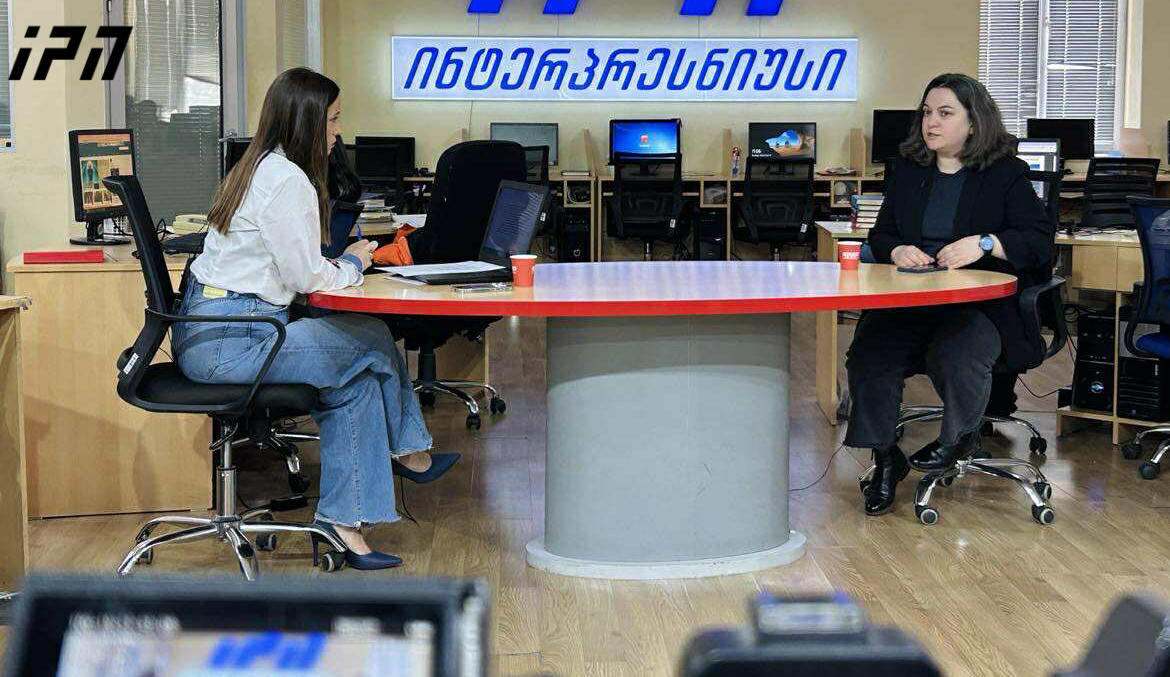
Imposing restrictions in areas where cars do not operate is completely unacceptable. This, in effect, criminalizes freedom of expression and assembly and will have a very chilling effect, the purpose of which is obvious, said Nona Kurdovanidze, Chair of the Young Lawyers’ Association, commenting on the draft bill prepared by “Georgian Dream.” According to the draft, it will be prohibited to block sidewalks unless the number of assembly participants makes it necessary.
Speaking on PalitraNews’ program “Day’s Newsroom,” Kurdovanidze noted that the changes envisaged by the draft are in conflict with the Constitution of Georgia.
“Imposing such restrictions in areas where vehicles do not operate is completely unacceptable and violates the Constitution. Looking at the sanctions, this effectively criminalizes freedom of expression and assembly. It will have a very chilling effect, and the purpose is clear. This continues the trend of recent years. In 2024–2025, multiple amendments were made to the ‘Assembly/Manifestation Law’ and the Code of Administrative Offenses, which further narrowed this space and effectively nullified citizens’ free ability to hold assemblies.
What can citizens do in this case? If there is any remaining space to express peaceful protest, that is one matter. Legally, however, it is generally possible to challenge norms adopted by Parliament in the Constitutional Court. Unfortunately, given the current situation, expecting the Constitutional Court to play any positive role may be an exaggeration,” Kurdovanidze said.
Regarding another amendment in the draft, which establishes the Ministry of Internal Affairs’ obligation to provide prior warning if a manifestation takes place in public traffic areas, Kurdovanidze said this effectively subjects the holding of protests to permission.
“Yes, this is framed as a ‘notification,’ but in essence and given its restrictive nature, it amounts to obtaining prior authorization, which is prohibited both by international treaties to which Georgia is a party and by the Constitution of Georgia. Moreover, the Constitutional Court has already ruled that restrictions cannot be imposed that would make it impossible for citizens to express their protest spontaneously. In practice, these amendments would effectively prevent such assemblies,” she said.
Kurdovanidze also commented on the BBC investigative report, noting that a press conference by the State Security Service (SSS) raised “many questions.”
“Generally, introducing any substances into water is problematic because it does not meet international standards. They claim to follow Amnesty’s guidelines, but there is nothing of the sort in those guidelines. In any case, dispersing any substance in water increases its scale of use and can cause more harm to people.
The SSS press conference raised many questions. There were also inaccuracies regarding the timing and the limitation to certain days, whereas the protests took place on earlier days as well. The number of people affected is unclear. We contacted the Ministry of Health. There is a difference between what citizens report and the statistics the state holds. The Ministry of Health said that over 200 people were taken to hospitals by medical brigades, but not all were poisoned. The police data and SSS statements do not provide comprehensive numbers, nor does it show how many people went to hospitals on their own. The Ministry of Health does not have these data.
Regarding the international investigation, when we are called to participate, it is first and foremost the state’s obligation to facilitate the investigation. Cooperation from the state is required; without it, the investigation may be impossible. Without access to materials, the investigation cannot be complete. The state must provide the public with detailed information on the basis of its conclusions to ensure transparency. Currently, this perception of a complete investigation does not exist because the data is provided fragmentarily,” Kurdovanidze said.
The GYLA Chair added that there are no expectations that the SSS investigation genuinely aims to enforce justice.
“When the SSS announced the investigation and cited two articles, it was clear that their main purpose was to direct the investigation under the articles that continue to be used. Regarding the use of chemical weapons or prohibited substances, they claimed none were used, and the investigation was framed as if giving an interview to the BBC could be considered hostile activity. This is unacceptable.
Even questioning our staff serves the purpose of intimidation. One of our employees was summoned and questioned even though they did not give any interview but merely appeared on camera during work. In such cases, there is no expectation that the investigation genuinely aims to enforce justice. Accordingly, trust in the investigation is very low,” Kurdovanidze said.