Nona Kurdovanidze: After the Strasbourg Court decision, Georgia is obliged not only to compensate the victims but also to establish detailed regulations for the use of special means
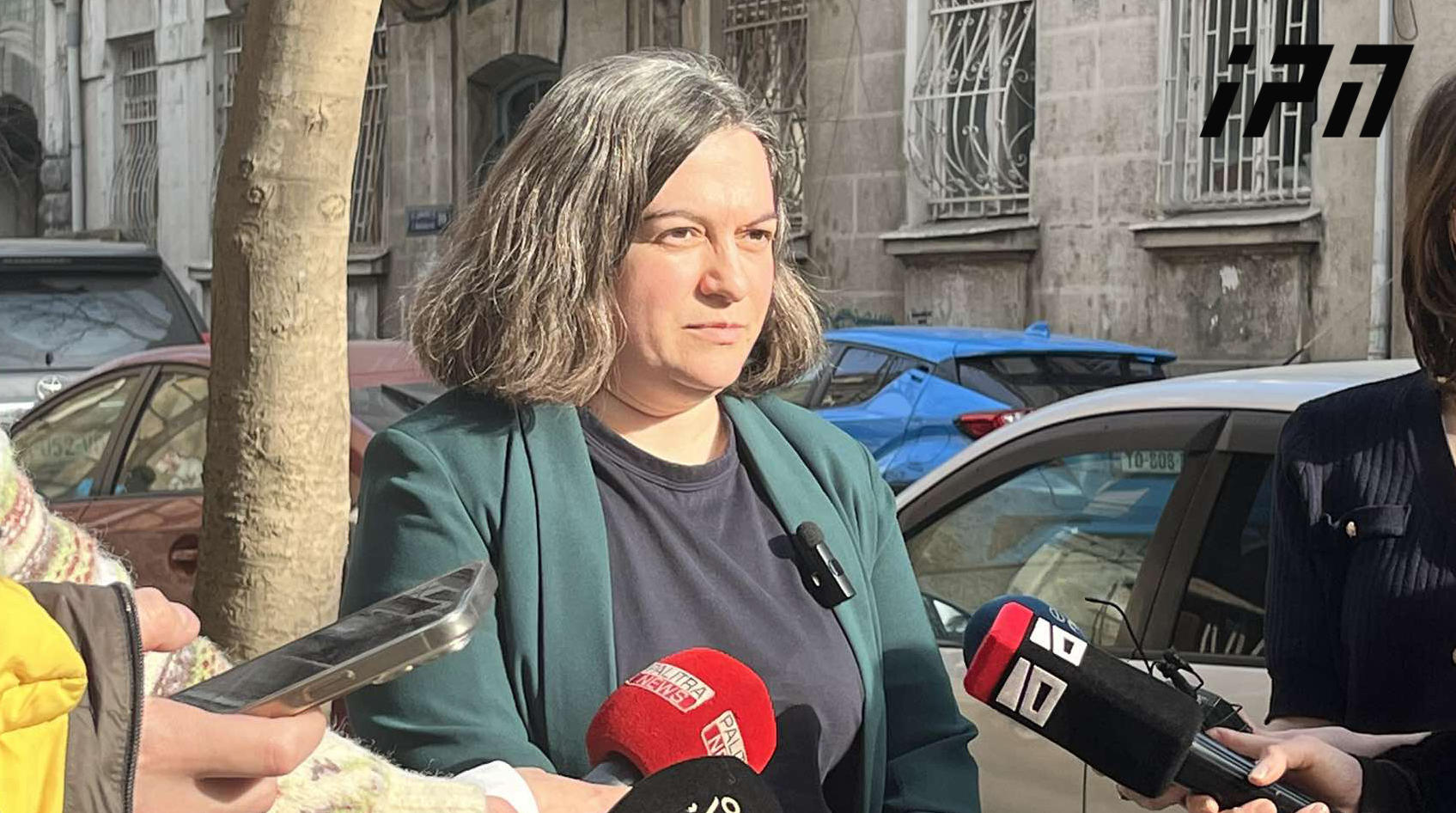
Nona Kurdovanidze, Chairperson of the Young Lawyers’ Association, explains why the decision of the Grand Chamber of the Strasbourg Court regarding the night of June 20-21 is significant.
As Kurdovanidze writes on social media, following this decision, Georgia is obliged not only to pay the mandated compensation to the specific victims but also to establish detailed regulations for the use of special means. According to her, this decision opens new opportunities for protecting the rights of peaceful assembly participants in the future.
“Why the decision of the Grand Chamber of the Strasbourg Court regarding the night of June 20-21 is so important:
It not only restores to the specific victims the belief that the difficult and long path of fighting for rights can successfully conclude, but it also opens new opportunities for protecting the rights of peaceful assembly participants in the future. This case is especially relevant today, when the right to peaceful assembly is among the rights most restricted in recent years, and the violent dispersal of demonstrations, torture, and use of special means against peaceful protesters remain pressing issues.
Following this decision, Georgia is obliged not only to pay the mandated compensation to specific victims but also to establish detailed regulations for the use of special means.
Georgia is obliged to:
Not use special means against peaceful participants of assemblies;
Develop detailed guidelines regarding the technical characteristics of each special means and its use, taking into account associated health risks. The domestic legal framework must also include effective safeguards to prevent arbitrary use of such means;
Use kinetic means (rubber bullets) only in extreme necessity, in response to an immediate and real threat to life or physical integrity;
Use kinetic means (rubber bullets) only in individual, targeted cases and not as a general crowd-control measure;
Position them in a way (considering the technical characteristics of the specific means) that minimizes risk to life and health even in targeted cases;
Avoid using multi-component means or metal-containing bullets;
Generally precede the use of kinetic means (rubber bullets) with an appropriate warning;
Ensure that kinetic means (rubber bullets) are used only by law enforcement officers with proper training;
Subject the use of kinetic means (rubber bullets) to strict command and control.
To recall what happened on the night of June 20-21:
The police began using kinetic weapons against thousands of citizens participating in a peaceful demonstration without any warning. Beyond tear gas and water cannons, the Ministry of Internal Affairs unlawfully and without prior warning began shooting rubber bullets at individuals at the protest. The prolonged and targeted use of tear gas, water cannons, and rubber bullets, along with the failure to meet related international standards, and the violent actions carried out by police and special forces for over six hours, caused physical harm to more than 200 people. The dispersal operation lasted almost seven hours. Over 800 rubber bullets were fired. Officially, 187 citizens and 38 journalists were injured by police actions. Some lost their sight, others suffered facial bone injuries due to rubber bullets.
Following this historic victory, today at GYLA, we recalled how we began working on these cases immediately after the dispersal of the protest: we started locating detainees and victims in detention facilities, represented nearly 80 individuals detained administratively in court, and found victims in hospitals.
We are very pleased that six years of work have borne fruit. Many thanks to all YLA staff who, over the past six years, at different times, worked on the cases of those harmed on June 20-21. Also, thanks to our partner, the European Human Rights Advocacy Centre (EHRAC), with whom we conducted this case at the Strasbourg Court,” writes Kurdovanidze.