Vakhushti Menabde: The purpose of the adopted law is to prevent citizens from expressing protest - we call on political parties to act beyond Rustaveli Avenue and meet citizens face-to-face
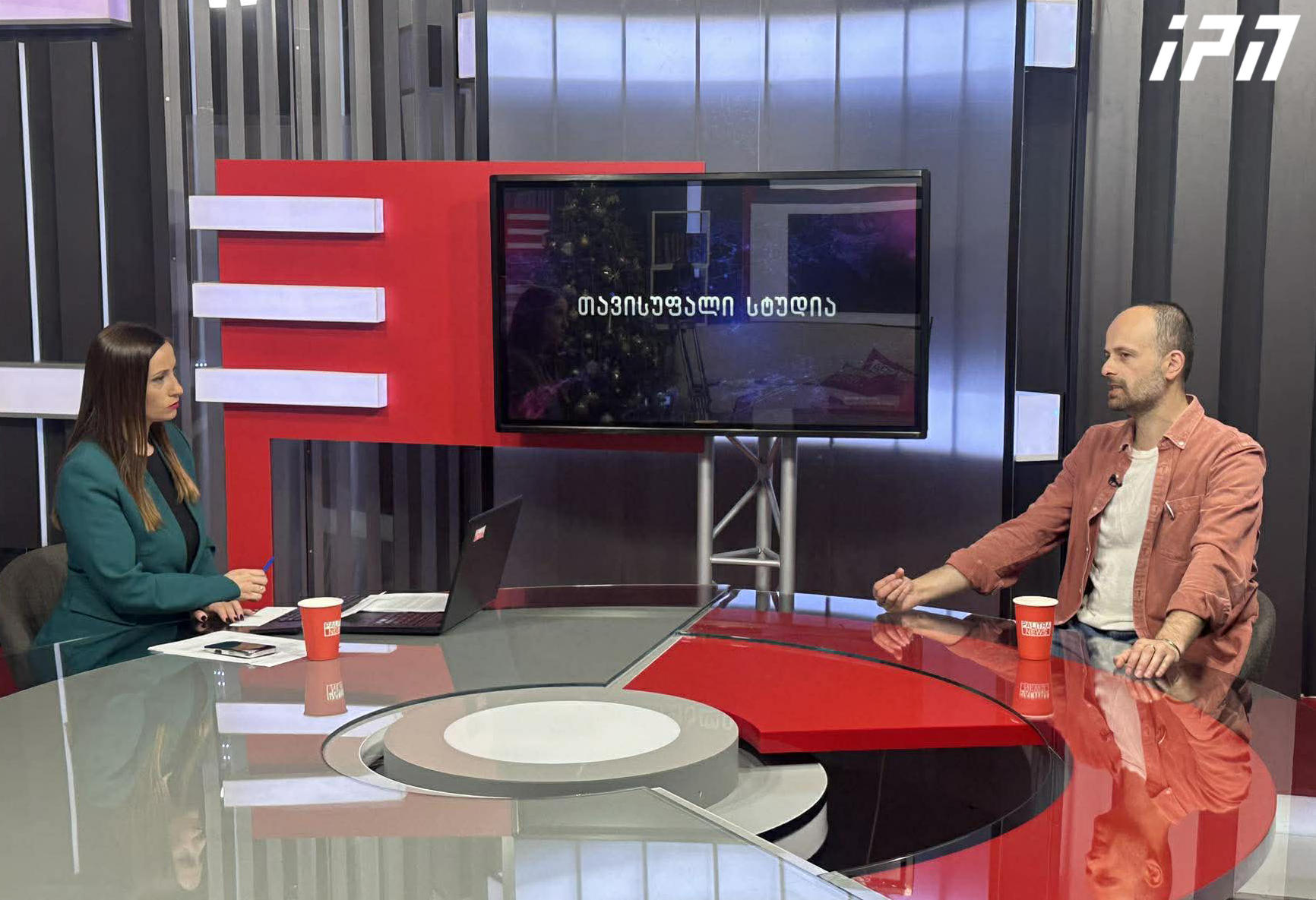
“The government has been forced to decide to pre-emptively and preventively intimidate people in order to reduce the number of those who resist,” said Vakhushti Menabde, a member of the movement For Social Democracy, in reference to the tightening of rules governing assemblies and demonstrations.
As he stated on PalitraNews’ program Free Studio, citizens will not face obstacles moving along Rustaveli Avenue even when protest participants are gathered there.
According to him, the goal of the law is to create obstacles for citizens and deprive them of the opportunity to express protest.
“According to the Constitution of Georgia, citizens have the right to gather in advance, both outdoors and indoors, and to express their protest.
Anyone who has ever been on Rustaveli — not as a participant but simply as a passerby — knows that pedestrians do not experience any discomfort or obstruction. If the road were blocked with barricades and it were impossible to pass through, then a discussion could be held. But nothing like this happens on Rustaveli. People gather, and anyone who wants to walk through can walk through.
The goal of this law is obvious — to create an obstacle for citizens, to deny them the ability to express their protest. Very soon we may reach the point of permits, or even a complete ban on protest,” Menabde said.
According to Menabde, assemblies and demonstrations are expressions of direct democracy, which pose challenges to any government. Peaceful demonstrations, he says, always create questions of legitimacy and discomfort for those in power.
“For Georgian Dream, this protest creates both a problem of legitimacy and discomfort. When an assembly or demonstration takes place, it is an expression of direct democracy. This inevitably challenges any government in terms of legitimacy. In Bulgaria, the government resigned simply because people went out into the streets. When people stand in the street, it means the government’s power does not extend there. This is what the regime seeks to eliminate. It is characteristic of an authoritarian regime not to tolerate dissent.
One question emerges — why now? Previously, Georgian Dream did not state things so openly; the restrictions were more subtle. But we see the dynamic — how the legislation on assemblies and demonstrations has been tightened, how more and more obstacles have been created for protesters,” Menabde stated.
According to him, the government is trying to weaken public resistance through targeted propaganda and preventive legislation.
“Propaganda needs time to shape public opinion. It does not work abruptly; it must operate gradually. First, society must be accustomed to one form; then, after this groundwork, the government moves to the next and then the next. Even the most authoritarian regime avoids openly violating people’s rights. For the government, punishing you for attending a protest alone is not enough — it also needs to issue a preventive warning: ‘If you go out, I will arrest you!’ The government has been forced to choose pre-emptive intimidation to reduce resistance,” Menabde said.
Menabde calls on opposition parties to act beyond Rustaveli Avenue and engage in direct communication with citizens.
“We ask political parties to act beyond Rustaveli Avenue. Work in city districts, other cities, villages. Develop visions of how they will address the problems that concern citizens. Meet people face-to-face. We cannot compete with the Georgian Dream in propaganda, so they must be smarter — they must change tactics. When the regime spends hundreds of thousands of lari on propaganda, and your priority is political survival, obviously you cannot compete in propaganda. Therefore, parties must start doing what they do not do — meeting people in person. Discussing problems must become the foundation of a new political ethic in this country. Parties must understand that they need to talk to people and respond sincerely,” Menabde said.