GYLA files amicus curiae breif with Constitutional Court regarding constitutional complaint on banning of parties
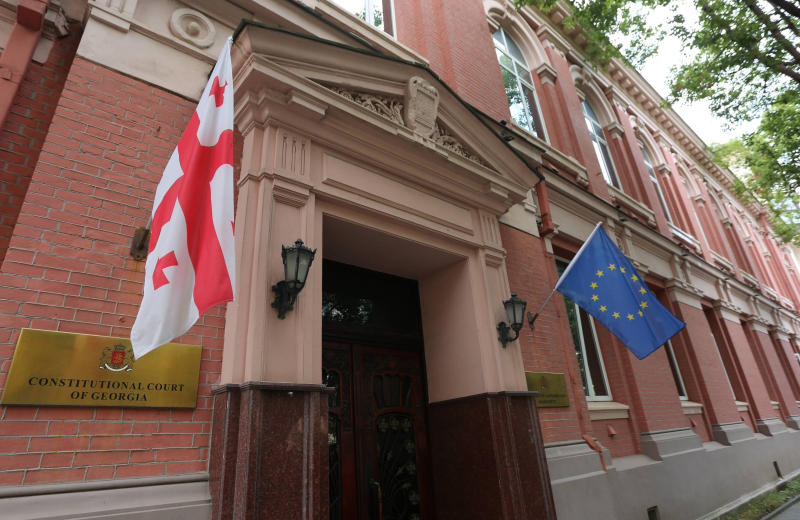
The Georgian Young Lawyers Association (GYLA) has submitted an amicus curiae opinion to the Constitutional Court on the constitutional lawsuit of members of the Georgian Parliament, which requests the banning of the political parties: "Unity - National Movement", "Coalition for Change, Gvaramia, Melia, Girchi, Droa" and "Strong Georgia - Lelo, for People, for Freedom".
GYLA disseminates information about this on social networks.
According to them, it is important for the court to take into account that the discussion of the issue of banning political parties is taking place in an essentially difficult political context.
“The document analyses the existing international standards and the national legislative framework on the most extreme form of restriction of freedom of association.
As the European Court of Human Rights has noted, in parallel with the justification of urgent public need, the court must take into account the historical context in which the banning of a party may occur. Thus, it is important for the court to take into account that the consideration of the issue of banning political parties is taking place in an essentially difficult political context, which is characterized by: the concentration of power in the hands of a single party, the gradual erosion of the principles of democratic pluralism, the systematic narrowing of opposition political parties and autonomous civic spaces, as well as the instrumentalization of the legal framework for narrow party interests.
Defensible democracy, as a concept repeatedly mentioned by the plaintiff in the claim, represents the idea of a democratic system that is ready to use preliminary illiberal measures in order to protect itself from anti-democratic forces that seek to destroy its basic principles using democratic mechanisms themselves. The purpose of this theoretical framework is to protect the democratic order from internal threats, but its operation only makes sense when the political system itself retains its democratic nature. If the regime loses its democratic character and uses the concept of a defensible democracy against political opponents, the theoretical framework of a defensible democracy loses its basis and becomes a legal instrument of politically motivated repression.
The European Court of Human Rights has clearly indicated that the banning of a political party is the most severe form of restriction of freedom of association and its use is permissible only as a measure of last resort, in exceptional cases. The basis for the banning of a party may be an organized and deliberate behavior directed against the democratic order. It is not permissible to raise the issue of the party’s responsibility solely for the individual statements or actions of certain individuals. At the same time, the party cannot be banned only for the reason that its ideas are unpopular or offensive to a section of society," the Young Lawyers Association says in the statement.