Davit Matikashvili: The European Union is increasingly resembling the Soviet Union when society is divided into patricians and plebeians
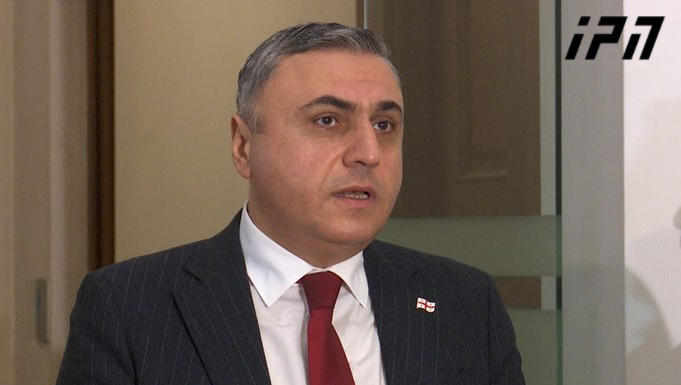
This is an example of unequal treatment that Kaja Kallas has shown to the public, said Davit Matikashvili, Chair of the Parliament’s Procedural Issues Committee, commenting on a statement by the EU High Representative for Foreign Affairs and Security Policy, Kaja Kallas. Kallas was responding to a question from a Rustavi 2 journalist, in which she noted that, unlike Georgia, the United States is not seeking to join the European Union.
According to Matikashvili, “the European Union is increasingly resembling the Soviet Union when society is divided into patricians and plebeians.”
“If you want to join the European Union, you have no right to speak out. You have no right to criticize the EU. Meanwhile, the United States subjects the European Union to harsh criticism and openly points out the flawed policies it has, unfortunately, adopted, as well as the outcome those policies will lead to. This is an example of unequal treatment that Kaja Kallas has demonstrated to the public,” Matikashvili said.
For reference, the EU High Representative for Foreign Affairs and Security Policy, Kaja Kallas, was asked the following question by a Rustavi 2 journalist:“The European Union has repeatedly stated that Georgia cannot become a member of the EU under the rhetoric it uses toward the European bureaucracy and the EU itself. Similar narratives are now reflected in the U.S. National Security Strategy. What is your response to this, considering that Washington’s rhetoric now appears to align with Tbilisi’s policies? Are you ready to accuse the Trump administration of carrying out a Kremlin-dictated scenario, or does this reveal a fundamental double standard in your policy toward Georgia?”
In response, Kallas stated that, unlike Georgia, the United States is not seeking to join the European Union.
“The difference is that the United States is not trying to join the European Union. Of course, what we read in the National Security Strategy is not pleasant reading, but we have adopted an approach of not interfering in the domestic politics of our allies.
As for Georgia, the main problem is that while Georgia declares on the one hand that it wants to join the European Union and has chosen the European path, we see steps taken by the government in the wrong direction. This is a signal to the government that as long as it continues policies of suppressing the opposition, pressuring free media, and other actions that contradict EU values, Georgia will have no future in the European Union,” Kallas said.