Giga Parulava to “Georgian Dream” MPs: If Gakharia hadn’t been there on June 20, many of you might today hold “National Movement” mandates in this Parliament
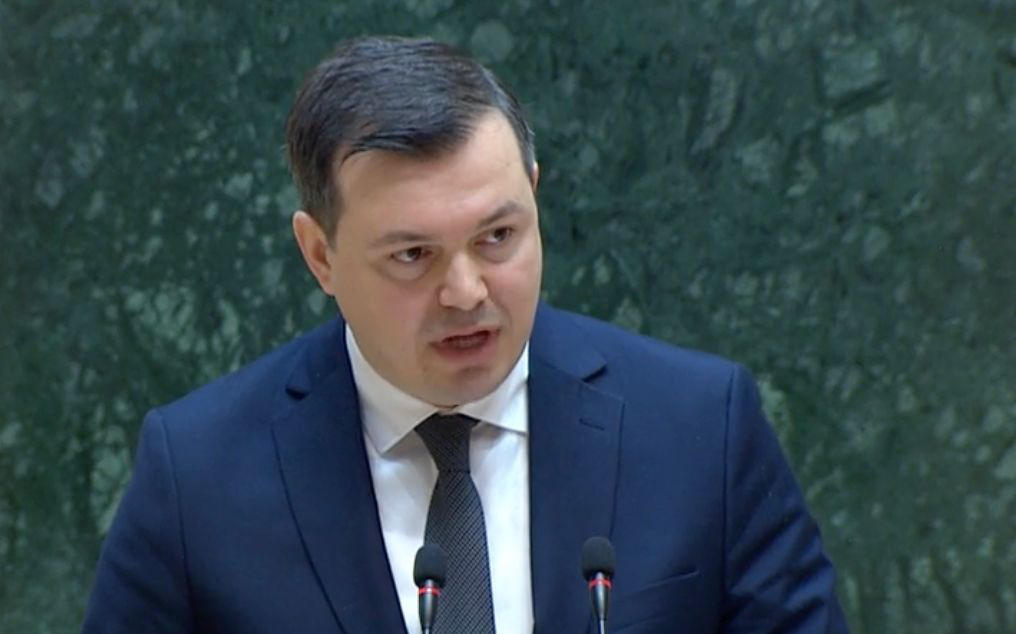
The investigation by the temporary parliamentary commission on the use of special means during the dispersal of assemblies and demonstrations must, alongside examining the methodology of using special tools, also assess the legitimacy of the decisions to disperse the gatherings. It is crucial to determine whether there was a real legal basis to interrupt the protests and whether the procedure for initiating dispersal measures complied with the imperative requirements of the law, said Giga Parulava, a member of the “Gakharia for Georgia” faction, during an extraordinary plenary session of Parliament on the creation of a temporary investigative commission to study the legality of special means used during the dispersal of the 2024 demonstrations.
Parulava emphasized the necessity of answering whether law enforcement authorities used active special means that posed unjustified risks.
He presented a draft resolution for establishing a temporary parliamentary investigative commission to study the legality of using special means by law enforcement officers during the dispersal of assemblies and demonstrations in November–December 2024 in Georgia.
The commission’s purpose is twofold:
To oversee the protection of fundamental constitutional rights, life, and health - the highest state-protected values - and to study the legality of restricting assemblies and demonstrations.
To examine possible abuse of authority by law enforcement officers when using special means during mass assemblies and demonstrations in Georgia.
There exists widespread legitimate concern in society that the use of force by law enforcement during the November–December 2024 assemblies violated Georgian legislation and international standards, potentially harming human life and health.
This concern is based on information and video materials in international media that question the legitimacy, proportionality, and appropriateness of police and special forces’ actions, including the use of chemical agents and other active special means, which may cause serious or long-term health complications if misused.
It is essential to determine whether law enforcement used active special means that posed unjustified risks, were prohibited under Georgian law, or were applied disproportionately or excessively.
Article 31 of the Law on Police sets principles for using coercive measures, establishing standards of proportionality and intensity to prevent risks to life and health. Article 33, paragraph 3, explicitly defines types of active special means and their appropriate use. Even minor deviations from these standards during the dispersals constitute criminal law violations.
In addition, the investigation must examine the legitimacy of the decisions to disperse assemblies and demonstrations. It is critical to establish whether there was a real legal basis for the dispersals and whether constitutional rights and the International Declaration of Human Rights were respected, or whether peaceful assemblies were artificially and unlawfully interrupted, leading to the use of force.
Following the assemblies and use of force, society and affected individuals did not receive complete, reliable, or transparent information about the events. Law enforcement failed to provide thorough reporting to the public.
Given the potential involvement of state officials in violations, there is a legitimate concern that internal investigations or prosecutorial actions may be insufficiently effective, objective, or independent. The parliamentary oversight mechanism through a temporary investigative commission aims to fill this gap.
The commission will ensure precise and transparent investigation within its competence, exercising effective parliamentary oversight. Parliament will determine whether officials exceeded their authority, whether the use of special means was lawful, and ensure legal accountability in all cases where human health was harmed.
The severity of the issue and high public interest require not only legal but also political and constitutional response, Parulava stated, urging colleagues to support the initiative.
During the session, the opposition MP also responded to a critical remark from a member of the majority:
"Regarding Gakharia’s participation in the diversion, one thing must be remembered - if Gakharia hadn’t been there on June 20, many of you might today hold ‘National Movement’ mandates in this Parliament. Yes, it was Gakharia who saved this Parliament from being stormed on June 20," Parulava said, addressing MPs from “Georgian Dream.”