Nikoloz Samkharadze on the European Council report: We want to hear a detailed opinion on what steps the EU can take to compensate Georgia for the economic damage if our country imposes economic sanctions on Russia
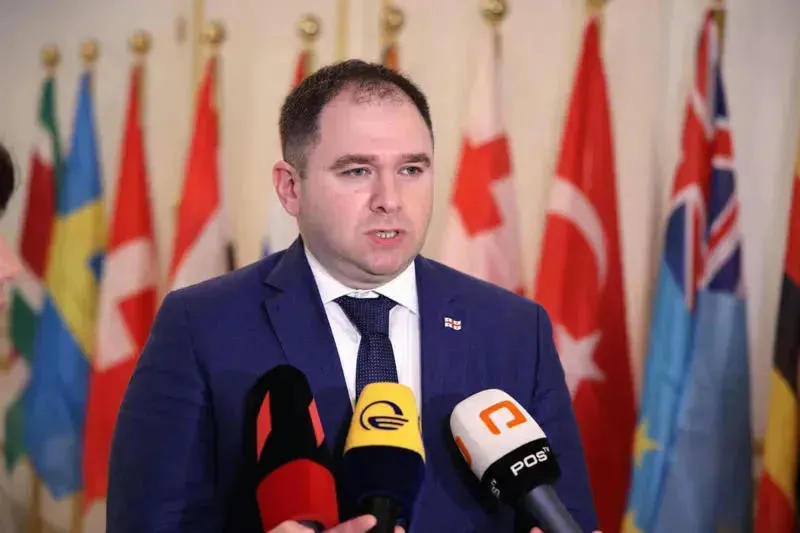
“We did not see anything new in today’s statement of the European Council. We want to hear a detailed opinion on what steps the European Union can take to compensate Georgia for the economic damage the country would incur if Georgia were to impose economic sanctions on Russia,” said Nikoloz Samkharadze, Chair of the Parliament’s Foreign Relations Committee, commenting on the conclusions adopted by the Presidency of the Council of the European Union regarding enlargement.
According to him, “the EU continues a policy that ignores dialogue and, on the other hand, disregards Georgia’s interests.”
“We did not expect much from this document anyway, but we want more details from them on whom exactly they refer to when they speak about illegally detained persons; which law they mean that allegedly restricts human rights. We also want to hear a detailed opinion on what steps the EU can take to compensate Georgia for the economic damage it would suffer if Georgia imposed economic sanctions on Russia. We have been talking about this for years, but apart from these general remarks, we have not received answers to a single question. So their policy continues to ignore dialogue and, at the same time, consideration of our interests,” Samkharadze said.
In addition, Samkharadze spoke about the part of the document that addresses visa liberalization, noting that “this wording also makes it clear that the EU does not intend to suspend visa-free travel for Georgia, which is welcome, as such a step would be unreasonable on their part.”
“As for the claim that we do not have alignment on certain issues, the much-discussed so-called ‘Transparency Law’ should be singled out, which has nothing to do with visas at all. We want to have a dialogue about how the transparency law and the law on non-governmental organizations are connected to visa liberalization.
It is also true that we do not have full alignment with the EU in visa policy, because we have a visa-free regime with many countries with which the EU does not. These include Turkey, Armenia, and Azerbaijan. We have our own interests, and it is important for us to have visa-free travel with these countries. In this component, of course, we do not have alignment with the EU’s visa policy, but they know this very well. We have discussed this many times, and when Georgia received visa liberalization, there was also a shared understanding that Georgia could not act in the same way as other Schengen member states, because we are not full-fledged Schengen members. When Georgia fully becomes an EU member, we will have to fully implement the rules that the EU has, but until then, we have our own visa policy,” Samkharadze noted.
For reference, the conclusions adopted by the Presidency of the Council of the European Union on enlargement state that Georgia’s EU accession process has effectively reached a deadlock until the authorities demonstrate firm commitment to changing course and returning to the path toward EU membership.
As noted in the document, the Council points to a serious overall backsliding in the areas of democracy, human rights, and the rule of law.
At the same time, the Council expresses regret over Georgia’s failure to implement the recommendations of the seventh report on the visa suspension mechanism and calls on the Georgian authorities to fulfill these recommendations and immediately meet the visa liberalization criteria.
The Council urges the Georgian authorities to release all unjustly detained politicians, journalists, and activists, repeal repressive legislation, adopt democratic, inclusive, and sustainable reforms in line with the fundamental principles of European integration, and stop using aggressive rhetoric against the EU, EU ambassadors, and the Head of the EU Delegation—these steps being identified as initial measures to re-engage on the EU path. The Council reiterates the EU’s support for Georgia’s sovereignty, independence, and territorial integrity within its internationally recognized borders and emphasizes that the EU remains firmly committed to the peaceful resolution of conflicts and to the policy of non-recognition and engagement, including through the work of the EU Monitoring Mission in Georgia.