Georgia’s Ambassador to South Korea steps down
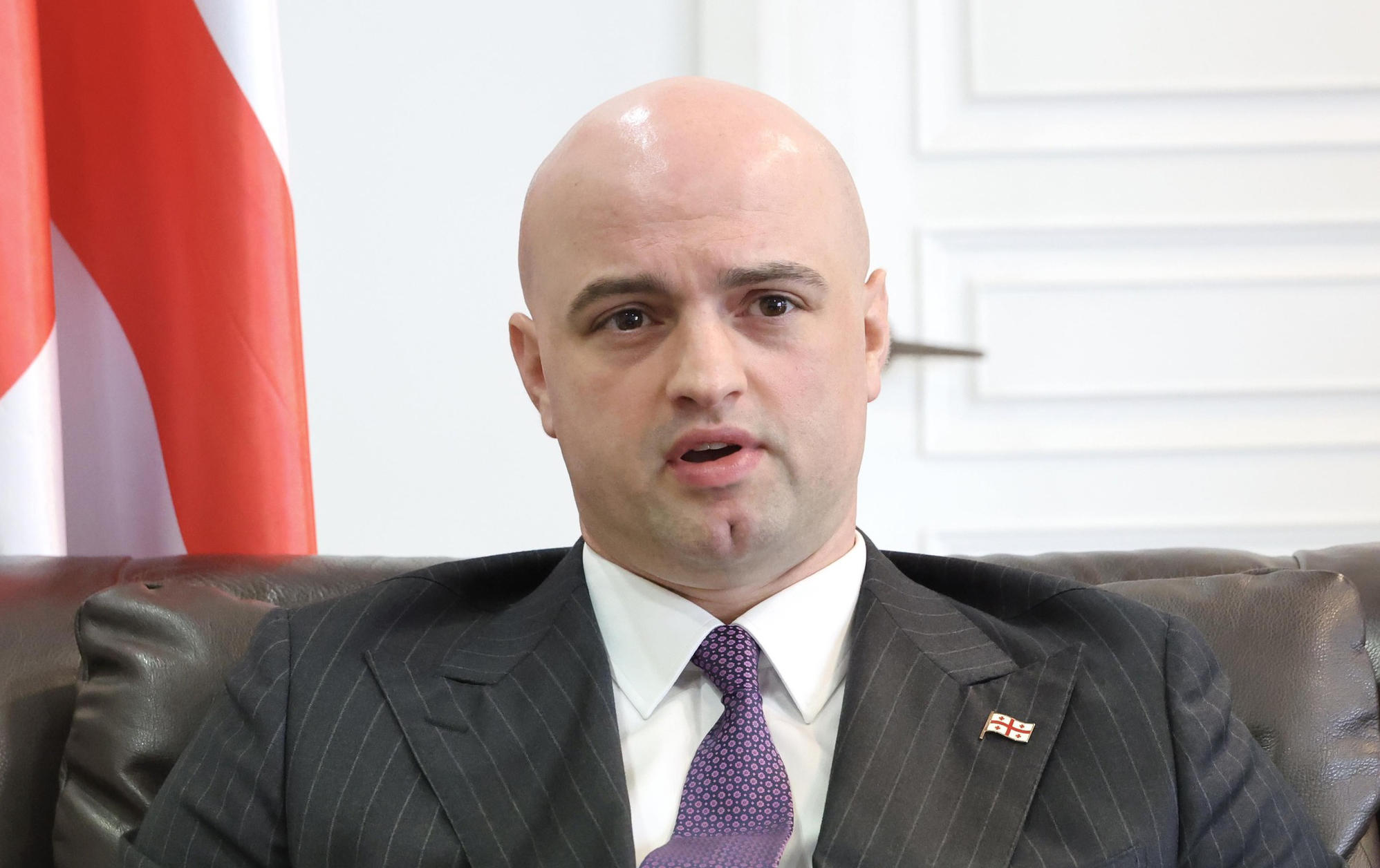
“I will conclude my duties as Georgia’s Ambassador to Korea on December 22. The reasons and circumstances are no longer of interest—I am preparing for new adventures,” wrote Georgia’s Ambassador Extraordinary and Plenipotentiary to South Korea, Tarash Papaskua, on social media.
He said that he is leaving the Ministry of Foreign Affairs along with the diplomatic service.
“I will conclude my duties as Georgia’s Ambassador to Korea on December 22. Together with my family, I am returning to Georgia for good. The reasons and circumstances are no longer of interest. I cannot say anything specific about future plans, except that I am leaving the diplomatic service and the Ministry of Foreign Affairs. I am preparing for new adventures.
As for serving as Georgia’s Ambassador to Korea (my first posting at the ambassadorial rank), it was truly a special honor and responsibility. I would like to express my sincere gratitude to former Minister Ilia Darchiashvili for this opportunity and for nominating my candidacy. In this country of North Asia with truly ancient traditions and culture, which today is the 4th largest economy in Asia, I began my work with great determination, enthusiasm, and commitment.
South Korea is truly exceptional in many respects. Most importantly, perhaps, the Korean people achieved what once seemed impossible: in just seventy years, since the end of the Korean War (1950–1953), the country has risen from being one of the poorest nations to becoming one of the world’s leading states—both in strengthening a democratic society and in innovation-driven, future-oriented economic development. Its ancient and beautiful cultural heritage, as well as the global spread of Korean culture—so-called K-pop, K-dramas, K-beauty, and K-food—are, in themselves, a subject of admiration and appreciation.
In terms of deepening Georgia–Korea bilateral partnership relations, I believe the past three years were not without results. We had many successes, as well as some failures. It must also be said that over the past three years, the global geostrategic environment has changed dramatically, which, of course, affected the dynamics of our relations as well (U.S.–China strategic competition; Russia’s open aggression and destructive war against Ukraine; the ongoing occupation of our country’s territories by Russia; Russia’s strategic alliance with North Korea, which has critically increased the risk of escalation on the peninsula; and new hotspots in our own region and neighborhood).
At the same time, despite genuinely productive bilateral cooperation, in the Georgia–Korea context, as is publicly known, in 2023 we unfortunately were unable to support Busan’s candidacy in the elections for World Expo 2030, which was one of Korea’s most important political, economic, and cultural priorities. Of course, countries often have to choose in favor of one partner or another, and that is normal. However, as a newly appointed ambassador at the time, I vividly remember how much effort, time, and resources Korea devoted specifically to this issue, and consequently how much time was lost in the dynamics of bilateral relations.
Also, on December 3, 2024, something happened in Korea that had not occurred in the past 40 years—a state of emergency (martial law) was declared, followed by the president’s immediate impeachment, an accompanying acute internal political crisis, and ultimately a democratic change of government through elections on June 3, 2025.
Unfortunately, the internal political situation in our own country has also been unfavorable. Over the past nearly two years, our diplomatic efforts have noticeably weakened, and Georgia’s image has been significantly damaged. Still, against this background, I will briefly outline what was achieved: after the COVID-19 pandemic, we restored direct Seoul–Tbilisi charter flights; over three years, the number of Korean visitors nearly quadrupled; negotiations on a free trade agreement with Korea were successfully completed in just eight months, with signing planned in the near future. In November 2024, Korea officially granted resident embassy status to its diplomatic mission in Tbilisi; a KOTRA office was also opened in November 2025. And importantly, on June 3, 2025, for the first time in 17 years, Korea supported a UN General Assembly resolution on the status of internally displaced persons and refugees from Georgia’s occupied regions.
Of course, I would like to thank our Korean colleagues and partners for their constructive cooperation and support. I also thank the Korean people for the warmth, attention, and care shown to me and my family. During this time, I gained many Korean friends, with whom our relationships will certainly continue in the future. Sincere thanks, and until we meet again, Korea!” wrote Tarash Papaskua.