Guram Macharashvili: It is up to the United States to determine its immigration policy in relations with countries - in today’s challenge-filled world, there is nothing surprising about this
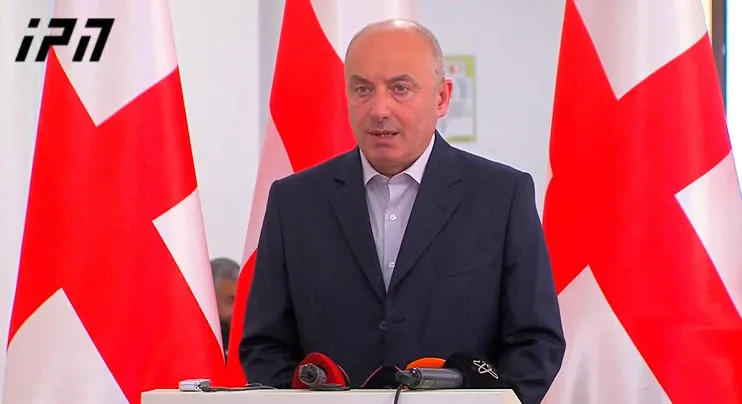
“It is the United States’ decision how it defines its immigration policy in relations with countries. In today’s world, which is full of challenges, there is nothing surprising about this,” said Guram Macharashvili, an MP from People’s Power, commenting on the U.S. decision to temporarily suspend the issuance of immigration visas for citizens of 75 countries, including Georgia.
According to him, every country, including the United States, makes decisions based on the interests of its state and its people.
“We clearly see what processes are unfolding in the world, including what kind of policy and stance the United States has in political processes in general. Accordingly, it is up to them to decide how to define immigration policy in relations with countries and so on. We see that every country, including the United States, makes decisions based on the interests of its state and its people. So first, in today’s challenge-filled world, there is nothing surprising. Second, both the U.S. Secretary of State and the President said at the time, when they entered the White House, that every country should make decisions based on its national interests,” Macharashvili said.
When asked why U.S. interests would conflict with allowing Georgian citizens to enter the country with visas and what the ruling party had done to ensure Georgia was not included on the list, Macharashvili responded that he hopes that under the Trump administration Georgia’s approaches will be assessed correctly in the future and that “not only in this direction, but overall, partnership relations will be reviewed.”
“I have exactly the same question you raised. Why could traveling to the United States with a visa be a problem for a Georgian citizen? Moreover, this question is not new - we have been asking it for years. For years, 33% of Georgian citizens received U.S. visas, while 66% of Russian citizens received them. I also have this question now: why does this happen when the United States tells us that Russia is unacceptable to them? For us, it is unacceptable because it is an occupying country. But when the U.S. tells us we are its partner, and at the same time we look at years of statistics showing that visas were issued to 33% of Georgian citizens and 66% of Russian citizens - this question has existed for years. You are not the only ones asking it. We hope that these processes will be reviewed in general. We have seen that the policy we spoke about in our statements and implemented has already been underway under the Trump administration for a year, and we hope that in the future Georgia’s approaches will be assessed correctly - not only in this direction, but that partnership relations overall will be reconsidered.
We are doing everything not only with the United States but with all countries to maintain partnership relations. We work based on the principle of fairness, and we hope that the principle of fairness will inevitably be established in the world. These processes are gradually beginning,” Macharashvili said.
For reference, the United States will suspend the issuance of immigration visas for citizens of Georgia as well. The full list of countries is as follows: Afghanistan, Albania, Algeria, Antigua and Barbuda, Armenia, Azerbaijan, the Bahamas, Bangladesh, Barbados, Belarus, Belize, Bhutan, Bosnia, Brazil, Burma, Cambodia, Cameroon, Cabo Verde, Colombia, Côte d’Ivoire, Cuba, the Democratic Republic of the Congo, Dominica, Egypt, Eritrea, Ethiopia, Fiji, The Gambia, Georgia, Ghana, Grenada, Guatemala, Guinea, Haiti, Iran, Iraq, Jamaica, Jordan, Kazakhstan, Kosovo, Kuwait, Kyrgyzstan, Laos, Lebanon, Liberia, Libya, Macedonia, Moldova, Mongolia, Montenegro, Morocco, Nepal, Nicaragua, Nigeria, Pakistan, the Republic of the Congo, Russia, Rwanda, Saint Kitts and Nevis, Saint Lucia, Saint Vincent and the Grenadines, Senegal, Sierra Leone, Somalia, South Sudan, Sudan, Syria, Tanzania, Thailand, Togo, Tunisia, Uganda, Uruguay, Uzbekistan, and Yemen.
According to the U.S. side, the pause on immigration visas does not apply to tourist visas. They clarified that “this pause applies only to immigrant visa applicants; tourist visas are non-immigrant visas.”
For information, the pause will take effect on January 21 and will remain in place indefinitely until the U.S. State Department completes a reassessment of visa procedures.