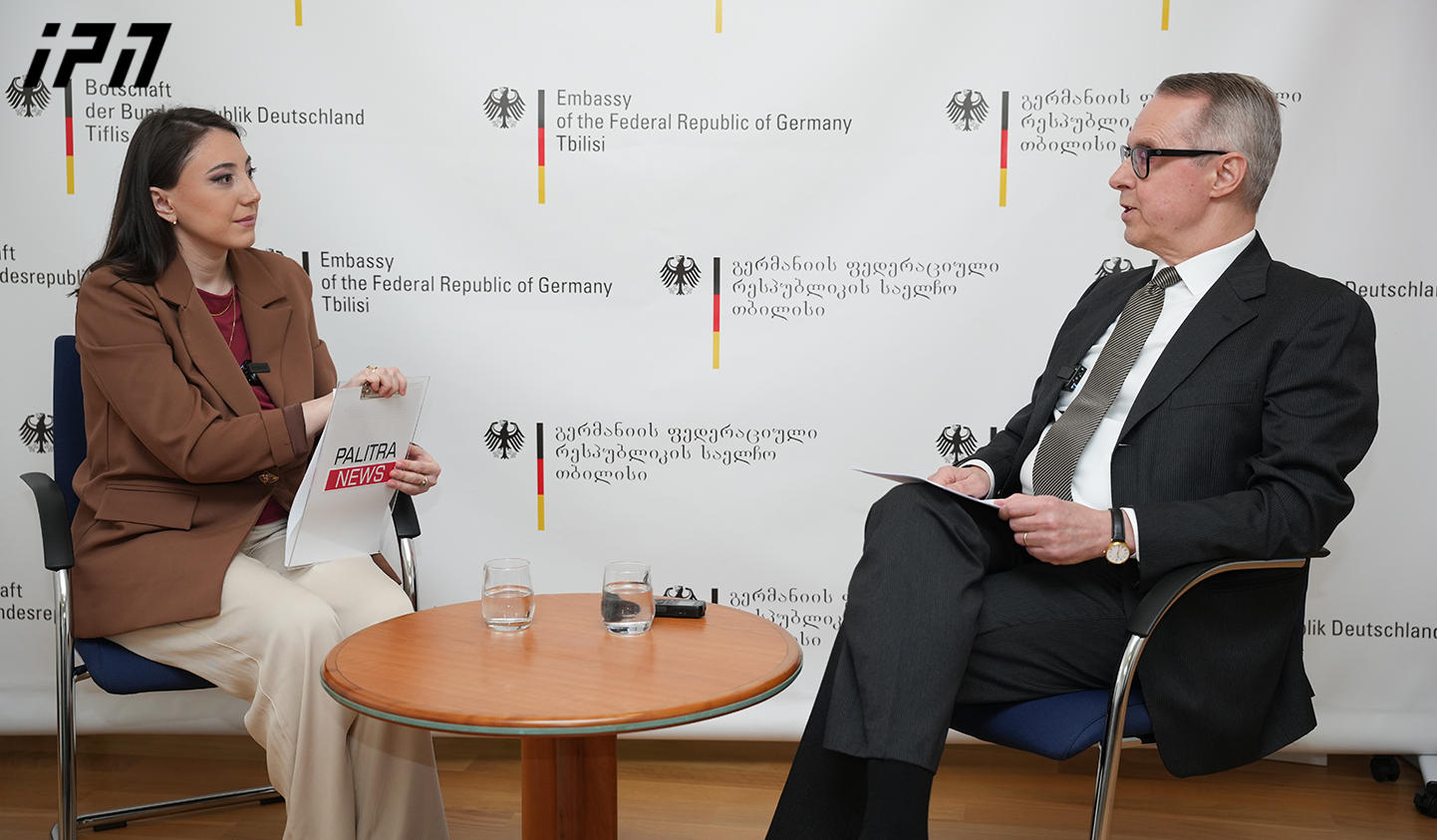
Lela Jejelava: Not being invited to the Davos Forum means our government fails the “face control”; criticizing “Georgian Dream” over Iran is not quite right - caution toward the Iranian regime is understandable
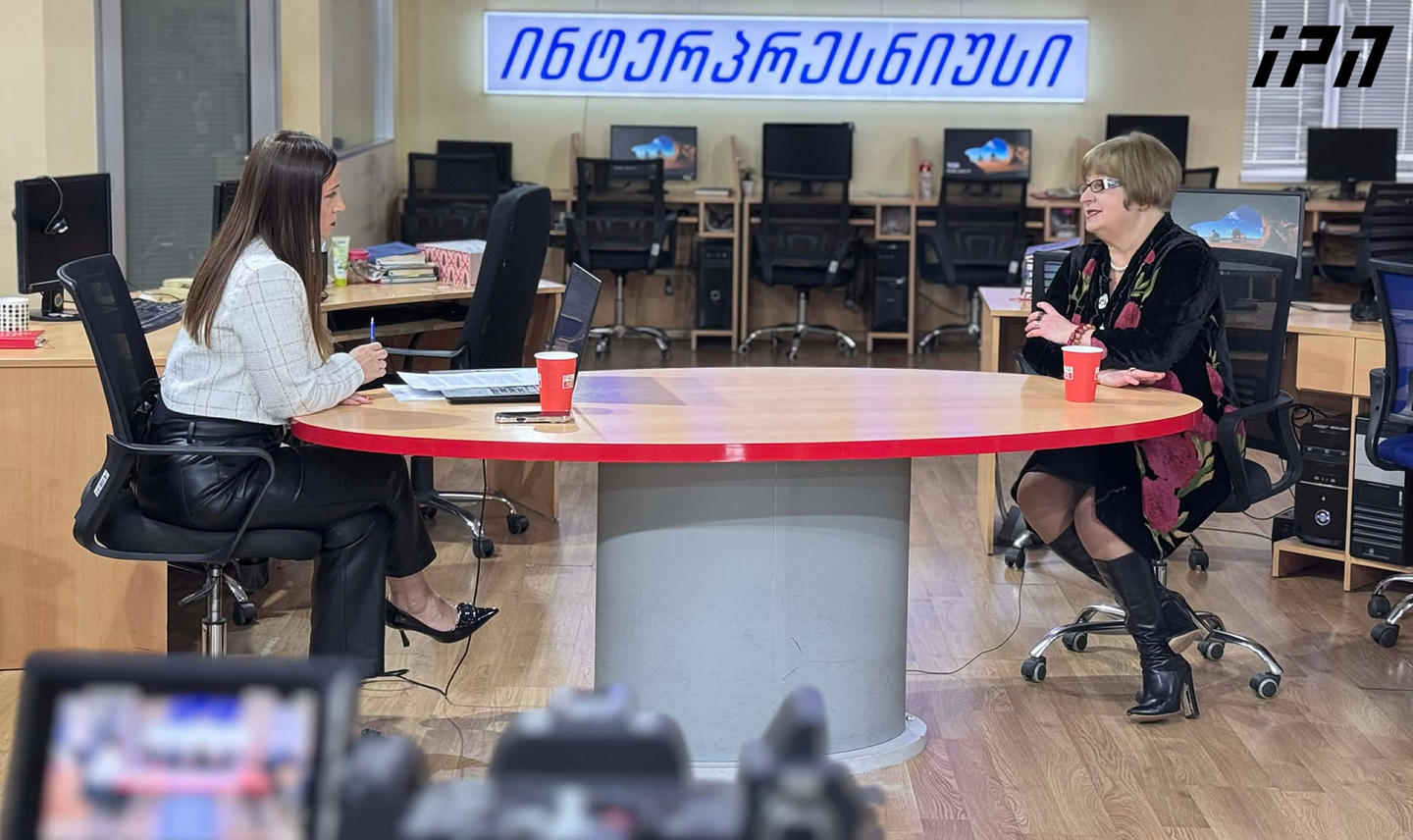
Georgia’s government fails the “face control” in the political circles where global development trends and future prospects are determined and discussed, analyst Lela Jejelava said while speaking on PalitraNews’ program Day’s Newsroom, commenting on the fact that Georgia is not participating in the World Economic Forum in Davos.
According to Jejelava, this is a clear message to “Georgian Dream” that it is not a member of a prestigious club.
“[Not being invited] is a very clear message to ‘Georgian Dream’: ‘You are not members of this prestigious club that determines the trends and prospects of global economic and political development.’ Georgia’s government fails the ‘face control’ in the political circles where the world’s development trends and prospects are decided and reviewed,” Lela Jejelava said.
Addressing other issues, the analyst also summarized global political developments, including comments on U.S. President Donald Trump’s statement about plans to impose 10% tariffs on eight countries amid disagreements over Greenland. As Jejelava explained, “this is a policy of shaking up Europe.”
“We are living in a very interesting era, when the entire epochal paradigm is changing, along with the architecture of the world order, and this is a very painful process. The international agenda that was formed after World War II - created in a completely different era with entirely different characteristics of global interaction - cannot be relevant to the digital age, which has absolutely different parameters. Therefore, this process is quite painful, including for transatlantic relations. The transatlantic alliance now faces a different type of challenges and can no longer sustain the rules of the game and standards that were established in this space.
Trump’s policy, which is very specific and often creates an effect of strategic uncertainty and ambiguity, does not ultimately define U.S. policy in practice, but it seems to me that it keeps both partners and opponents in constant readiness. It is very difficult to predict what Trump will say and what actions will follow his words. We know that institutions work in the United States, and it has already become quite evident that in the direction of foreign policy, the main levers are still in Marco Rubio’s hands. So, one thing is Trump’s rhetoric, and another is how the situation is actually shaped.
I believe the United States is trying as much as possible to get a much stronger Europe in terms of partnership than it has been so far. I think this is a policy of shaking up Europe. In many cases, when Trump makes certain claims against Europe, they are not entirely groundless. China is the main opponent for the United States. The U.S. has always viewed the EU and Europe as its number one ally. When, one day, it turns out that the EU is actively cooperating with America’s opponent on a range of issues, it is natural that the United States defends its strategic interests and tries to pull its partner fully to its side.
As for Trump’s position voiced regarding Greenland, this is not a whim; it is a very important strategic interest for him in terms of security. Finding a form of cooperation is entirely possible. I am convinced that sooner or later an agreement will definitely be reached on this issue. Right now, everyone is simply trying to pull the blanket more toward themselves. The discussion is about ensuring that neither side ends up losing. Weakening U.S. security is not exactly the right decision for Europe either,” Jejelava said.
Another issue Lela Jejelava addressed was Donald Trump’s statements regarding the ongoing developments in Iran. According to Jejelava, “any hastily taken measures in Iran could lead to far more severe consequences for the Iranian people themselves, the region, and the international geopolitical environment.”
“I would not say that U.S. assistance is not visible. Anyone familiar with how Iran’s system functions internally would find it hard to imagine what immediate assistance ‘on the way’ could look like. Marco Rubio very clearly outlined what U.S. assistance to the Iranian people entails. This includes psychological and informational pressure that is effectively being exerted on Iran, cyberattacks, and issues related to the internal positioning of elites. The situation that has unfolded in Iran today includes economic, political, religious, environmental, and social crises - every possible type of crisis a state can face is present. The regime has no resources to break the resistance of the people. The processes underway in Iran are completely transforming the region and reshaping the entire international agenda. Therefore, any hastily taken steps in Iran could result in much more serious consequences for the Iranian people, the region, and the international geopolitical landscape,” Jejelava said.
As for the statements made by “Georgian Dream” regarding developments in Iran and the criticism of Georgia’s government for not condemning or distancing itself from the actions of Iran’s authorities, the analyst said she does not fully share this criticism.
“With regard to Georgia’s position, condemning the actions of the Iranian authorities would not have any real power behind it. Accusing the government of not doing more, in my opinion, is not the most accurate or targeted step against the authorities. In reality, they can do nothing. Caution toward the Iranian regime on the part of Georgia’s government is very understandable and something that must be taken into account,” Lela Jejelava concluded.