GYLA: Human rights crisis reaches a new level as citizens deemed offenders for protesting on sidewalks
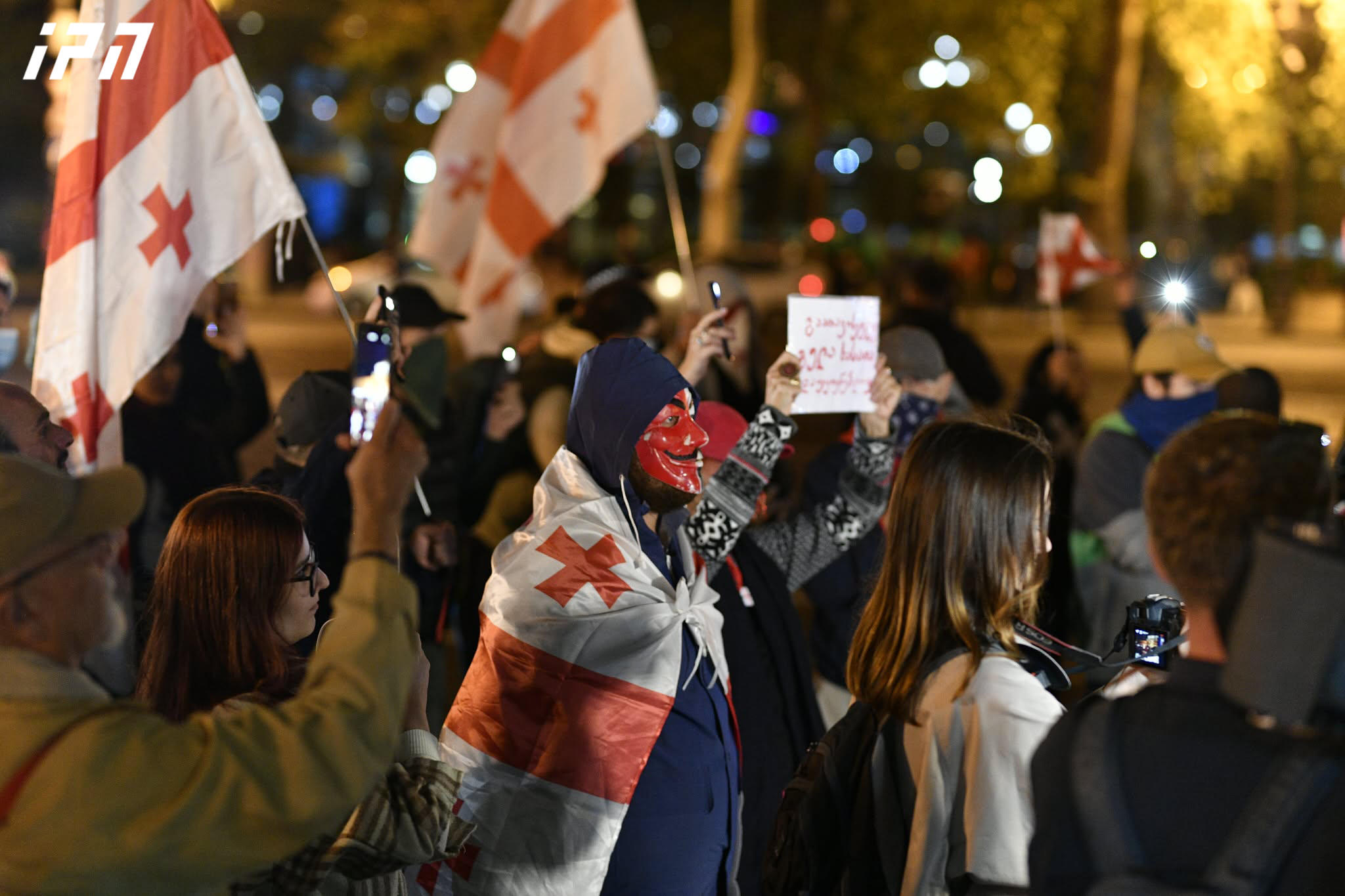
The Georgian Young Lawyers’ Association (GYLA) stated that the human rights crisis in Georgia has reached a new peak, as citizens were legally recognized as administrative offenders for protesting on a sidewalk.
According to GYLA, the practices of the Ministry of Internal Affairs and the courts in enforcing such measures reflect not only repression against individual activists but also aim to create a chilling effect on the broader right to hold demonstrations.
"Today, January 23, 2026, the human rights crisis reached a new level when Georgian citizens (Dimitri Jamburia, Mikheil Zakareishvili, Sandro Megrelishvili, Natia Chavchanidze, Nukri Kakulia, Luka Nagliashvili, Ani Akhmeteli) were deemed administrative offenders by the court for protesting on the sidewalk," GYLA said.
The organization emphasized that such decisions effectively restrict the fundamental right to freedom of assembly, undermining its very essence, and are clearly unconstitutional.
Freedom of assembly, as a means of expressing opinions, is a cornerstone of democratic society. The right to peaceful assembly allows individuals, regardless of their status, to voice concerns, criticize, and present alternative viewpoints. While assemblies may naturally cause temporary disruptions in public life, any restriction must undergo a strict balance-of-interests test.
GYLA represents Dimitri Jamburia in these cases. While the court formally cited European Court of Human Rights decisions, it limited its reasoning to general abstract standards rather than applying them to the specifics of the case. Proper application of ECHR standards would have prevented the City Court of Tbilisi from declaring citizens administrative offenders for merely protesting on the sidewalk.
Furthermore, GYLA’s request to forward the case to the Constitutional Court was rejected. This means the court did not consider whether the legal norm applied in the case might be unconstitutional. If constitutional review had been applied, the general courts would have had an additional mechanism to uphold the constitutional principle of the supremacy of law.
The court also rejected multiple requests to examine evidence, including reviewing camera recordings for legality.
Applying the same rules for sidewalk protests as those for obstructing traffic, even though sidewalk gatherings minimally disrupt public life, indicates that the goal of such decisions is not protecting others’ rights or public order, but creating undue obstacles for assemblies and demonstrations.
GYLA concluded that the practices of the Ministry of Internal Affairs and the courts, in pursuing such anti-constitutional human rights policies, not only repress individual activists but also have a chilling effect on the ability to hold demonstrations, potentially causing long-term damage to both individual rights and the foundations of democratic society.