Tengiz Sharmanashvili on education reform and the merger of TSU and GTU: Optimization is necessary to align graduates with labor market needs
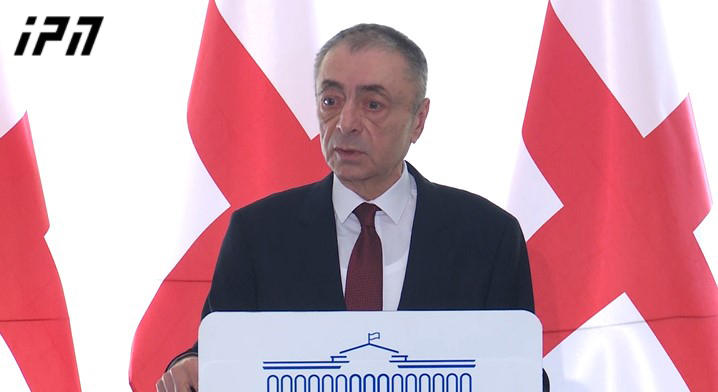
Speaking to journalists about education reform, Tengiz Sharmanashvili, a deputy from Georgian Dream, explained the rationale behind optimizing university programs and specialties.
“Suppose Georgia needs 150 engineers. We should not create an artificial situation where 700 engineers are trained and funded, when we know that we cannot employ more than 150 in this field. That is why this optimization and redistribution of specialties took place,” Sharmanashvili said.
He emphasized that this focus applies only to state universities, noting that private universities are free to manage their programs independently. The main principle, according to Sharmanashvili, is that public funding should align with national needs, so that graduates contribute effectively to the country’s economy.
“Since the state spends money on these universities, it must ensure the funding is effective. This does not restrict private institutions. The goal is to match the state’s investment with actual labor market demand. Taxes collected from citizens’ salaries must result in graduates who enter the workforce and serve the country in some form,” he said.
Regarding the merger of Tbilisi State University (TSU) and Georgian Technical University (GTU), Sharmanashvili noted that both universities’ leadership are involved in planning the effective redistribution of functions:
“The merger is an optimization, and this policy will be implemented nationwide. Interest in technical subjects is very low - almost no one chooses engineering or other technical programs. Consolidating universities in Tbilisi into a single state institution makes management and planning easier. Both universities’ leadership are involved in ensuring functions are distributed efficiently,” he explained.
For context, Givi Mikanadze, Georgia’s Minister of Education, Science, and Youth, previously announced that TSU and GTU will merge, and a temporary governing council will be established to manage the reorganization, including appointing acting rectors and deputy rectors.