Nugzar Tsiklauri: Meetings with Botswana or Kurdish representatives won’t change Georgia’s historical choice - “Georgian Dream’s pseudo-solidarity is a clay-footed colossus”
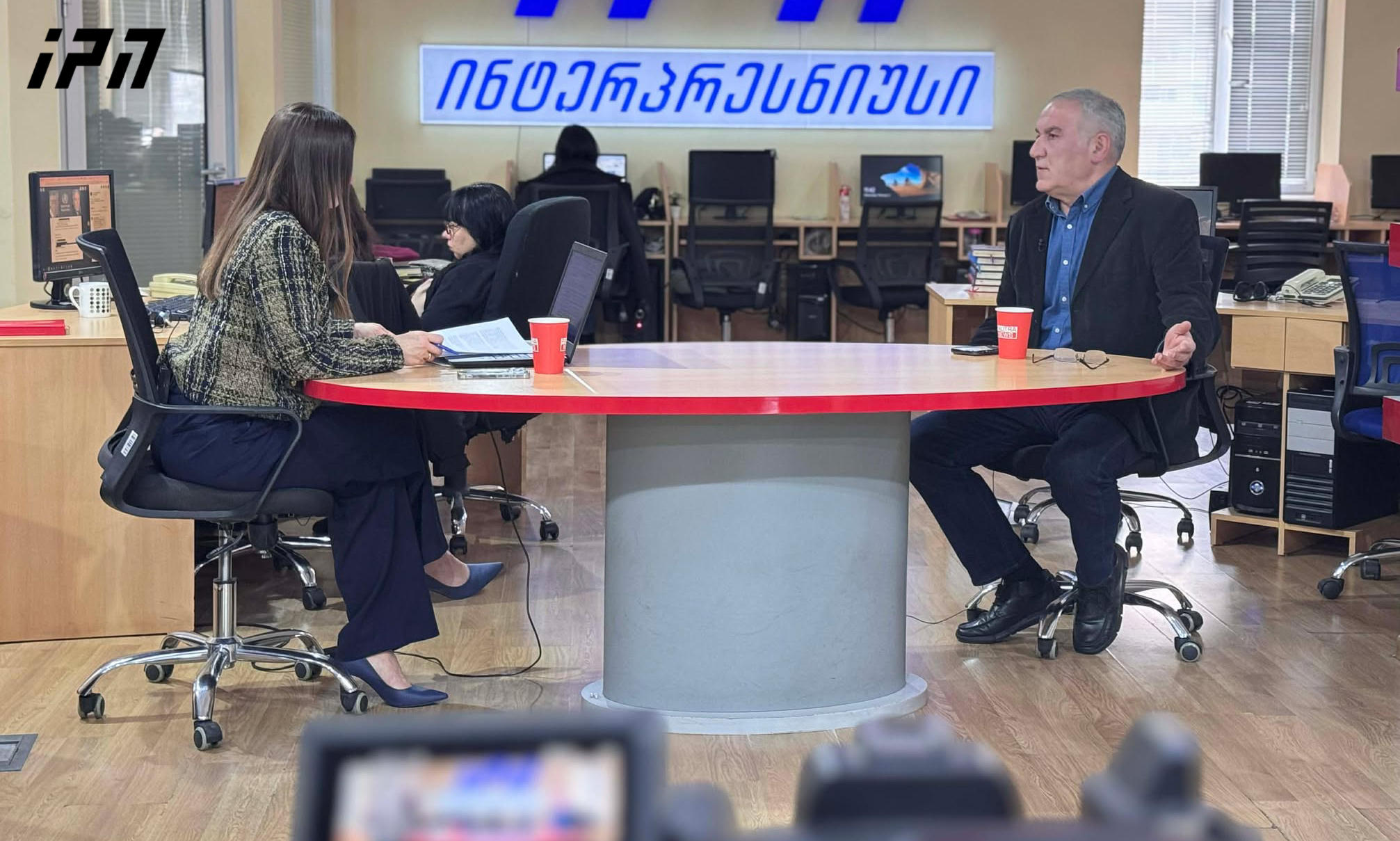
In January, Nugzar Tsiklauri, one of the leaders of the Coalition for Change, commented on meetings held by Georgia’s Prime Minister during the World Government Summit in Dubai, stating that visits to countries like Botswana or meetings with Kurdish representatives cannot alter Georgia’s historically determined path, especially when relations with major partners such as Italy, Germany, the UK, France, and the US are at a critical point.
“Whether it was Ashgabat before, or now Botswana, we might expect visits to Bishkek or some other capitals, but no meetings with Botswana or Kurdish representatives can change a choice that has been historically determined for centuries,” Tsiklauri said.
He added that the position of the ruling party, Georgian Dream, is pushing Georgia into full international isolation:
“We respect all countries and seek friendly relations with everyone, but Georgia’s place is in the European and Euro-Atlantic space. No meetings with Botswana or Kurdish representatives can change the choice that has been determined over centuries,” he said.
Tsiklauri also touched on US-Georgia relations, in the context of the meeting between Deputy Foreign Minister Lasha Darsalia and US Deputy Secretary of State Brendan Hanrahan. He emphasized that without democratization, new elections, and a clear statement from Georgia affirming a return to the Euro-Atlantic course, no progress with the US can be expected.
“The position of the United States has been shaped by the unfortunate developments where we no longer have a strategic partnership with this powerful country due to Georgian Dream’s actions. The US expects respect for the will of the people and the release of political prisoners. This is the core on which partnership between the two countries could be built. Without progress in these areas, obstacles to US-Georgia relations remain insurmountable. The US has a clear position, expressed in multiple State Department statements, focusing on democratization, respect for human rights, and reversing Georgia’s current tilt toward Russia and the Chinese Communist Party,” he said.
Tsiklauri criticized Georgian Dream’s attempts to restore ties with the US, noting that without real democratization, new elections, and reaffirmation of the Euro-Atlantic orientation, no positive outcomes will be achieved. He further criticized domestic governance:
“When the head of the State Security Service is regulating prices in stores, there is obviously no talk of democracy. The country is in a severe political crisis, which has not been resolved in a year. Claims that Trump’s election would change Georgia or Georgian Dream’s behavior proved false. Their propaganda now attacks the US president and brands him as an architect of so-called ‘deep state’ rebranding. Everything is on the table,” he said.
Finally, Tsiklauri addressed the domestic political crisis, warning that Georgia is heading toward political and moral collapse:
“This crisis cannot be resolved through violence. Georgian Dream refuses to confront it politically, which requires dialogue with the opposition, new parliamentary elections, and the release of political prisoners. Instead, they try to impose terror across society - telling some people not to stand on the sidewalk, telling others not to express opinions. This is reminiscent of the 1930s Bolshevik rise, where people were persecuted for thinking differently. Georgian Dream thinks it can solve problems through force - it cannot. These people are the spiritual heirs of Gigla Berbichashvili; their political lineage is evident. They do not consider accountability to the Georgian people or academia; rather, they try to fill positions with loyalists or political appointees. Ultimately, this leads to a dysfunctional state. Their supposed strength is a pseudo-solidarity - a clay-footed colossus that will crumble at the first serious blow,” Tsiklauri concluded.