Levan Makhashvili: The Council of Europe asked Georgia to share its experience in combating foreign interference - we can say the ice has been broken
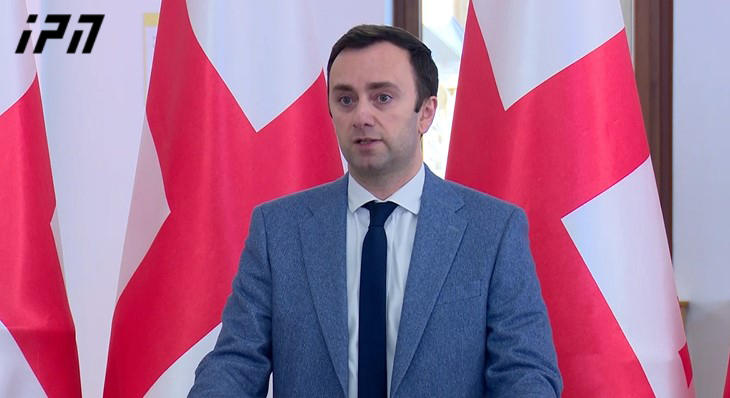
The Council of Europe has asked Georgia to share its experience in combating foreign interference, Parliament’s Chairman of the European Integration Committee, Levan Makhashvili, told journalists.
According to Makhashvili, the Council of Europe is interested in what kind of experience Georgia has in this area.
He stated that Georgia has already compiled its experience, legislation, steps, and decisions and submitted them to the Council of Europe.
“We can say that the ice has been broken. Finally, the Council of Europe has acknowledged that this [foreign interference] is a problem. It is not an artificially created issue dictated by individual political processes, but a real problem facing not only Georgia, but many member states of the Council of Europe. The fact that different countries face situations where other states interfere through manipulation, disinformation, and other means is an established reality, and the Council of Europe’s decision confirms this. The Council of Europe has decided to study the situation within its member states and is discussing offering concrete mechanisms to these countries - solutions that, on the one hand, respect the constitutional order and, on the other hand, are compatible with the protection of human rights. It is in this context that they approached Georgia and expressed interest in our experience in this direction - from sabotage to election interference. We have compiled our experience, legislation, steps, and decisions and provided them,” Makhashvili said.
He added that Georgia shared all of its experience in this area with the Council of Europe, starting from the “transparency law” and ending with the most recent legislative initiatives.
“We sent Georgia’s experience in dealing with and combating foreign influence. All relevant legislation - from the transparency law to the latest draft laws - was included. We also shared our experience of how Georgia addresses this specific problem. In some cases, other countries fight this issue in similar ways, in others differently. On some issues we have a shared vision, on others there are differences. It is up to the Council of Europe to decide what experience will be best for them and what other Council of Europe member states might be able to use,” Makhashvili said.
According to him, despite criticism, it has now become clear that foreign interference is not a real and systemic problem only for Georgia.
“When we were hearing criticism, they did not even acknowledge the problem or say that it existed. They always told us that we were fighting an imaginary threat and that we had other motives. Now it has become clear that this is a real and systemic problem not only for Georgia. This problem will become even more serious and severe for Council of Europe member states. The decision of the Council of Europe’s experts is precisely that this issue should be addressed more systematically, on a larger scale, and more seriously - starting with acknowledging the problem,” Makhashvili said.