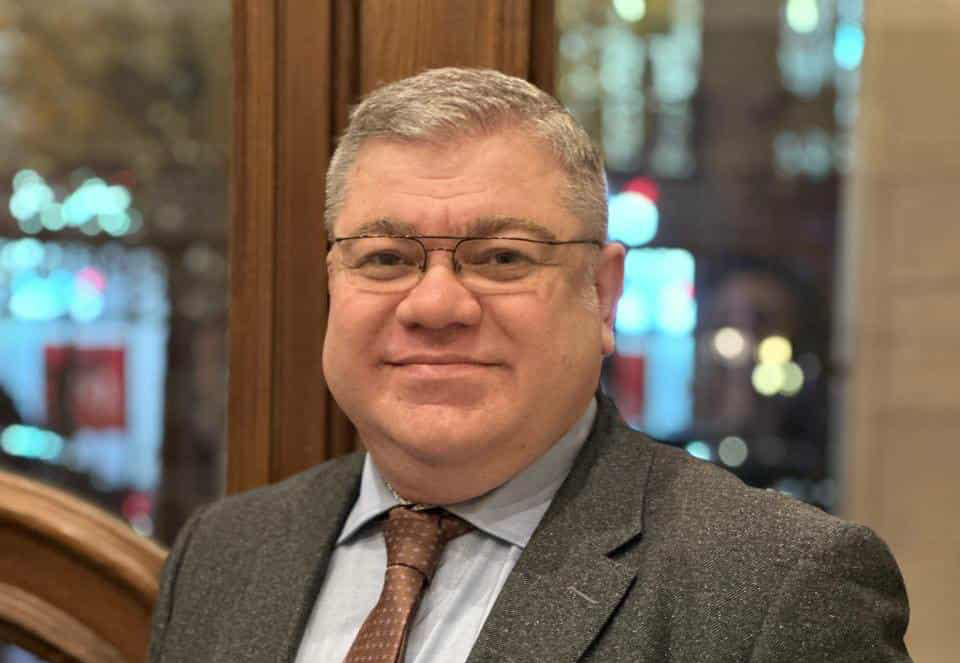
Amiran Gamkrelidze: Regulating medicine prices requires a well-thought-out approach; we must not allow shortages to emerge - The oversupply of pharmacies remains a problem, but we also can’t suddenly become Denmark, Switzerland, or Austria

According to Amiran Gamkrelidze, former Director of the National Center for Disease Control, regulating medicine prices requires a cautious and well-considered approach so that shortages of essential drugs do not arise and medicines remain accessible to the population both physically and financially.
Gamkrelidze was responding to the Prime Minister’s initiative regarding the pharmaceutical sector, which states that “ways must be found to reduce prices in the medicines and pharmacy sector, within which a government coordination commission is working.”
As Gamkrelidze told InterpressNews, the main share of a medicine’s cost should be covered by the state or the insurance system, and citizens should not have to pay the full real price of medicines.
“Generally, medicine price regulation must be approached with caution. We must not make decisions that would cause shortages of important medicines on the market. Medicines must be physically and financially accessible to the population.
For people, the primary necessity is food, followed by medicines. Therefore, when introducing regulations, a balanced approach and close cooperation between the state and the private sector are essential.
Today, Georgia has a free market, and shortages of specific medicines are rarely recorded. There is no longer a state supply system like in the Soviet period, when the Main Pharmacy Directorate ensured the import and distribution of medicines through state subsidies. Back then, choice and quality were far more limited than today. That is precisely why we must not allow medicine shortages to emerge.
Pharmacy chains in the country are quite strong in terms of infrastructure and services. Branded pharmacies, in terms of service culture, do not lag behind Western standards. However, the oversupply of pharmacies remains a problem - both large chains and small outlets. This issue has been on the agenda since the 1990s, including during the adoption of the Law on Medicines in 1997. International experience and WHO recommendations must be carefully considered here as well, but we cannot suddenly become Denmark, Switzerland, or Austria.
On the other hand, we face a situation where citizens have to go from one pharmacy to another because the state does not cover the cost of a specific medicine. Such problems cannot be solved in one or two days, or even in one or two months. Short-term and long-term strategies are needed to gradually move closer to the standards applied in civilized countries.
Medicines must be accessible to the population. The maximum share of their cost should be reimbursed by the state or insurance. This should be the main goal - people should not have to pay the real cost of medicines,” Gamkrelidze says.
Amiran Gamkrelidze also spoke about the current situation in the pharmaceutical market and steps needed to improve access to affordable medicines.
“The global pharmaceutical market is one of the largest industries, with a turnover of about USD 1.5 trillion. Every country uses different mechanisms to regulate prices. I never use the term ‘price reduction.’ Developing a medicine is an extremely expensive process (about USD 1.5 billion from molecule to final product - hopefully artificial intelligence will shorten this process), so it cannot be cheap. The key issue is that medicines are financially and geographically accessible to the population.
In developed countries with well-functioning healthcare systems, medicine prices may be high, but they do not pose a burden on citizens. Costs are reimbursed by the state or insurance systems. The population pays only a small co-payment, around 5-10%, and not for all medicines.
Access to medicines cannot be resolved through a single approach - it requires a multifaceted strategy. There are strict World Health Organization recommendations, and it is desirable for the country to follow these approaches.
One mechanism is the use of so-called external reference pricing, which Georgia already applies partially. It is also important to encourage the use of generic and biosimilar medicines. High-quality generics are not inferior to branded medicines in terms of their mechanism of action, and in many developed countries they are widely used - this is generic pharmaceutical policy. This approach has been introduced in Georgia as well, but for many reasons it has not yet fully worked.
It is important for the state to negotiate prices and conduct so-called bulk procurements, especially for expensive oncological medicines. Continuous education of doctors and pharmacists, combating polypharmacy, and maximum support for local production are also essential, so that its share in total consumption increases.
There are many mechanisms to regulate affordability - transparency in price formation, public disclosure of contracts, indirect regulations, and strict management of the prescription system. It is necessary to review and publish the list of essential medicines at least annually or every two years, based on WHO approaches, covering life-saving drugs. These medicines must always be accessible in the country, both financially and geographically.
It is also necessary to significantly expand the reimbursement component for medicines within state and private insurance programs. When a patient pays only a small share of the cost (a symbolic co-payment), this reduces the risk of self-medication and ensures better tracking of medicine use. Strict control over the rational use of prescriptions is decisive in this process.
Some of the above mechanisms have been partially introduced in Georgia, but they are not yet fully functional. Strong monitoring is required, and most importantly, close cooperation between the state, the private sector, and professional associations in the process of preparing all new decisions,” Amiran Gamkrelidze concludes.