Peter Fischer - The scope of the expert mission is quite long and includes both the 2024 and 2025 demonstrations - so everybody's wrong, the OSCE is wrong, the United Nations are wrong, Council of Europe is wrong, and the EU is wrong about what's happening to Georgia, is that possible?
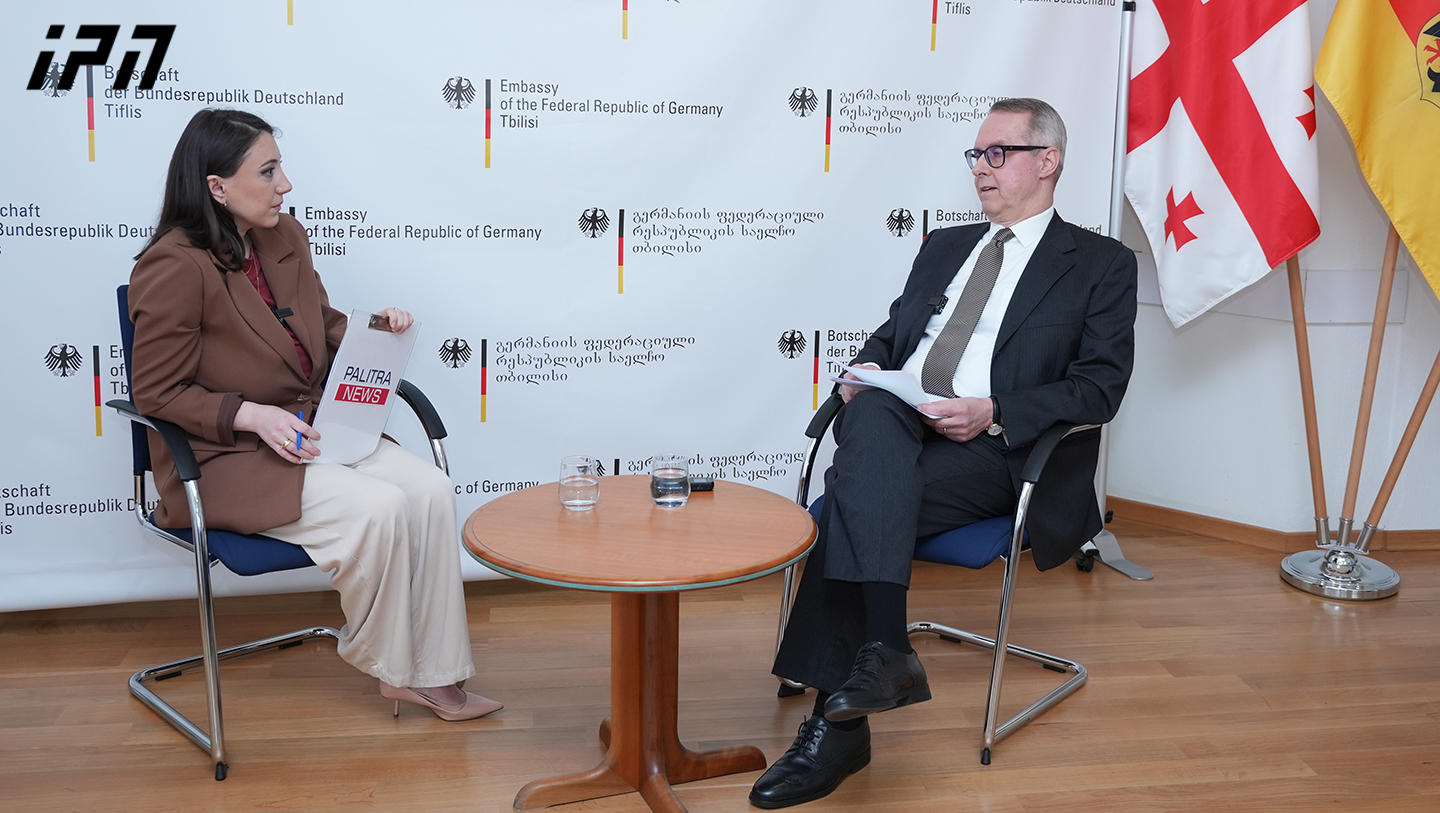
Germany, and the German ambassador already assesses that there have been violations of human rights and international commitments by Georgia in connection with the demonstrations, both in late 2024 and early 2025. We have to see where the OSCE process leads. It's an international organization that works with its own rules with the participating states. It's important you to have realistic expectations about sanctions, - German Ambassador to Georgia Peter Fischer stated in an exclusive interview with InterpressNews, speaking about the OSCE's launch of the Moscow Mechanism.
According to the ambassador, the scope of the expert mission is quite long and includes both the 2024 and 2025 demonstrations.
Georgia is a participating state in the OSCE, and that means it's kind of like membership in this international organization. And membership in international organization comes with commitments, with obligations, and I'll probably be talking about this quite a lot, about living up to the things that you signed up to that's very important in international relations. So as a participating state in the OSCE, Georgia, committed and freely signed up and undertook to uphold human rights and fundamental rights. And the philosophy of the OSCE is that human rights and fundamental rights of the citizens are essential for peace, justice, well being and friendly relations among the participating states. That's the black and white text of the OSCE agreements. The point of the OSCE is to cooperate for a peaceful world. And all participating states, including Georgia, have agreed black on white in writing that human rights and fundamental rights, and again, I'm quoting, are of immediate concern to all participating states and do not belong to the exclusive area of International affairs. So these are the rules of the game. If you're part of an organization, you sign up to these things. You may expect, and you must expect, that you'll be measured by the same rules that you signed up to. So the procedure, in December 2024 OSCE participating states invoked the Vienna mechanism. Georgia made a response which was not satisfactory, and then in late January, we activated the Moscow mechanism, 23 states, including Germany. And that means that the OSCE will appoint an expert mission to come here to establish the facts, to make recommendations. Those recommendations will go back to the participating states for review. Georgia has the opportunity to take a position vis a vis the recommendations, and then it will go to the OSCE permanent council to follow-up. The scope of the expert mission is quite long. I have the text with me. You can check it all. It's all on the record. You know, as I like to say, everything is black on white and can be read. There's no need to imagine things or speculate. But it's, let's put it in a nutshell. It's about human rights and fundamental freedoms, the rule of law in Georgia. It includes the demonstrations in both 2024 and early 2025. So what I want to say is Georgia signed up to the OSCE. Georgia is a member of the United Nations. The United Nations has the Declaration of Human Rights and other instruments. Georgia, as a member of the Council of Europe, signed up voluntarily. Georgia signed the EU Association Agreement. Association agreement also has, in its preamble and in its general principles, reference to human rights, fundamental freedoms, rule of law, and Georgia's European values and aspirations. Georgia signed the DCFTA deep and comprehensive free trade agreement with the EU, it also refers to human rights and fundamental freedoms. Georgia signed the EU visa liberalization agreement with the EU and it also refers to human rights and fundamental freedoms. And finally, Georgia applied to join the EU and the EU is a space, more than anything else, of human rights, fundamental freedoms of the citizens. And now, what's happened? Georgia got a very harsh review at the UN Human Rights Council United Nations. Georgia is at present, not participating in the Parliamentary Assembly of the Council of Europe. Georgia is facing sanctions under the EU visa liberalization regime. We'll come to that, I think. And the process of EU membership has come to a standstill for Georgia. So everybody's wrong. The OSCE is wrong, the United Nations are wrong. Council of Europe is wrong, and the EU is wrong. All are wrong and unfair about what's happening to Georgia. Is that possible?