The Minister of Education announced which state universities will open admissions for which faculties
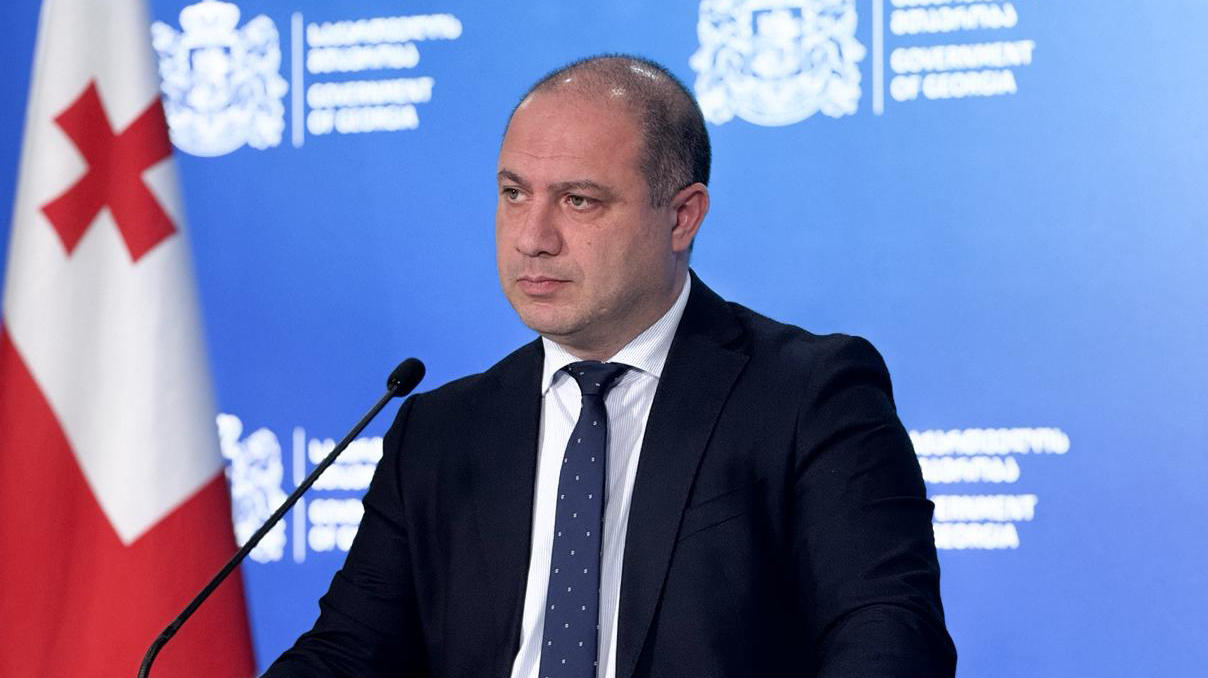
According to the concept of higher education reform, quotas at state universities will be distributed based on the “one city - one faculty” principle, essentially reflecting the traditional profiles of universities, the Minister of Education, Givi Mikanadze, stated.
“Students at Tbilisi State University will be admitted to programs in exact and natural sciences; humanities (excluding pedagogy); law; economics and business administration; and social and political sciences.
At the Georgian Technical University, admissions will be open for engineering and technical disciplines.
At Tbilisi State Medical University - medical specialties.
At Ilia State University - pedagogy programs and STEM specialties with ABET accreditation.
At Sokhumi State University - agricultural programs, Georgian-Abkhaz language and literature, and pedagogy programs.
Art universities and the Sports University will admit students to their respective programs.
Universities in Batumi and Kutaisi will maintain a multifunctional profile.
Universities in Zugdidi, Gori, Akhaltsikhe, and Telavi will focus on agricultural specialties, tourism, and pedagogy.
At this stage, agricultural programs will temporarily remain under the Georgian Technical University, so admissions will be announced under its name. However, a reorganization process will begin in the coming days, and within a few months, agricultural programs will transfer to the jurisdiction of Sokhumi State University.
Accordingly, in the 2026-2027 academic year, newly admitted students to agricultural faculties will begin their studies at Sokhumi State University,” Minister Givi Mikanadze stated at a briefing at the Government Administration.
The minister also spoke in detail about quotas. He noted that the number of admissions is based on labor market analysis, and additional admissions will only occur as exceptions.
“Today, quotas for student admissions to Georgia’s higher education institutions were approved. For the first time since independence, these quotas are based on labor market analysis.
The labor market analysis, conducted by the Ministry of Economy and Sustainable Development together with our ministry and consultations with the private sector, revealed many problems and challenges.
The results of the labor market research are more concerning than one might think at first glance. In general, over the past years, student admissions have not aligned with labor market demand. As a result, most students admitted were at risk of being unable to use their degrees professionally.
For example, over the past five years, an average of 3,598 students enrolled in law faculties across various universities, but only about 2,047 graduated, while the annual labor market demand for lawyers is less than 700. Therefore, incorrect practices in law faculties sacrificed approximately 2,900 students, who would later be unable to work as lawyers. Naturally, the state has a responsibility to protect students from such prospects and allocate quotas according to labor market demand.
A similar situation exists for economics and social and political sciences. For example, in economics, an average of 1,053 students enroll, about 662 graduate, and the labor market demand is only 150. In social and political sciences, the average annual enrollment is 4,916 students, with 2,591 graduates, while labor market demand is around 400.
Conversely, there is a significant shortage in engineering and technical disciplines, where over the past five years, an average of 2,225 students enrolled annually, but only 1,200 graduated, while labor market demand is 1,800.
It should also be considered that demand for engineering and technical specialists will increase with economic growth.
Additionally, there is a steadily growing demand in Georgia for information technology specialists, which must be carefully considered when determining quotas.
Student enrollment in medical and veterinary programs does not meet labor market demand.
Overall, the student enrollment practice has significantly deviated from labor market needs, causing structural problems in human capital mobilization and utilization.
Labor market research has allowed us to accurately determine the optimal number of students to admit to each program. Accordingly, this year, admissions to higher education institutions will largely reflect labor market needs.
To avoid a sharp reduction in admissions in certain programs, such as law, intermediate quotas will be set this year.
Regarding the main principle of the concept, “one city - one faculty,” it ensures targeted mobilization of resources and rationalization of educational programs.
All state universities will retain their unique educational programs. The only exception allowed at this stage is to fully preserve internationally accredited or joint/dual-degree programs, as internationalization is a main priority of higher education policy, and the state invests significantly in this direction annually.
Last year, 19,311 students were admitted to state universities. This year, the admission quota will increase by approximately 2,000 students to a total of 21,300. Additionally, around 10,000 students will be admitted to professional programs, all receiving completely free education.
Additional admissions may occur as exceptions in cases where two or more students achieve equal scores on the national exams or if residents of Georgia’s temporarily occupied territories wish to enroll in state university programs without taking the national exams.
As a result of these changes, Tbilisi State University will regain its status as the mother university. As you know, until the 1990s, when Georgia’s higher education system faced serious problems, Tbilisi State University was the only university in Georgia, while other higher education institutions had institute status.
Through higher education reform, Tbilisi State University will not be the only state university in Georgia, but as the leading multi-disciplinary university in the capital, it will regain its original mission, which it partially lost due to developments in the 1990s and due to deliberate policies by the government between 2004 and 2012.
The main goal of the higher education reform is for Georgian students to receive a modern, high-standard higher education in Georgia, which is unfortunately not currently ensured. Properly determined university quotas based on these principles will create a good and necessary foundation to achieve this result,” Givi Mikanadze stated.
This information was released by the Ministry of Education.