Ilia State University Vice-Rector: The decision is shocking and unrelated to education reform - we will do everything possible to ensure the university’s history does not end this way
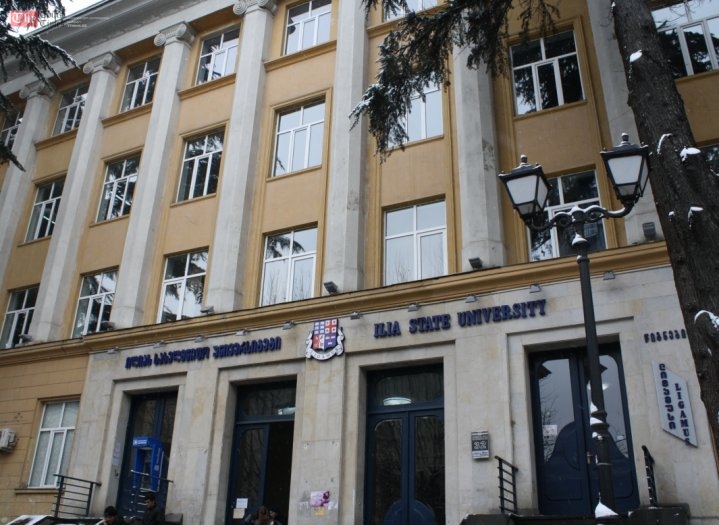
The Vice-Rector of Ilia State University, Professor Giorgi Gvalia, has stated that the university will strongly oppose the decision made regarding the institution, which he considers “illegitimate and inconsistent with the Constitution of Georgia.”
According to Gvalia, the university will use all possible legal mechanisms, both domestically and internationally. He said there is complete unity within the academic community and that they will make every effort to ensure the university’s history “does not end in this way.”
As Ilia State University representatives note, the institution will firmly resist the decision of the Ministry of Education and Science.
“We intend to oppose this decision to the fullest extent, as we believe it is not legitimate and contradicts the Constitution of Georgia. We will use every legal mechanism available, both within the country and beyond its borders. There is full unity within the university community, and we will do everything possible to ensure that the history of this university does not end in this manner,” Gvalia said.
The Vice-Rector described the decision as “shocking” and emphasized that it has no connection to genuine education reform or improving the quality of education. In his assessment, the long-term consequence of the decision will be a decline in educational standards.
“This is a shocking decision that has nothing to do with real education reform or improving the quality of education. The only long-term result of this decision will be lowering the quality of education. In fact, the decision regarding Ilia State University effectively means the abolition of one of the country’s successful universities. Imagine a university that currently runs around 100 programs across various fields, and only pedagogical programs remain. This effectively means losing 90% of its programs and, consequently, 90% of its students. It can be said that the university, in the form we know it, will no longer exist.
According to this decision, starting from the autumn semester, we will no longer admit students to a number of programs, which will naturally lead to a decline in student numbers. This will, of course, negatively affect the university’s financial condition and create challenges not only for maintaining the so-called pedagogical programs but also for ensuring the stability of the remaining programs.
We will make every effort to retain our staff, but once student numbers decrease, financial difficulties will inevitably have an impact on personnel as well,” Gvalia stated.