Irakli Abesadze on the October 4 case - A lawyer conducted an examination of the metal and everything is clear from that - the expert came, looked at the palace fence and said, " Oh, must should be broken, not cut" - we can say that the conclusion is false
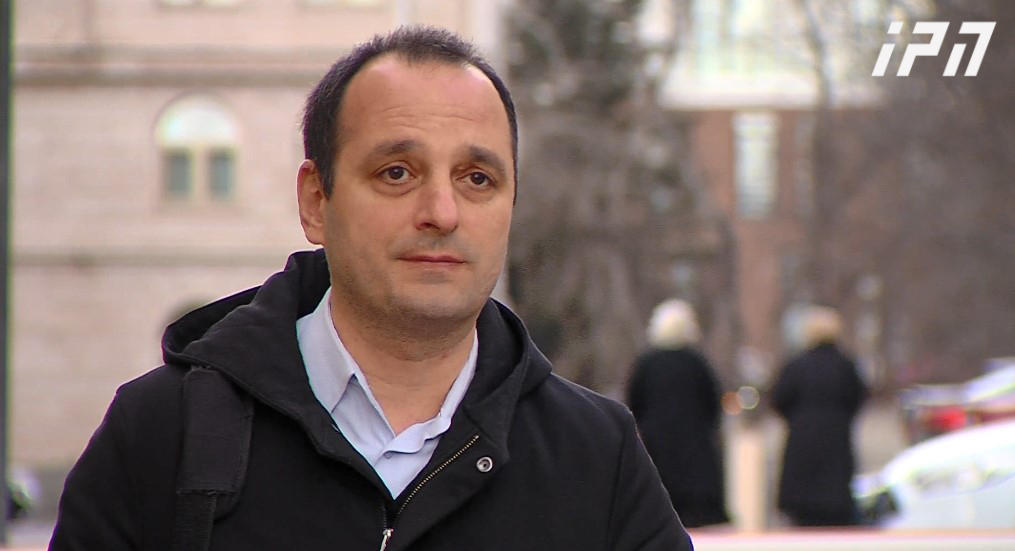
In short, an expert came, looked at [the fence of the presidential palace] and said, "Oh, this must be broken, not cut, I'm not kidding, this is an expert conclusion, based on which they want to send 64 people to prison," lawyer Irakli Abesadze said after the trial.
At the trial of the politicians and other participants of the protest detained in connection with the events near the Atoneli Palace on October 4, expert-trasologist Otar Khaburzania was questioned. It was he who conducted the examination of the palace fence.
"A lawyer conducted an examination of the metal, and I think that everything is clear to the public. As for what the lawyer could not answer regarding the metal, the expert could not say how many welding points there were, how many places he looked for traces of cutting, he simply did not know. The expert confirmed that they did not even lift the fence sections to see if there were any traces of cutting or mechanical damage on the lower side of the fall to the ground. The expert actually confirmed to us that he did not examine and does not have the knowledge to examine whether there was a welding defect, the expert could not exclude whether there were traces of an artificially created fracture. The expert confirmed that he does not have information whether there were any manipulations on the fence section before his arrival. The expert could not justify how he excluded all traces of cutting, while there are many different methods of cutting metal and they leave different traces. The expert confirmed to the prosecutor's office that the fence was supposedly fastened with welding and other types of fasteners, but later in the expert report he failed to indicate what kind of fastener he was talking about, whether it was broken or cut, and he could not find the fastener mentioned in the photographs he took. In short, to put it simply, the expert came, looked at it and said, uh, this must be broken, not cut, I'm not kidding, this is the expert report on the basis of which they want to send 64 people to prison. I was not kidding in the last sentence, the methodology for conducting the expert report was this - the lawyer came to the site, looked at the sections of the fence, without even touching them, and said, uh, this is really broken, there are no traces of cutting. We can say that his conclusion that the fence is broken and not cut is false," Abesadze said.
For information, Murtaz Zodelava, Paata Burchuladze and Irakli Nadiradze were charged under Article 19-222, Part 2, Subparagraph “a” of the Criminal Code of Georgia, which refers to an attempt to seize and block objects of strategic and special importance committed by a group. They are also charged under Article 225, Part 1 of the Criminal Code of Georgia, which refers to the organization and leadership of group violence. They are also charged under Article 317 of the Criminal Code of Georgia, which refers to a call to change the constitutional order of Georgia by force and to overthrow the state government, which is punishable by up to 9 years of imprisonment.
Irakli Shaishmelashvili is charged under Article 317 of the Criminal Code of Georgia, which refers to a public call to change the constitutional order of Georgia by force or to overthrow the state government, which is punishable by up to 3 years of imprisonment.
Lasha Beridze is charged under Article 19-222, Part 2, Subparagraph “a” of the Criminal Code of Georgia, which pertains to an attempt to seize and block objects of strategic and special importance, committed by a group. He is also charged under Part 1 of Article 225 of the Criminal Code of Georgia, which involves organizing and leading group violence.
Irakli Chkhvirkia, Nika Gventsadze, and Tornike Mchedlishvili are charged under Subparagraph “a” of Part 2 of Article 19-222 of the Criminal Code of Georgia, which involves an attempt to seize and block strategic and special importance objects, committed by a group. He is also charged under Part 1 of Article 225 of the Criminal Code of Georgia, which involves organizing and leading group violence. The aforementioned act is punishable by 6 to 9 years of imprisonment.
Guri Zhvania is charged under Part 2 of Article 225 of the Criminal Code of Georgia, which pertains to participation in group violence.
Paata Manjgaladze is charged under Part 1 of Article 225 of the Criminal Code of Georgia, which pertains to organization of group violence. The aforementioned act is punishable by imprisonment for a term of 6 to 9 years.