EU Special Representative for Sanctions Issues: The Kulevi Oil Terminal was removed from the EU's 20th sanctions package against Russia
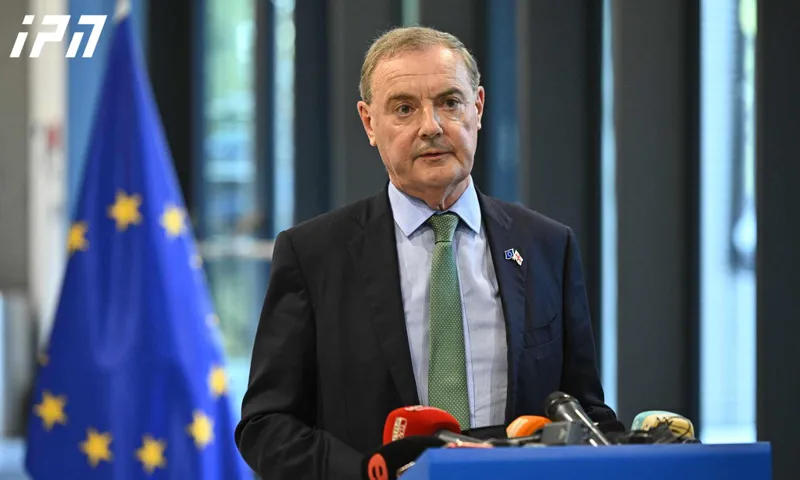
The European Union did not include the Kulevi Oil Terminal located in Georgia in the 20th sanctions package against Russia, - this is stated in a letter sent by the EU Special Representative for Sanctions Issues, David O'Sullivan, to Georgia's Minister of Foreign Affairs, Maka Bochorishvili.
“Dear Minister Bochorishvili,
Thank you for your letter of 18 February 2026 and the document sent to EU Member States regarding the EU's 20th sanctions package against Russia, which is planned to be adopted in the near future.
To date, the EU has listed 605 vessels, specifically tankers, that engage in high-risk and deceptive shipping practices. We will continue to target vessels that undermine the impact of our sanctions, including the addition of up to 40 vessels in the 20th package.
Vessels are sanctioned in accordance with Council Regulation (EU) 833/2014, based on evidence that these tankers have been involved in high-risk shipping practices. This is one of the legal grounds on which the EU can target vessels. Other grounds include vessels supporting Russia's energy sector, transporting sanctioned goods, or circumventing EU sanctions,” - the letter states.
David O'Sullivan explains that the fight against the “shadow fleet” is not limited to sanctioning vessels alone; it requires a comprehensive approach targeting the entire logistics chain and broader ecosystem.
“The EU is working to reduce dependence on Russian energy and to strengthen efforts to restrict Russia's export of petroleum products. For this reason, we impose transaction bans on such factors as infrastructure located in Russia and third countries that support this activity and threaten the effectiveness of our sanctions through circumvention. In this regard, the Kulevi port in Georgia was initially proposed for possible inclusion in the 20th sanctions package due to its role in the maritime transportation of Russian oil and the entry of shadow fleet tankers into the port. This initial position was reassessed after your authorities and the port operator took positive commitments. I welcome your commitment that Georgia will not allow vessels sanctioned by the EU to enter its ports or receive services, as well as SOCAR's commitments to conduct its operations in strict compliance with relevant EU sanctions, including the price cap on Russian crude oil and refined products derived from such oil, and the EU import bans.
These commitments were critical in our consideration of the situation and ultimately determined that the Kulevi port would not be included in the 20th sanctions package,” - the letter states.
The letter notes that the Georgian authorities contacted the Commission requesting consultations regarding the case of the tanker M/T TRUVOR (IMO 9676230).
“I note that your authorities have already contacted the Commission requesting consultations regarding the case of the tanker M/T TRUVOR (IMO 9676230), and I appreciate that you have denied this vessel entry to a Georgian port. I hope that operational-level exchanges of views will continue and lead to fruitful cooperation. The EU closely monitors the movements of the shadow fleet and will continue to do so in the future. As regards trade restrictions, monitoring and restricting the re-export of Common High Priority (CHP) items and Economically Critical Goods (ECG) remains one of the Union's main priorities. These goods are critically important to Russia's military or industrial complex, and preventing their redirection is essential for the effectiveness of our measures. We appreciate your continued efforts in this regard and ask you to continue ensuring that Georgian territory is not used for the transit or re-export of such sensitive goods to Russia,” - the letter states.