Mariam Lashkhi at the Culture Committee session on hearings with heads of arts institutions: We must ensure we have dignified individuals who will not use the stage as a political instrument
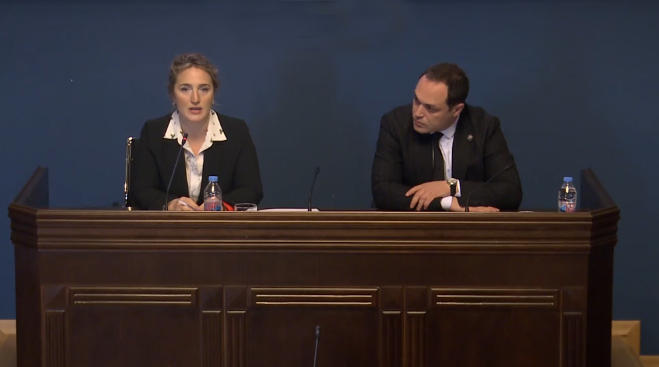
Art education is a priority for our country – we must jointly deliberate so that a new chapter is written in our country’s history, and so that young people are nurtured who, on the one hand, will be creators of our nation’s biography, and on the other hand, will be dignified individuals who will not use the stage as a political instrument, but will give art the respect and dignity through which our country has reached the present day.
This statement was made by Mariam Lashkhi, Chair of the Parliamentary Committee on Education and Science, at a joint session of the Education and Culture Committees, where the heads of higher arts institutions were being heard.
Invited to the joint committee session were: Rector of the Vano Sarajishvili State Conservatoire Giorgi Vachnadze, Rector of the Apolon Kutateladze State Academy of Arts Karaman Kutateladze, Rector of the Shota Rustaveli Theatre and Film State University Giorgi Shalutashvili, and Vice-Rector of the Giorgi Mtatsmindeli University of Chanting Tatia Chkheidze.
According to the session agenda, representatives of higher arts institutions will present their activities and discuss existing challenges. The discussion will also cover “the importance of higher education reform in the context of the sustainable development of the artistic and creative sector.”
"Today’s session is historic, as culture and education are the backbone of our country. Together, they create what we call the biography of our nation. Today we are hosting institutions that have shaped this biography and raised generations who created eras in our country’s history. Education teaches you a language, but how you use that language and contribute to the country’s history is shaped in your universities. I am pleased that the Parliament of Georgia has the opportunity to listen to you and jointly discuss the key challenges facing arts education.
Art education is a priority for our country. We must work together so that a new page is written in our history – raising young people who are not only creators of our national story but also individuals who will not use the stage as a political tool, and who will treat art with the respect and dignity through which our country has come to this day,” Lashkhi stated at the opening of the joint committee session.