Lawyer: The prosecution must choose: either Usoyan ordered the Mikadze brothers - possibly through Partskhaladze - to kill Jangveladze, or Partskhaladze himself ordered the murder due to a conflict
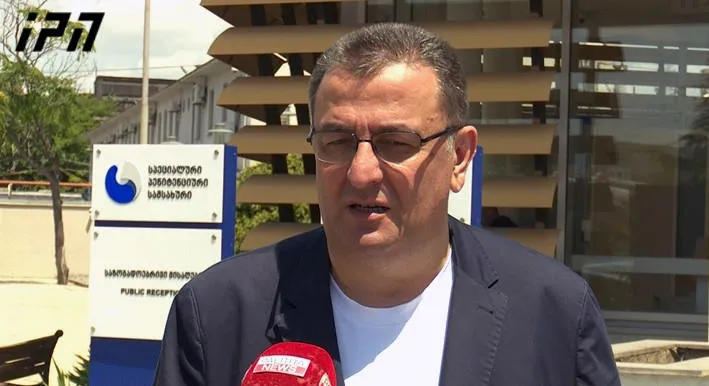
“The prosecution must choose: either Irakli Usoyan ordered the Mikadze brothers - possibly through Otar Romanov-Partskhaladze - to carry out the murder of Levan Jangveladze, or it must choose the version that Partskhaladze and the deceased were in conflict and that Partskhaladze himself ordered the killing,” said defense lawyer Zviad Kordzadze after the court hearing.
Kordzadze delivered his closing argument at today’s trial, representing brothers Giorgi Mikadze and Davit Mikadze, who are accused of organizing the contract killing of Jangveladze.
According to the lawyer, the evidence presented by the prosecution does not prove that the Mikadze brothers organized the murder, and therefore a guilty verdict cannot be reached.
“During the four hours of my closing argument, I tried to clearly demonstrate to the court that there is no evidence confirming the charges. We reviewed in detail all the evidence presented and showed that it does not and cannot relate to the alleged organization of the crime, nor to the prosecution’s claim that the Mikadze brothers’ role was to transfer information - there is no such evidence in the case at all.
At the same time, we showed the court what was not done in terms of the investigation and what could have been done. The prosecution claims that meetings to organize the murder took place on February 15, while also stating that on February 12 the killer was sent to Greece to create an alibi. This is a major inconsistency. If the killer was sent on February 12, how was the murder planned on February 15?
The prosecution has not established the timing of the crime - when the agreement or organization took place, who contacted whom, when, how the communication occurred - by email, phone, or in person - whether anyone traveled, how coordination happened, and so on. Not only is there no evidence, there is not even a coherent version. This does not meet the standard for a conviction, or even for an indictment - it doesn’t even meet basic logic,” Kordzadze said.
When asked about the connection between the Mikadze brothers and former Prosecutor General Partskhaladze, the lawyer said such a link should be proven in the case, but it is not supported by evidence.
“We couldn’t establish that either. The motive must be very specific. The prosecution names a contract killing, allegedly ordered by Usoyan for $5 million. In that case, I don’t understand what relevance personal conflicts or business relations have.
The prosecution must choose: either Usoyan ordered the killing through the Mikadze brothers, possibly via Partskhaladze, or Partskhaladze and the victim were in conflict and he ordered the murder himself. Two versions cannot exist simultaneously. To this day, we don’t know which version the prosecution supports, and each requires different evidence. There is no evidence supporting either version.
The Mikadze brothers’ connection to Partskhaladze must be proven within this case - specifically that they received some kind of order from him - but there is nothing of the sort. When I say there is nothing, I mean it does not exist at all. Under such circumstances, issuing a guilty verdict in a contract killing case is inconceivable,” Kordzadze stated.
For context, the investigation accuses Giorgi and Davit Mikadze, along with Giorgi Jokhadze, of organizing the contract killing of Levan Jangveladze. Jokhadze is also charged, together with Giorgi Kachkachashvili, with the illegal group purchase of firearms.
In the same case, Gela Udzilauri has been convicted and sentenced to life imprisonment for the murder of Jangveladze and the attempted murder of Gia Chaduneli. Sandro Tsivtsivadze has been sentenced to 8 years in prison for illegal firearms trafficking.
Former Prosecutor General Otar Romanov-Partskhaladze is also charged under the Criminal Code with organizing a contract killing for financial gain, an offense punishable by 16 to 20 years or life imprisonment. He is a Russian citizen and is currently wanted internationally.