State Security Service - BBC's information about the use of "camite" against protesters is deliberate disinformation - the actions of Georgian citizens and the film's authors were well-organized and campaign-like in nature to achieve hostile goals
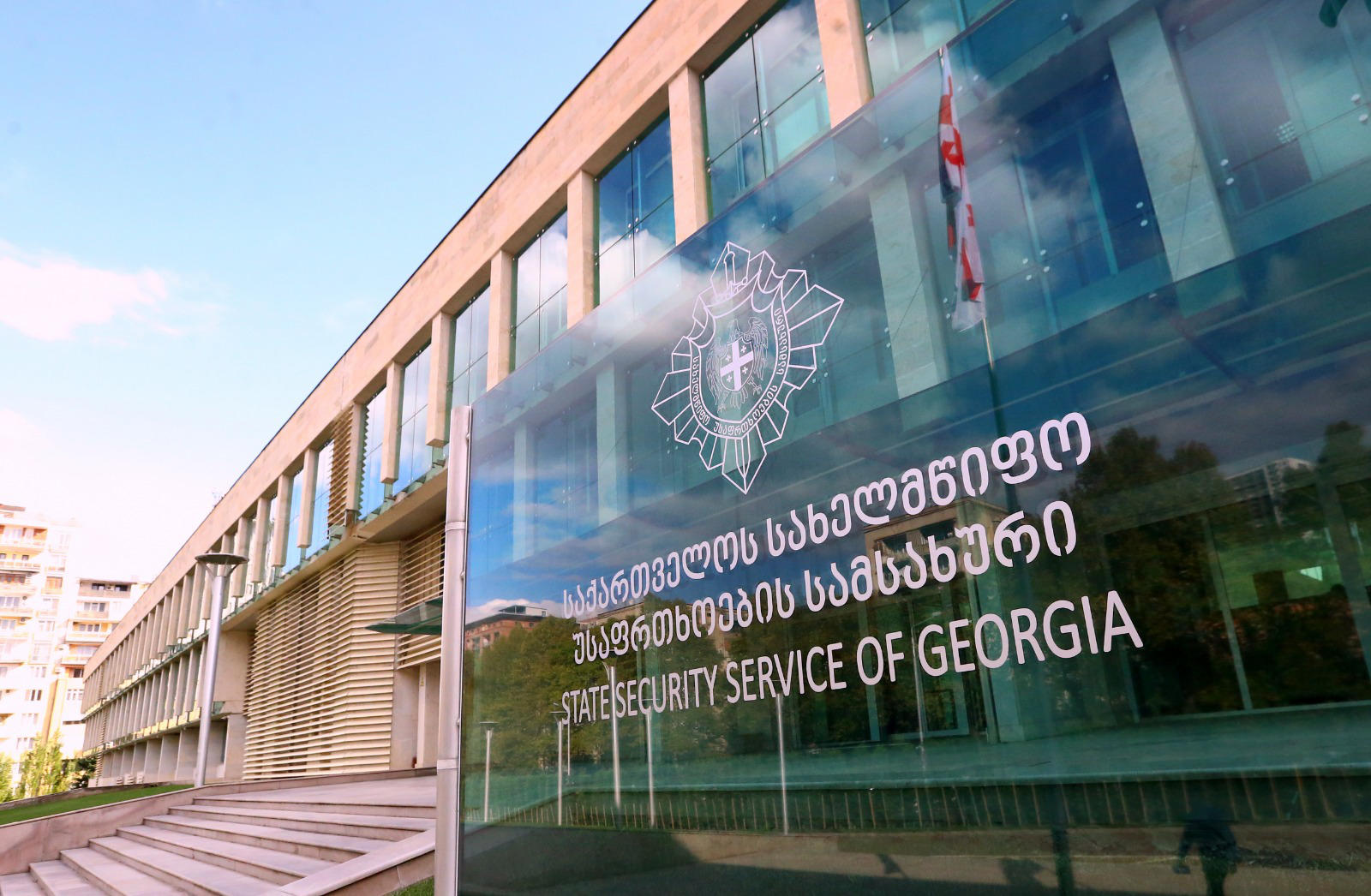
The information voiced in the BBC film about the use of the so-called chemical weapon, "camite", against protesters in Georgia is deliberate disinformation - it served to damage the interests of Georgia, in which Georgian citizens were also involved and, together with the authors of the BBC film, their actions against Georgia were of a well-planned, organized and campaign nature to achieve specific hostile goals, - the State Security Service writes in its annual report submitted to the Parliament.
According to the State Security Service, the trends of recent years have clearly demonstrated that the disinformation and double-standard information campaign emanating from Western countries and institutions has helped both individual public and political groups operating in Georgia, as well as the special services of foreign countries, conducting effective anti-Western propaganda and instilling nihilism towards Western institutions in part of society.
It is in this context that the State Security Service in its report speaks about an investigative film prepared by the BBC, which concerns the use of chemical substances against demonstrators during the November-December 2024 protests.
The State Security Service report states that the investigative story spread by the authoritarian British media has somehow become part of a disinformation campaign against our country and may have had negative consequences in the country.
According to the Service, as a result of the timely response of the state and the State Security Service itself, which was manifested in the timely conduct of investigative actions on the issue and proactively informing the public, the negative consequences that the above-mentioned disinformation story aimed to avoid were avoided.
The Service states in its report that the substance “bromobenzyl cyanide”, also known as “camite”, was never purchased by the Georgian Ministry of Internal Affairs.
“In early December 2025, an investigative report prepared by the BBC was broadcast, according to which the Georgian authorities were accused of allegedly using the banned toxic substance bromibenzyl cyanide (CA), also known as “camite”, against participants in the protests.
As a result, the State Security Service launched an investigation into the criminal case both on the information provided in the report by the BBC, and on the campaign conducted in Georgia based on it.
More than 160 investigative actions were conducted in this criminal case, 93 witnesses were interviewed, including current and former employees of the Ministry of Internal Affairs, doctors, experts, respondents to the British broadcaster’s report, representatives of non-governmental organizations and other persons.
Various types of documentation were seized from the Customs Department of the Ministry of Internal Affairs and the Revenue Service. The First and Second Special Tasks Department of the Ministry of Internal Affairs seized 25 research samples from the departments’ databases, on which chemical expertise was conducted at the Levan Samkharauli National Forensic Bureau.
As a result of the aforementioned operational and investigative actions, it was determined that the chemical powder, which had been purchased by the Ministry of Internal Affairs of Georgia and had been used for years during ongoing protests, as needed, for crowd control, was “chlorobenzylidene malononitrile”.
The said substance was purchased by the Ministry of Internal Affairs from a Jewish company on December 18, 2007 and March 27, 2009, together with the solvent “trichloroethylene”. During transportation, it was assigned the international shipping code UN 3439, and the solvent liquid – the shipping code UN1710. These codes are recorded in customs documentation and all other, including write-off acts drawn up after use. A 17.5-kilogram barrel was seized as a sample, in which the aforementioned powder was stored. An information sticker made by the organization supplying the substance was attached to it, which, along with a lot of other data, indicated both the name of the aforementioned substance “chlorobenzylidine malononitrile” and the assigned international transportation code UN3439.
The investigation also established that in addition to the Ministry of Internal Affairs, various Georgian organizations, including “Aversi-Rational”, “GPS”, “Rustavis Azot” and others, have imported it 606 times over the past 20 years. Also, the transportation code UN3439 is recorded 507 times and the transportation code UN1710 is recorded 99 times in the accounting databases of the Customs Department.
As for the substance “bromobenzyl cyanide”, the same "camite", the Georgian Ministry of Internal Affairs has never purchased such a substance.
The people who were questioned as witnesses in the case were the people whose so-called conclusions or information served as basis for the BBC to report on the use of a poisonous chemical substance. During the interrogation, absolutely all of them denied that their information or conclusions concerned the poisonous chemical substance “camite”. According to the authors of the so-called study, they could not establish the fact of the use of “camite” for the simple reason that they had not conducted research in this direction.
According to the statements of representatives of medical and expert circles questioned as witnesses within the framework of the investigation, the use of the substance “bromobenzyl cyanide”, so-called “camite”, against humans leads to extremely serious and often even lethal consequences, which is why it was banned in the 30s of the last century. It is noteworthy that according to documents obtained from the Ministry of Health of Georgia in the days following November 28, 2024, out of 54 people transported to inpatient medical institutions by emergency medical teams, 5 people had mild intoxication and were discharged from medical clinics the next day.
The investigation also established that in early December 2024, specifically on the night of December 4-5, the substance “chlorobenzylidine malononitrile” was used for crowd control, and a solution of the substance “propylene glycol” was used as a solvent. None of the aforementioned substances belong to the category of prohibited substances.
According to the chemical examination conducted, the substances seized by the investigation were: - 1. The chemical substance “chlorobenzylidine malononitrile”. 2. Chemical substance – trichloroethylene (the written-off balance in the amount of 880 liters). 3. Chemical substance – propylene glycol.
Of the persons of interest to the investigation, it was not possible to interview the only witness, whose information was largely used in the BBC story. He also appears in the October 4 case and is related to the fact of the purchase and storage of the explosive substance TNT.
Thus, the irrefutable evidence obtained by the investigation provided the basis for drawing a conclusion that the information voiced in the BBC film about the use of the so-called chemical weapon “camite” against protesters in Georgia is deliberate disinformation.
It served to harm the interests of Georgia, in which Georgian citizens were also involved, and together with the authors of the BBC film, their actions were well-planned, organized and campaign-like in nature to achieve specific hostile goals against Georgia.
Accordingly, in this regard, the State Security Service continues to investigate only the possible crime provided for in Article 319 of the Criminal Code of Georgia, which involves assisting a foreign organization in hostile activities,” reads the State Security Service report submitted to the parliament.