Grigol Gegelia - Ukraine and Moldova are moving towards EU membership, while Georgia is in danger of losing visa-free regime – the Dream regime is increasingly isolating Georgia
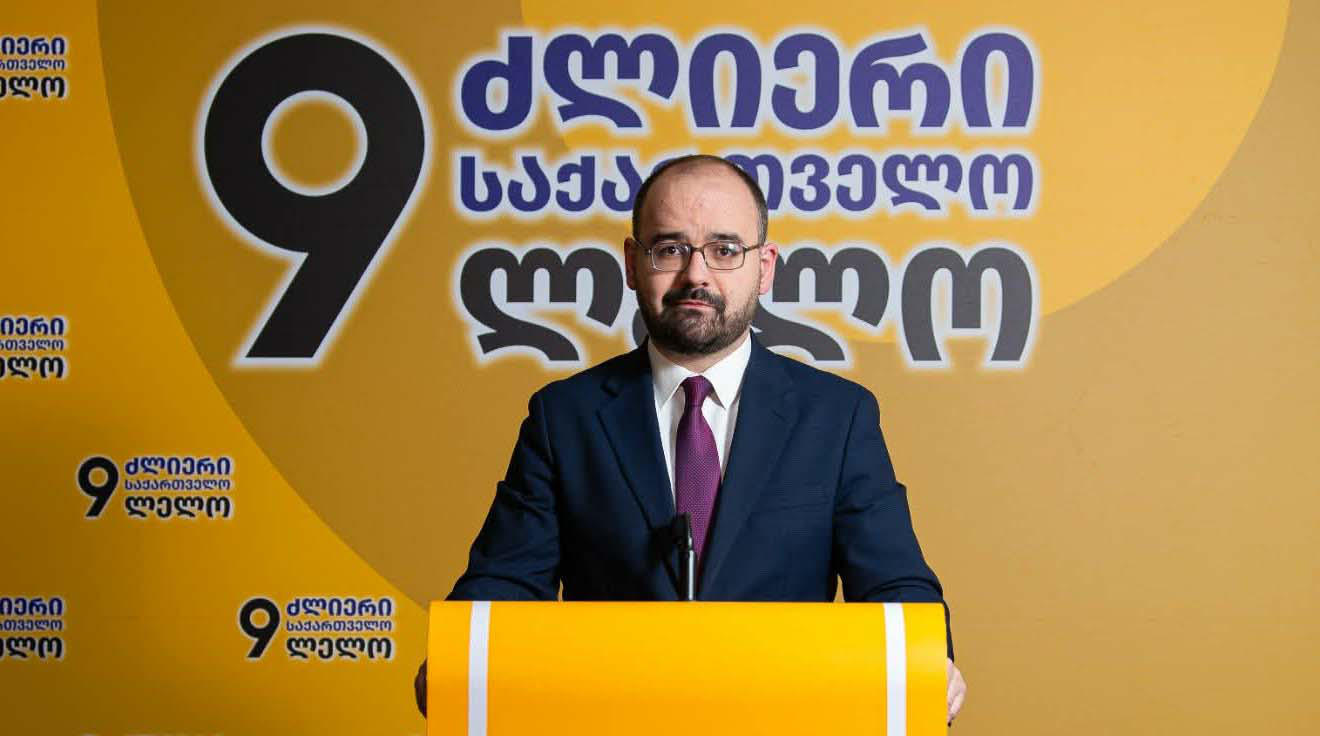
We see that Ukraine and Moldova are moving towards EU membership, while Georgia is in reality in danger of losing visa-free regime - this is the best proof of the Russian foreign policy task that the Georgian Dream regime is fulfilling, as in reality Georgia is increasingly isolating itself, - Grigol Gegelia, one of the leaders of Lelo-Strong Georgia, stated.
According to him, there is a clear contrast between Georgia and its partner countries, which are approaching EU membership at a time when Georgia’s historical achievements are under threat.
"This shows a clear contrast between, on the one hand, those states that have already started a dialogue on membership with the right policies, and, on the other hand, a poor “Dream” state that may lose what the Georgian public and diplomatic service has gained through decades of very hard work. This is the best proof of the Russian foreign policy task that the Georgian Dream regime is fulfilling, when in reality it is increasingly isolating Georgia and doing more and more to prevent Georgia from moving forward towards more Europe, more prosperity and more security,” said Gegelia.
In addition, he responded to the issue of the report prepared on Georgia, which will be adopted at the plenary session of the European Parliament on June 17, and noted that the resolution demonstrates the protective spirit that the European Union has against the Dream’s hybrid Russian regime.
“This is another very tough and clear resolution that demonstrates Europe’s continued support for Georgia and the Georgian people and our democratic struggle. Secondly, this resolution demonstrates the protective spirit that the European Union has against the Dream’s hybrid Russian regime,” Gegelia said.
53 MEPs voted in favor of the annual report on Georgia, while 14 voted against it, at the European Parliament’s Foreign Affairs Committee.
“The report focuses on the European Parliament’s main concerns regarding the state of democracy, rule of law and European integration in Georgia,” the explanatory statement states.
The report will be discussed at the European Parliament’s plenary session on June 17.