Michael O’Flaherty - We urge the Georgian authorities to Repeal or thoroughly revise the legislative changes affecting the right to freedom of association and freedom of expression
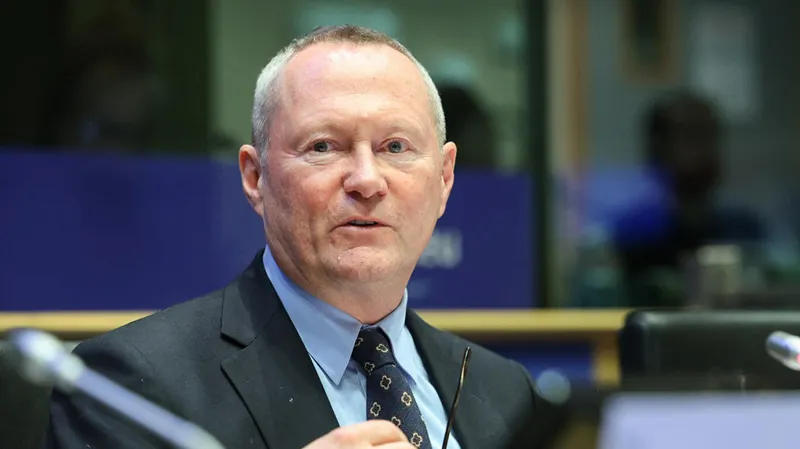
The Council of Europe Commissioner for Human Rights, Michael O’Flaherty, has released a memorandum asking the Georgian authorities to make progress in ensuring accountability for the disproportionate use of force against protesters and to reverse legislation curtailing freedom of assembly, association and expression in Georgia.
The Commissioner notes that the recommendations made in his March 2025 memorandum remain relevant. In particular, it reiterates the need to effectively investigate allegations of ill-treatment and excessive use of force by law enforcement officials, hold perpetrators accountable, and provide comprehensive reparation to survivors.
In addition, the Commissioner recommends that the Georgian authorities:
Ensure prompt adoption of, and effective implementation in practice of the legislative proposal requiring all law enforcement personnel to wear visible individually distinguishable identification numbers;
Ensure that investigations conducted by the Prosecutor’s Office into violence against protesters and journalists are thorough, prompt and genuinely independent, addressing not only individual perpetrators but also issues of command responsibility;
Extend the scope of investigations to all credible allegations of ill-treatment during the protests of March 2023, March-May 2024, and November 2024 to early 2025, and reclassify cases where appropriate under Articles 141¹, 141² or 141³ of the Criminal Code;
Ensure a thorough, independent and transparent inquiry into the use of water cannons containing chemical substances against protesters, in line with the 2020 UN Human Rights Guidance on Less-Lethal Weapons in Law Enforcement, with the participation of victims and civil society and public disclosure of the findings without further delay;
Adopt the 2020 UN Human Rights Guidance on Less-Lethal Weapons in Law Enforcement;
Implement the measures required to fully execute the Court’s judgments in the Tsintsabadze group of cases and Tsaava and Others, in line with the decisions of the Committee of Ministers.
In addition to the recommendations made in his Memorandum of March 2025, which remain valid, the Commissioner recommends that the Georgian authorities:
Review, repeal or substantially amend the changes to the Law on Assemblies and Demonstrations, the Administrative Offences Code and the Criminal Code, adopted in October and December 2025, to ensure compliance with Article 11 ECHR and relevant international standards, in particular by: protecting spontaneous assemblies and removing blanket restrictions on peaceful protest, while ensuring that any restrictions are strictly necessary, proportionate and subject to effective judicial review; repealing provisions introducing disproportionate administrative detention and criminal liability for repeated protest-related offences, and limiting deprivation of liberty in the context of assemblies to a last resort, applied on an individualised basis;
Implement without delay the judgments of the European Court of Human Rights concerning violations of the right to peaceful assembly and ill-treatment by law enforcement, including by strengthening safeguards against arbitrary detention, ensuring effective accountability for unlawful policing practices, and addressing structural shortcomings identified in the submissions by the Commissioner and the Public Defender;
Cease inquiries into civil society organisations initiated under the GEOFARA and the Law on Grants;
Terminate criminal investigations against civil society organisations for alleged involvement in aggravated sabotage or at least immediately restore access to the organisations’ bank accounts;
Rescind GEOFARA, all changes to the Law on Grants and the Law on Broadcasting adopted since 2024, and related amendments to the Administrative Offences Code and the Criminal Code;
Repeal or thoroughly revise other legislative changes affecting the right to freedom of association and freedom of expression, in particular the amendments to the Law on Freedom of Speech and Expression and the Organic Law on Political Association of Citizens, in accordance with Articles 10 and 11 of the ECHR and the case law of the European Court of Human Rights;
Refrain from any measures that arbitrarily restrict democratic freedoms, political pluralism and participation in public life.