Parliament approves legislative package prepared by Ministry of Internal Affairs regarding new mechanisms for managing migration processes
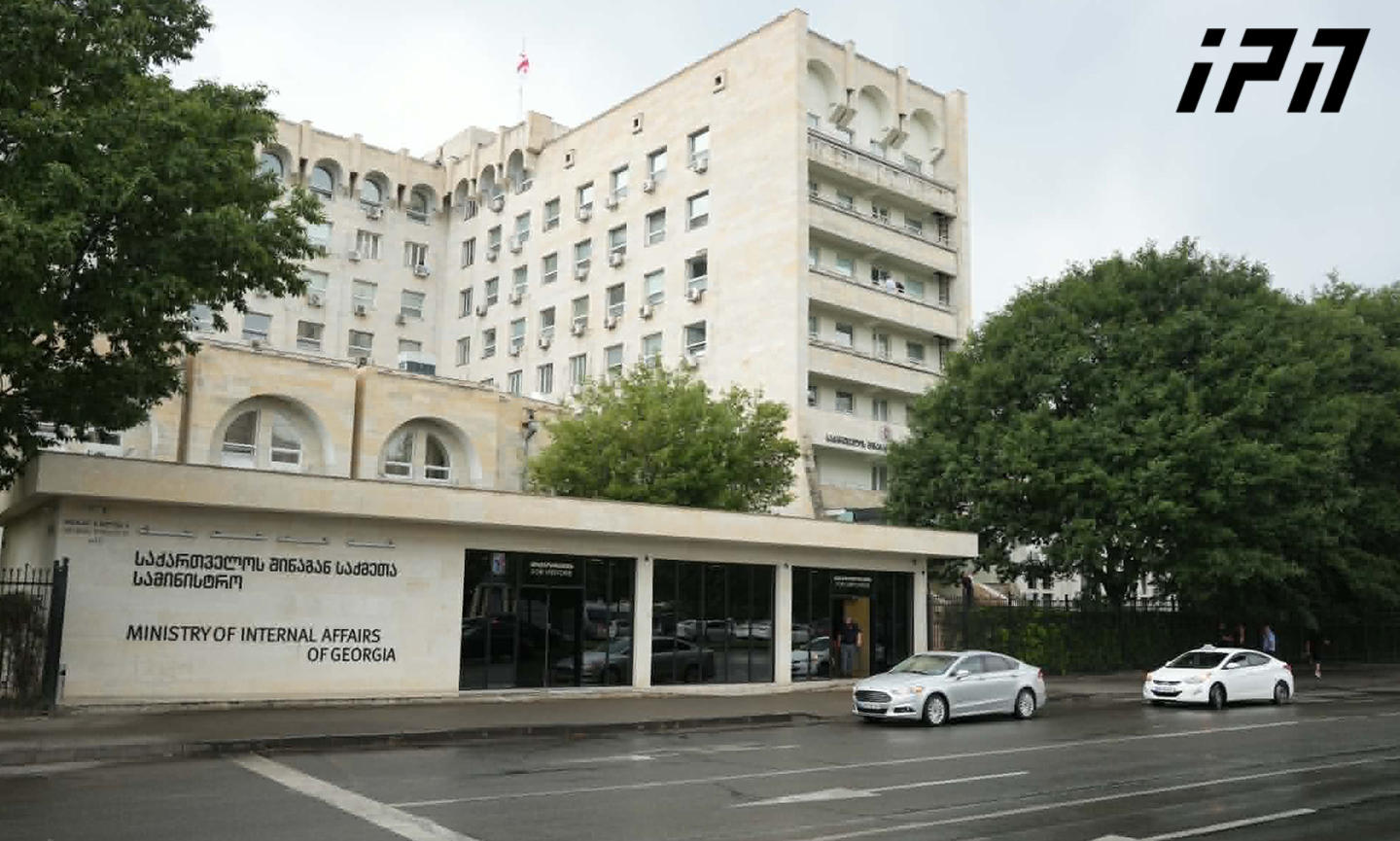
The Parliament has approved a legislative package prepared by the Ministry of Internal Affairs regarding new mechanisms for managing migration processes.
The amendments to the Law “On the Legal Status of Aliens and Stateless Persons” were unanimously adopted in the third reading - with 81 votes.
The amendments determine additional prerequisites for the admission of foreign students to higher and vocational educational institutions, such as the submission of an international language certificate and/or passing a foreign language/state language exam organized by NAEC.
As the Ministry of Internal Affairs explains, the aforementioned regulation excludes the enrollment of a student in a foreign language program without actually possessing the relevant language competence.
In addition, the educational institution will be obliged to reflect information on obtaining the enrollment, suspension/termination/restoration of student status, mobility, completion of studies, and other information in a unified information system, which will be accessible to relevant state agencies.
Educational institutions are subject to administrative liability for violating the rules for registering foreign students, and both a fine and a restriction on the admission of foreign students can be used as sanctions.
The legislative amendments also regulate issues related to the study residence permit. The specified permit will be issued to an adult only in the case of studying at an authorized higher or vocational educational institution. The package of legislative amendments also defines the grounds for terminating the period of stay of a foreign student in Georgia (cancellation of the residence permit), including in the event that he/she fails to meet academic requirements, violates the conditions of labor activity, or is actually absent from the territory of Georgia for the period specified by law.
The legislative amendments also regulate issues related to the issuance of a residence permit based on marriage between a Georgian citizen and a foreigner. A new type of residence permit is defined - a residence permit for the spouse of a Georgian citizen, issued before obtaining a permanent residence permit. In addition, the validity of the marriage will be verified before the said residence permit is issued, and a special commission will be established for this purpose. According to the legislative amendments, a fictitious marriage between a citizen of Georgia and a foreigner for the purpose of obtaining Georgian citizenship, a residence permit in Georgia and/or other legal grounds for legal stay in Georgia will be punishable under criminal law.
The punishment will include the expulsion of the foreigner from Georgia and a ban on entering Georgia for a period of two to ten years, or a fine, or house arrest for a period of one to two years, or imprisonment for a period of two years.
The package of legislative amendments also provides for the replacement of the unserved part of the sentence for a convicted foreigner with expulsion from Georgia and a ban on entering the country, in compliance with the conditions established by the legislation of Georgia. The legislative amendments will grant the Migration Department of the Ministry of Internal Affairs the authority to carry out operational-investigative measures in order to combat, prevent and suppress illegal migration.
In addition, the package of legislative amendments introduces changes in the field of judicial proceedings. In particular, the deadlines for appealing decisions are reduced, tighter deadlines for case consideration are established, and in some cases it becomes possible to consider cases without an oral hearing.
According to the Ministry of Internal Affairs, the legislative amendments were prepared in close coordination with the Ministry of Justice, the Ministry of Education, Science and Youth, and other state agencies.