Dr. Khatuna Burkadze delivered a lecture on AI at the NATO Defense College
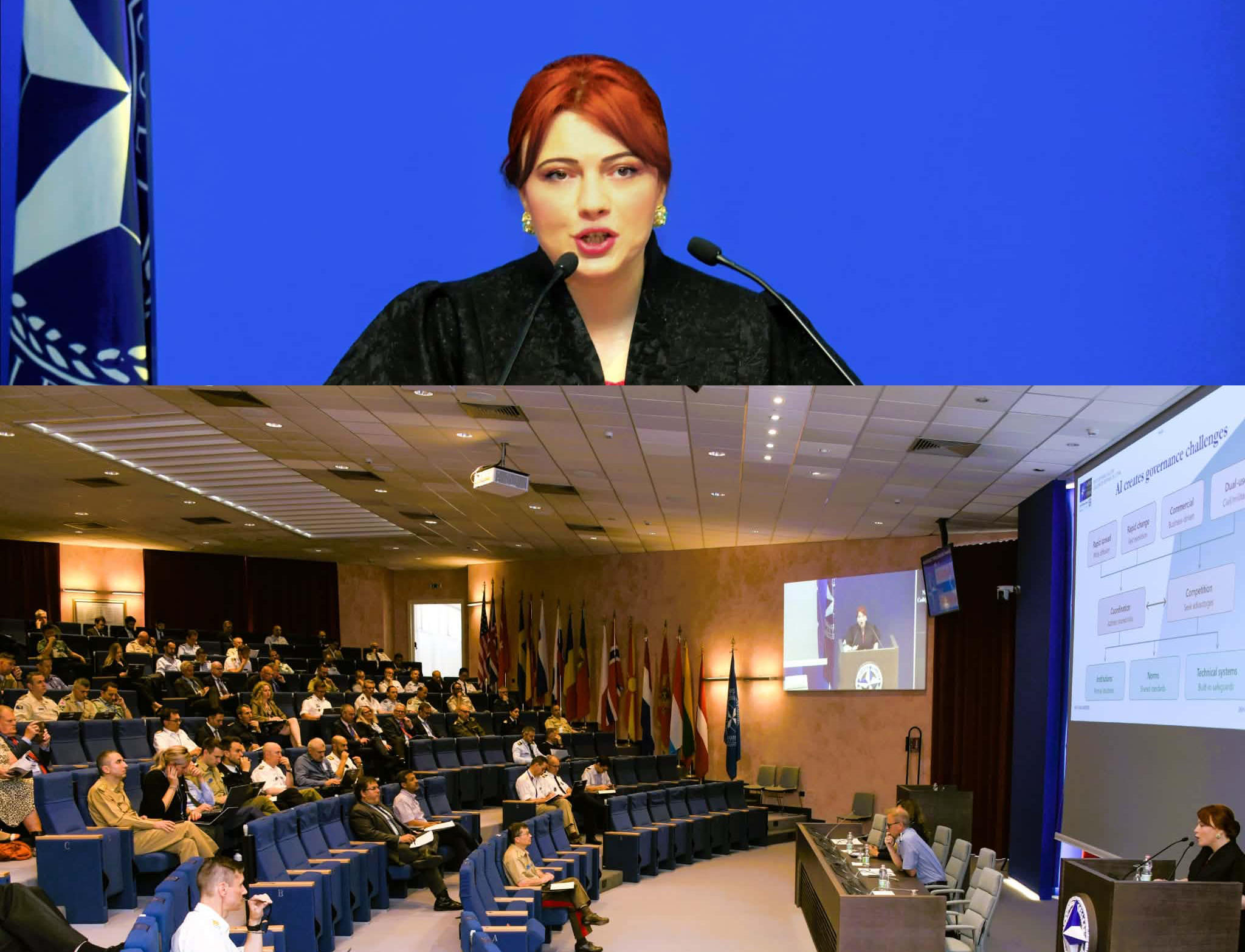
Prof. Dr. Khatuna Burkadze addressed Senior Course 148 and the NDC Anciens during NDC’s seminar entitled “Artificial Intelligence — A Primer for the Strategic Level”. She delivered a lecture on the developmental waves of AI, the transformative opportunities, and the practical capabilities of AI systems to meaningfully contribute to defense purposes, and paid special attention to the associated challenges.
Prof. Dr. Khatuna Burkadze highlighted: “We live in an era of rapid technological change. These advances are redefining the character, scope, and execution of military operations in the digital age. Artificial Intelligence (AI) drives digitalization and accelerates change in defense. Amidst rapid technological progress, AI systems offer transformative opportunities to enhance the strategic and operational effectiveness of military missions. These capabilities can make both conventional and non-conventional operations more efficient, improve resilience against diverse threats, and strengthen the ability to deter aggression and overcome challenges.”
“AI serves as a sophisticated digital force multiplier—automating complex workflows, extracting actionable intelligence from massive datasets, and providing decision-makers with advanced, data-driven analysis and strategic recommendations. Leveraging these capabilities, AI not only facilitates the achievement of defense objectives but also enables rapid, high-impact interventions across a spectrum of dynamic, unforeseen scenarios. The conceptualization and deployment of AI should be firmly grounded in international human rights frameworks. Advancing AI as a strategic tool in defense architecture requires careful alignment with the protection of fundamental rights and interests. Supported by robust digital cooperation, AI applications can drive the digital transformation of defense and security institutions while safeguarding against unlawful or unethical use. Achieving effective innovative reshaping of the aforesaid domain requires a systematic assessment of both opportunities and inherent challenges. The development of legal regimes that prioritize the responsible and reliable use of AI-driven instruments at national, regional, and global levels can mitigate risks associated with technological change,” mentioned Prof. Dr. Khatuna Burkadze.
“Ultimately, the accelerating integration of AI in defense contexts highlights the critical need for proactive leadership and governance to shape the international order in the digital era. The future success of states will depend on their capacity to actively frame the digital landscape rather than merely react to its changes. Consequently, leadership in AI adoption and governance should play a decisive role in forming the international innovation environment of the twenty-first century, guided by fundamental legal principles and fostering effective human-machine collaboration to address key security challenges,” added Prof. Dr. Khatuna Burkadze.