Levan Makhashvili - The voice of the Icelanders turned out to be heard by Brussels, but for some reason, the voice of the Georgians was not heard - Brussels should respect other peoples not selectively, but everyone
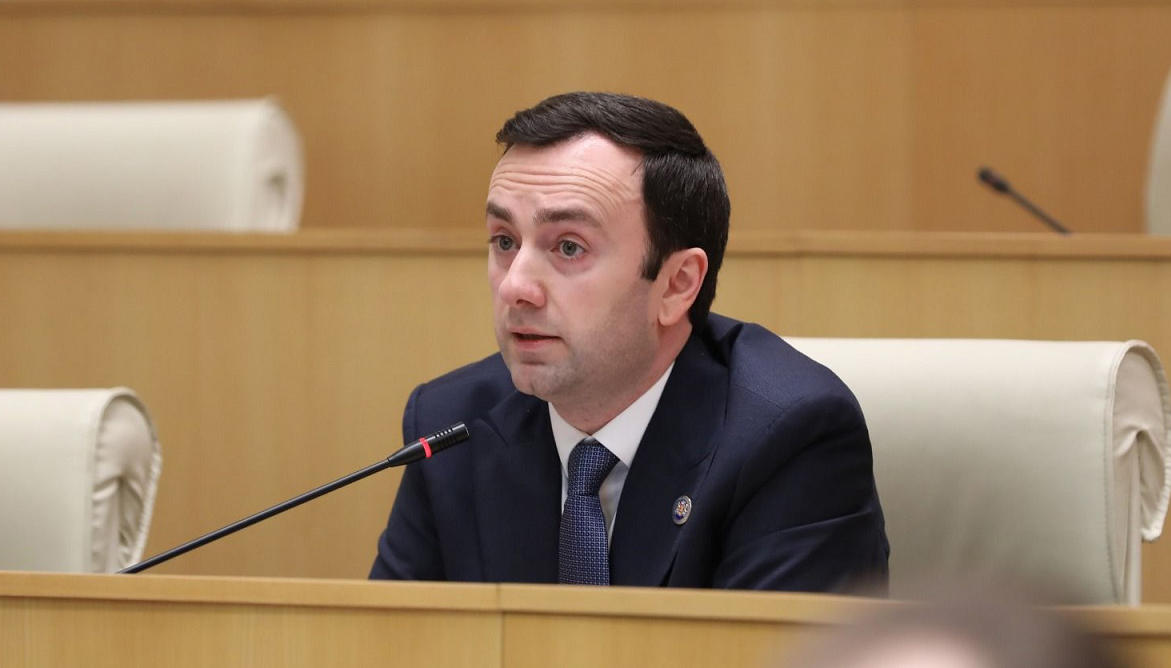
The Icelandic referendum was not a failure of the European idea. It was a failure of Brussels policy and a reminder that the European idea is based on European states and that Europe will not be what Brussels bureaucrats see from their windows, but what European peoples want, - Levan Makhashvili, Chairman of the Parliamentary Committee on European Integration, stated at the plenary session of the Parliament.
Makhashvili notes that Brussels accepted Iceland’s decision without any problems, while in the case of Georgia, the choice of the people and the government became a reason for criticism and interference in internal affairs.
“In recent weeks, we have witnessed several important facts that clearly demonstrate to both European politics and Georgia the two main realities of modern international politics - the price of peace and stability and the need to protect one's own national interests.
Unfortunately, Europe's weakening as a geopolitical actor has continued. To summarize the speech of the President of the European Commission at a meeting with businessmen in France: - Europe has lost cheap energy resources. - Europe has lost its technological advantage. - Europe has lost its largest key markets. - Europe has lost its security umbrella.
Irrational and fashionable decisions, unthinking steps, irresponsible policies of European politicians who are subordinate to the interests of others harm their own citizens first and foremost and are destroying Europe as a flagship of business, technology, peace, order and law. Ordinary Europeans are already facing these grave consequences. Face to face - in the form of employment, demographic, social, crime, migration and other negative trends.
Accordingly, the results of the latest Eurobarometer survey were completely expected, according to which almost 2/3 of Europeans do not look at their future with hope.
It is precisely this irresponsibility, complete disrespect for democracy and sovereignty that spoiled the EU's relations with Georgia, when the Georgian government was disliked for caring for its own people and when peace in the country was baptized as pro-Russian.
The result of the Icelandic referendum was also interesting.
In the Icelandic referendum, 52% of the people refused to start accession negotiations with the EU. Iceland refused to give up its main resource and chose the format of relations that today, at this stage of history, best serves its national economy. Iceland confirmed that partnership with the European family is possible and necessary only by protecting the dignity and interests of the country.
The Icelandic referendum was not a failure of the European idea. It was a failure of Brussels policy and a reminder that the European idea is based on the states of Europe and that Europe will not be what Brussels bureaucrats see from their windows, but what the European people want.
It is also interesting that the remaining 48% who participated in the referendum did not come out and start storming state institutions, burning police officers alive, staging revolutions and violently overthrowing the government. No one declared the day of the referendum a black day for democracy, no one adopted resolutions and sanctions to punish the Icelandic people, no one from the European Union came to rallies in Iceland.
This voice turned out to be heard by Brussels. But for some reason, the voice of the Georgians was not so heard. However, the will of the people is the will of the people in Iceland, Switzerland and Georgia. Instead of interfering in internal affairs, engineering electoral and political processes on its own, Brussels should respect other peoples not selectively, not according to the amount of money paid under lobbying contracts, but sincerely and honestly. And the sooner and more sincerely Brussels respects the will expressed by the Georgian population in the elections, the more it will preserve its own image, trust and reputation, which it has been damaging and tarnishing for the past 2 years through the hands of NGOs and radicals.
Finally, a strong Europe is in the best interests of Georgia. Georgia and the Georgian people cannot be friends of bureaucrats who are obsessed with the agenda of war. Instead, Georgia was, is and will be a partner of the European Union as a healthy, democratic organization that respects its own and others' interests and sovereignty. Therefore, let us hope that European leaders will understand their responsibility and act not at the behest of informal interest groups, but in their own national interests. This will be beneficial for their countries and for improving relations with Georgia," said Levan Makhashvili.