Irakli Garibashvili – Gakharia abandoned the country and the team in crisis, committing an act of unexpected betrayal by resigning, I took over a government that was in a state of collapse; yet, without ever bowing my head to anyone—either domestically or internationally—we secured EU candidate status
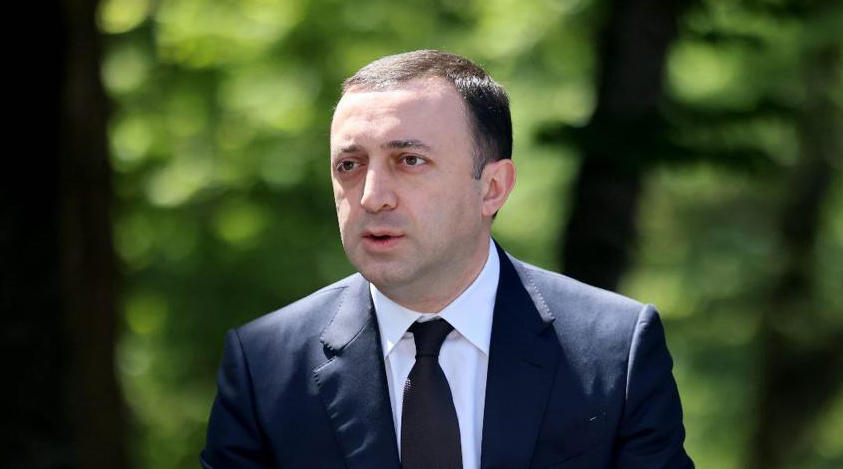
"In January 2024, the approval rating for my government’s performance stood at 60%, as did that of the party; almost three years have passed since then, and I want to ask people: has the situation in the country improved or deteriorated—regarding domestic or foreign policy?" – former Prime Minister of Georgia Irakli Garibashvili writes on social media.
In a lengthy post, he discusses the circumstances under which he returned to the post of Prime Minister in 2021.
Specifically, the former Prime Minister writes about his tenure from 2021 to 2024, recalls the economic and political results achieved during his time in office, and asks the public whether the situation in the country has improved or deteriorated since his departure. In a lengthy statement, the former Prime Minister focuses on the crisis that followed Giorgi Gakharia’s resignation, as well as on double-digit economic growth, foreign policy achievements, and the attainment of EU candidate status.
At the same time, regarding former Prime Minister Giorgi Gakharia, he states that he "committed an act of betrayal."
"I would like to remind the public, citing the facts, of the situation in which I returned to the post of Prime Minister in February 2021:
The country was in the midst of an acute political crisis and the COVID-19 pandemic (with a vaccine shortage); the country and the economy were shut down; there was a six-percent economic contraction and a nine-percent budget deficit; the government debt-to-GDP ratio exceeded 60%; the Lari exchange rate had climbed to the 3.3–3.4 mark; everything had come to a standstill, and the country was effectively facing the threat of default.
Gakharia abandoned the country and the team while they were in such a crisis, committing an unexpected act of betrayal by resigning. The government was on the verge of collapse; the ruling party was demoralized, the team was in disarray, and the party’s approval rating had fallen to 35–37%. This was the state of the government I inherited on February 18, 2021.
Immediately upon my appointment as Prime Minister, we rapidly restored balance, strengthened the team, and stabilized the situation. Together, we took bold, decisive, and effective steps—measures that carried significant risk at the time: we reopened the country, introduced three types of vaccines, rejected the "Covid dictatorship," and declared full freedom of choice for our people regarding vaccination.
In parallel, we reopened the locked-down economy and gave a powerful boost to business and economic development. Amidst the pandemic, we launched new initiatives and major infrastructure projects nationwide, initiated a regional renewal program, and commenced work in every municipality.
That same year, we won the local elections convincingly; we surpassed the 43% threshold and secured 47% of the vote. We averted destabilization and an attempt to stage a revolution involving Saakashvili, put all destructive forces in their place, and resolved the political crisis. Finally, we concluded both 2021 and 2022 with unprecedented double-digit economic growth.
The country's economy grew most rapidly during my three-year tenure. In three years, the economy expanded by thirty billion GEL. We succeeded in controlling inflation; it fell below the target level and, at times, even dropped below 1%. Consequently, the pressure on prices was alleviated. For instance, opening the Turkish market and introducing reference pricing for medicines led to an immediate drop in drug costs—a reduction of 30–40% on average—saving the population 400 million GEL over two years. It is worth noting that, prior to this, medicines were sold with markups of 100–300%, and there was no effective oversight. We reduced the budget deficit from 9% to 2.8% and stabilized the Lari exchange rate within the 2.6–2.7 range. Over three years, we sharply cut government debt from 60% to 38%.
Thanks to targeted programs aimed at the population—particularly vulnerable citizens (for instance, we allocated 500 million GEL annually and introduced monthly supplements for children from socially vulnerable families)—unemployment and poverty rates dropped to historic lows, and tens of thousands of new jobs were created. After a long hiatus, we raised public sector salaries (increasing the pay of police officers, soldiers, and special service personnel by 40–50% over three years), increased pensions, and raised the salaries of teachers and doctors.
Robust, real economic growth enabled us to increase the state budget multiple times throughout the year and direct additional funds toward various needs of the country and its people.
Every sector and area of activity was developing at a rapid pace. Georgia ranked first in economic growth among EU member and candidate states. We held third place for low inflation and tenth place for low government debt. During my three-year tenure, my team and I overcame extremely difficult crises, averting the real dangers of revolution and being dragged into war.
From the very first days of the Russia-Ukraine war—and despite immense pressure—we firmly and uncompromisingly defended our country's national interests, avoiding destabilization and the real threat of war. Alongside rapid domestic development, we pursued an active foreign policy.
Over the course of three years, we undertook 25 foreign visits, submitted an application for EU membership, and concluded new strategic partnerships and free trade agreements. I undertook successful visits to China, Brussels, various European capitals, the United States, the Middle East and the Gulf states, as well as Israel and Jordan (with the blessing of His Holiness Ilia II, Georgia returned to the Holy Land after three hundred years).
We strengthened friendly and strategic relations within the region. Notably, the first mediation effort between Azerbaijan and Armenia in recent times took place with my direct participation. Furthermore, a meeting of the prime ministers of all three countries was held in Tbilisi for the first time.
And finally:
Without ever bowing to anyone—whether domestically or internationally—and solely through the uncompromising defense of our country's national interests and the collective effort of our team, we secured EU candidate status in December 2023. Through these achievements and, above all, by employing democratic methods, we politically neutralized the entire radical opposition, leaving them with no grounds for criticism or argument. As of January 2024, the approval rating for my government stood at 60%, matching the party's own rating. I left the post of Prime Minister with these results at the end of January 2024.
Almost three years have passed since then, and I want to ask people: has the situation in the country improved or deteriorated—regarding both domestic and foreign policy?" writes Gharibashvili.