Nika Simonishvili: President showed the Government that she would not obey them, interestingly, the Georgian Dream remembered that the President’s signature was of a ceremonial nature only after critical positions were expressed
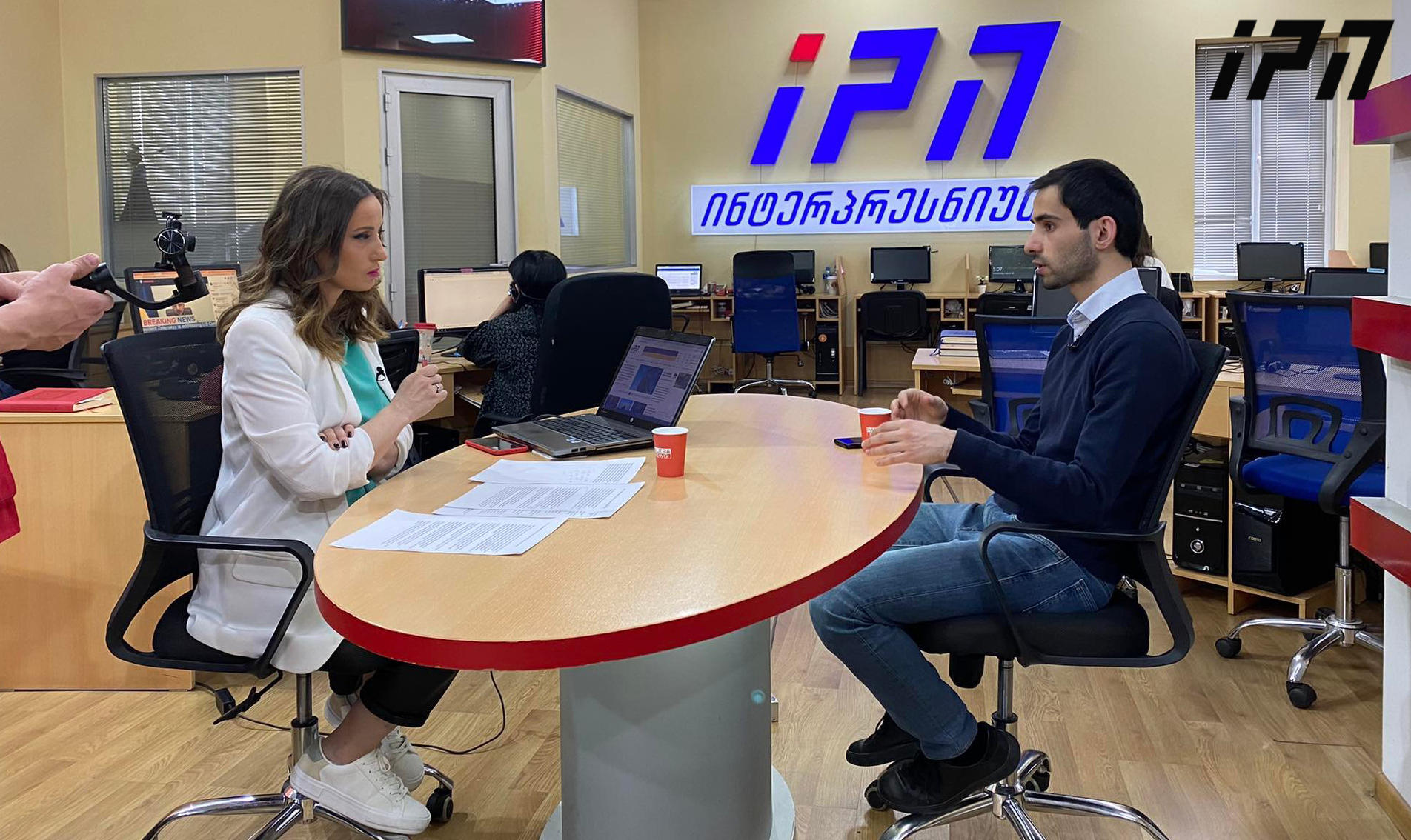
The President showed the Government that she would not obey them, she demonstrated her abilities and strength, Nika Simonishvili, chairman of the Georgian Young Lawyers’ Association, told PalitraNews’ Daily Newsroom program.
According to Simonishvili, at a time when the Parliament and the Government are not taking significant steps toward European integration, it was precisely the President who took it all upon herself.
"We saw a similar case when she entered the session hall of the Parliament together with the Ambassador of Ukraine. We can certainly say that this is a procedural violation but with this, the President showed both the Parliament and the government that she does not intend to obey the rules set for her by the Parliament and the Government, and that she made a political decision. The President practically showed both of these branches of government that when they present their positions at the international level in a very disgraceful manner, she wants to present those positions correctly. At a time when the Parliament and the Government are not taking significant steps toward European integration, it was precisely the President who took it all upon herself. Otherwise, the President simply would not have had the opportunity to do so. Had the President not violated these rules and procedures, the image of the country would have been severely damaged. Let’s imagine a scenario – had the President not appeared on the international arena, as she did, and had she not made those assessments, what sort of an image would our country have today? After the disgraceful positions held by the Prime Minister and representatives of the authorities, the image of our country would have been damaged further. With this act of disobedience, the President has played a very significant role in maintaining the country’s image," Nika Simonishvili stated.
During the program, Nika Simonishvili also spoke about Salome Zourabishvili’s refusal to sign off on the ambassador candidates nominated by the Government and the lawsuit filed by the Georgian Dream in the Constitutional Court.
Simonishvili noted that this is Salome Zourabishvili’s discretionary right, as the law does not specify who is to sign the document if the President refuses to do so.
"This was yet another example of how the President disagreed with what she saw as the Government’s wrong decisions.
Interestingly, the Georgian Dream remembered that the President’s signature was of a ceremonial nature just now, only after the highly critical positions and assessments were made. All of this stands out as somewhat strange against this background. But let’s take a look at the legal context – the Constitution says that upon nomination by the Government, the President shall appoint ambassadors and heads of diplomatic missions.
The President certainly has the discretionary power not to appoint a representative, and this has its explanation. According to the Georgian Dream’s explanation, this entry in the Constitution says that the President must sign the appointment in any case, but we do not see it that way. In principle, this is the discretionary power of the President, as the head of state. If the President had to sign the appointments in any case, then the entry should have included the procedure for what happens if the President does not sign – who signs the appointments in that case? We find no such procedure, and accordingly, this is the President’s discretionary power. If the President refuses to sign, we can’t force her to sign, can we?" Simonishvili stated.
Additionally, Simonishvili explained how the process might take place if the Constitutional Court finds a violation of the procedure by the President.
According to him, in this case, the Georgian Dream will have to make some changes to the law regarding the appointment of ambassadors.
"Regarding the Georgian Dream’s lawsuit – this is not an impeachment procedure; this is a dispute over competencies between the governmental bodies. The Government will take the lawsuit to the Constitutional Court in connection with the entry of a specific legislative act that allows the President not to sign the nomination, it will appeal specific entries of the law, and in this case, the dispute over compliance with the Constitution will be heard in the Constitutional Court. If the Constitutional Court finds that the President does not have the right to refuse to sign and is obligated to sign in any case, in this case, the President will be obligated by law to sign the appointments, in line with the definition of the Constitutional Court. If the President refuses to sign despite this, then what will happen is interesting because this procedure is not provided for by law or the Constitution. In this case, they might have to make some changes to the law.
Even if the Constitutional Court finds that the Constitution has been violated, the Georgian Dream does not have the 100 votes required to achieve the desired result, should it want impeachment," Nikoloz Simonishvili stated.